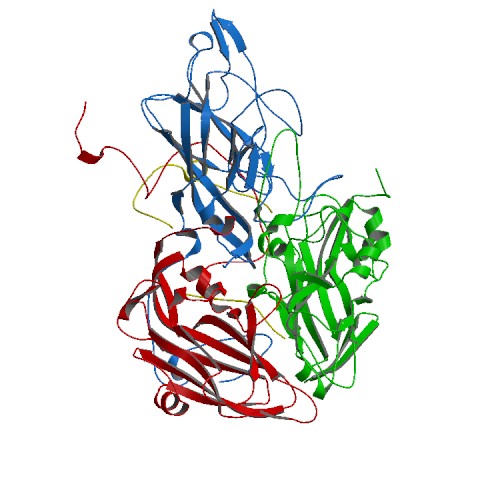




The Senecavirus is a "new" virus, discovered several years ago by Neotropix Inc., a biotech company in Malvern, Pennsylvania. It was at first thought to be a laboratory contaminant, but researchers found it was a pathogen, now believed to originate from cows or pigs. Further investigation found that the virus was harmless to normal human cells, but could infect certain solid tumors, such as small cell lung cancer, the most common form of lung cancer.

Scientists at Neotrophix say that, in laboratory and animal studies, the virus demonstrates cancer-killing specificity that is 10,000 times higher than that seen in traditional chemotherapeutics, with no overt toxicity. The company has developed the "oncolytic" virus as an anti-cancer agent and is already conducting early phase clinical trials in patients with lung cancer.

LANCASTER, England, October 8 /PRNewswire/ -- A new survey has found that 83 percent of businesses believe their websites are failing to convert enough visitor traffic into actual sales or enquiries, report online consultancy Backbone IT Group.

In a poll of one hundred UK companies, only 15 percent expressed a high level of satisfaction with the amount of business being generated by their websites. Companies also feared that less than half of potential online sales were currently being achieved.

The survey, carried out by Backbone IT Group with assistance from Lancaster University, also highlights a lack of awareness in the wider business community of some of the more recent online marketing practices.

LONDON, October 8 /PRNewswire/ -- Schools are responsible for looking after their students. It is a teacher's job to zip up coats, wipe away tears, and teach children the things they need to know. There are procedures in place to make sure that students are looked after while they are under the school's care, but what about a student's personal data? Are British Schools keeping their students' data safe?

LONDON, October 8 /PRNewswire/ --

- Majority of Men Prefer the Boyish Figure of Keira Knightley to the Over-Enhanced Curves of Pamela Anderson.

With the average bra-size now ballooning from a 34B (Anna Kournikova) ten years ago to a 34E (Kelly Brook) in 2008*, you'd think that most single men would be in seventh heaven - but not so according to a new survey by PARSHIP.com Europe's largest serious online matchmaking service. When it comes to relationships, 31% of single men would prefer not to try getting closer to a busty woman, so anything above a "D" cup will reduce a woman's chances of finding a partner by as much as a third.

Proteins found in sperm are central to understanding male infertility and could be used to determine new diagnostic methods and fertility treatments according to a paper published by the journal Molecular and Cellular Proteomics (MCP). The article demonstrates how proteomics, a relatively new field focusing on the function of proteins in a cell, can be successfully applied to infertility, helping identify which proteins in sperm cells are dysfunctional.

"Up to 50 percent of male-factor infertility cases in the clinic have no known cause, and therefore no direct treatment. In-depth study of the molecular basis of infertility has great potential to inform the development of sensitive diagnostic tools and effective therapies," write co-authors Diana Chu, assistant professor of biology at San Francisco State University and Tammy Wu, post-doctoral fellow at SF State. The study is included in a special Oct. 10 issue of MCP dedicated to the clinical application of proteomics.

BERLIN, October 8 /PRNewswire/ --

- La Musica Finds New Best Freund

Popkomm -- TuneUp Media, the creators of TuneUp for iTunes, today empowered music lovers worldwide to experience their music in a new way with an International version of TuneUp in French, German, Italian, and Spanish. The new version allows millions more people around the world to automatically fix their mislabeled song information, find missing cover art, receive upcoming concert alerts, and enjoy music videos, all integrated with iTunes' familiar interface.

Researchers from Ohio State say that wetlands in tropical areas are able to absorb and hold onto about 80 percent more carbon than wetlands in temperate zones.

The scientists extracted soil cores from wetlands in Costa Rica and in Ohio and analyzed the contents of the sediment from the past 40 years. Based on their analysis, they estimated that the tropical wetland accumulated a little over 1 ton of carbon per acre per year, and the temperate wetland accumulated .6 tons of carbon per acre per year.

The temperate Ohio wetland in the study covers almost 140 acres, meaning it sequesters 80 tons of carbon per year. The tropical wetland covers nearly 290 acres and stores 300 tons of carbon each year.

Superconductors are materials that conduct current with negligible resistance and reduced energy waste so research has always generated enormous interest.

Magne Runde and Niklas Magnusson at SINTEF Energy Research are testing superconductors in the huge induction heaters utilized by the aluminium industry. Currently, companies have to preheat huge aluminium cylinders, known as billets, in induction heaters with copper conductors. When the temperature reaches 500 °C, the billet is extruded to profiles.

“This heating process leads to large losses in energy,” says Runde. “Only half the energy supplied is used to heat the billet. The remaining 50 percent is waste energy. This is something super conductors can improve.”

Edward O. Wilson is a Pulitzer Prize winning author and Harvard research professor emeritus and has pioneered seminal works in evolution of social behavior and organization; and a commitment to conservation that has shaped the face of science, philosophy, ethics and activism for more than a half century.

Who does he admire? Charles Darwin, whose audacious ideas on natural selection, evolution, and the nature of human origins turned a Victorian public and scientific establishment on its collective ear.

On Nov. 4, Wilson will kick off Arizona State University’s Darwinfest, a series of events and speakers that will tap into what Darwin set in motion when he stepped outside of the box 150 years ago to publish “On the Origin of Species.” Wilson will speak about “Darwin and the Future of Science” at 7 p.m. at the Tempe Center for the Arts.

A research team at Singapore A*STAR's Data Storage Institute (DSI) has invented a new phase change material that has the potential to change the design of future memory storage devices.

Phase change materials are substances that are capable of changing their structure between amorphous and crystalline at high speed. Currently, these materials are used to make Phase change memory (PCM), the most promising alternative to replace FLASH memory.

This research advance was given special mention in Nature's Asia Materials journal. In the August issue of Nature Photonics journal, the creation of a needle of longitudinally polarized light in vacuum using binary optics was featured.

