



This week, an Australian woman delivered a baby at the age of 62 after having in vitro fertilization (IVF) abroad.

Few women can naturally conceive a baby later in life without the help of IVF – and these are rarely first pregnancies. These women go through menopause later, and have lower risks of heart disease, osteoporosis and dementia.

But does that mean that it’s safe to start a family later in life? Are there other risks and complications associated with pregnancy and childbirth in your 50s and 60s – or even your 40s?

Science-fiction is filled with technologically advanced species that could easily overwhelm us - but it may be that we are going to be that first interstellar traveler, and we may discover other life before it even knows it is being discovered.

The universe is 13.8 billion years old, while our planet formed just 4.5 billion years ago. That large time gap may mean that life on other planets, should it already exist, could be billions of years older than ours. Or it could be that present-day life is actually premature from a cosmic perspective and we have the huge head start by even being able to ask those questions.

A new paper in
EBioMedicine finds that infection with the Epstein-Barr virus (EBV), one of eight known viruses in the herpes family to infect humans, may put some women at increased risk for developing breast cancer.  

EBV is one of the most common viruses and is best known as the cause of infectious mononucleosis. More than 90 percent of the world's population carries EBV, and most individuals experience no effects from infection, but it has been linked to everything from cancer to Hodgkin's disease so it's hard to know which are real.

The biggest misconception young people have about the 1960s is that they actually happened in the 1970s. The real free love/drug culture only began in the summer of 1968 - the decade after, before AIDS, was really the time to hook up.

Yet many think it is happening more often now, among Millennials. The reason is obvious; premarital sex is far more accepted than ever, Tinder is a thing, and a baby born today is as likely to be born to a single mother as not. Yet in practice, Millennials are forgoing sex during young adulthood. Sort of. They learned from a former president that sex is what you define it as being. 

FINDINGS

Using the landmark Framingham Heart Study to assess how physical activity affects the size of the brain and one's risk for developing dementia, UCLA researchers found an association between low physical activity and a higher risk for dementia in older individuals. This suggests that regular physical activity for older adults could lead to higher brain volumes and a reduced risk for developing dementia.

The researchers found that physical activity particularly affected the size of the hippocampus, which is the part of the brain controlling short-term memory. Also, the protective effect of regular physical activity against dementia was strongest in people age 75 and older.

BACKGROUND

A new review examines the potential of antioxidant approaches for the treatment of neurodegenerative diseases such as Alzheimer's disease, Parkinson's disease, amyotrophic lateral sclerosis, and multiple sclerosis.

Certain compounds that are involved in oxidative stress look like promising therapeutic targets. For example, researchers are investigating the potential of increasing antioxidant capacity by targeting what's known as the Nrf2 pathway, as well as developing inhibitors of NADPH oxidases, which are key sources of reactive oxygen species. Other potential strategies for limiting oxidative stress in neurodegenerative diseases include reducing the production of nitric oxide, or preventing mitochondrial dysfunction.

Consistent with previous reports, poor sleep quality was linked with joint pain in a recent Arthritis Care & Research study of the general population, but the study found no association between obstructive sleep apnea and pain or daytime sleepiness. This lack of association between pain and sleep apnea is surprising given the established link between pain and poor sleep quality.

Additional studies are needed to determine whether the relationship between pain and sleep apnea is different depending on the cause of sleep apnea. Furthermore, the mechanisms behind the different relationship between pain and sleep apnea compared with that of pain and sleep quality remain unclear and should be investigated.

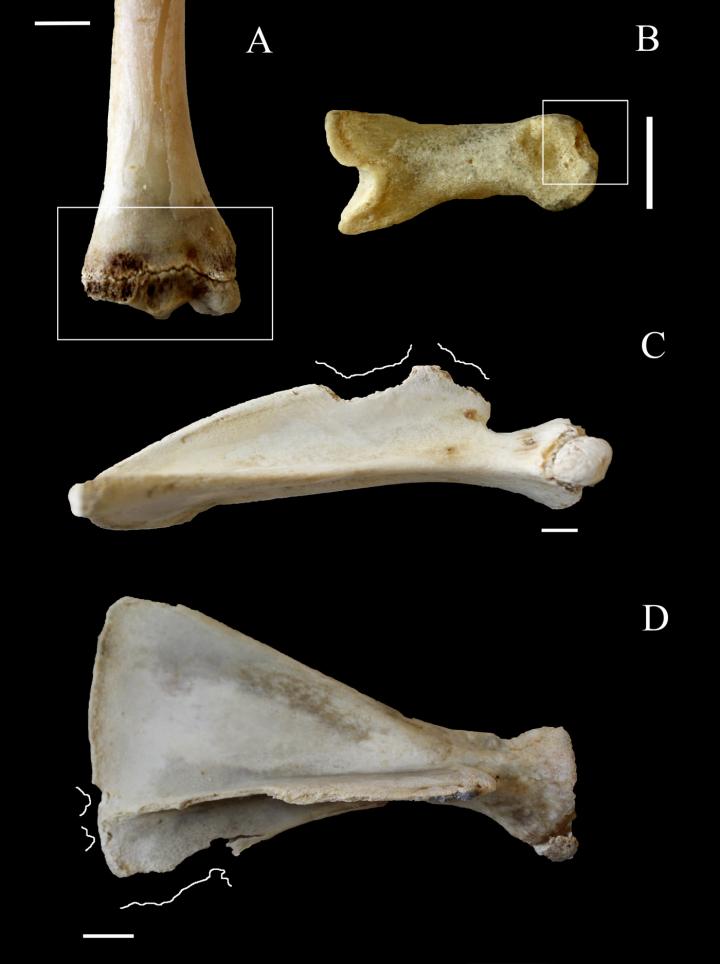
Archaeological sites speak about the everyday lives of people in other times. Yet knowing how to interpret this reality does not tend to be straightforward. We know that Palaeolithic societies lived on hunting and gathering, but the bones found in prehistoric settlements are not always the food leftovers of the societies that lived in them. Or they are not exclusively that.
Farmers are doing a lot more than just feeding the world, they are also offsetting tropical forests declines, capturing nearly 0.75 giga-tons of carbon dioxide every year ---but global warming estimates never account for that. 

In a recent study of girls and women diagnosed with at least one autoimmune disease, vaccination against human papillomavirus (HPV) did not increase the risk of developing another autoimmune disease. In fact, being vaccinated was associated with a slightly reduced risk compared with not being vaccinated.

The study included all 70,265 girls and women between 10 and 30 years of age in Sweden in 2006 to 2010 diagnosed with an autoimmune disease.

Dr. Lisen Arnheim-Dahlstrom, senior author of the Journal of Internal Medicine study, noted that individuals with autoimmune disease are vulnerable to vaccine-preventable diseases.

Source: Wiley

