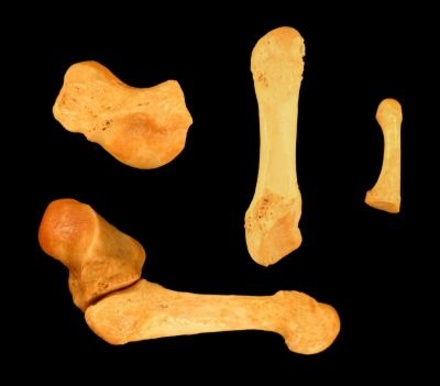




Long before the dinosaurs, hefty herbivores called pareiasaurs ruled the Earth. A detailed investigation of all Chinese specimens of these creatures - often described as the 'ugliest fossil reptiles' - has been published in the Zoological Journal of the Linnean Society.

Pareiasaurs have been reported from South Africa, Europe (Russia, Scotland, Germany), Asia (China), and South America, but it is not known whether there were distinct groups on each of these continents.

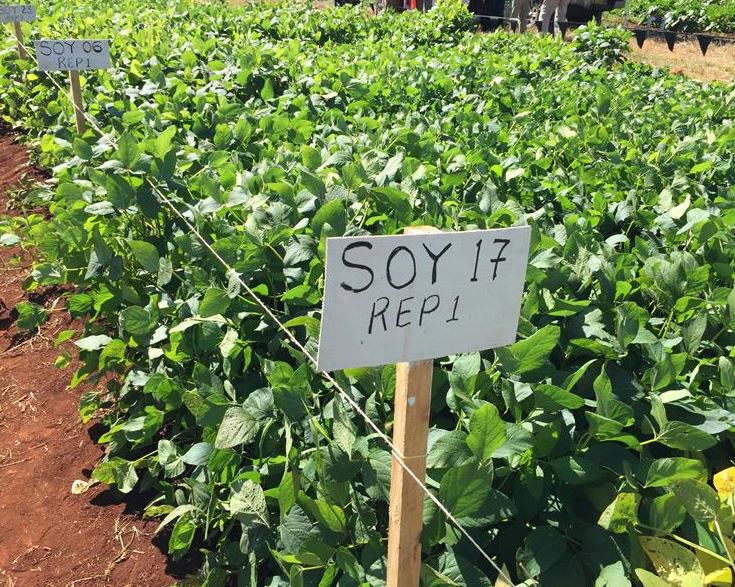
Soybean farmers in the United States can choose from a “candy store” of hundreds of varieties of soybean seed—high-yielding seed with proven performance traits for every region and latitude.

Not so in Africa. For a variety of political reasons, soybean farmers either only have access to a few seed varieties with an unimpressive yield potential, or a few high-yielding varieties for which no performance data exists for their latitude and altitude.

That may change, thanks to a new cultural fortitude which resists being controlled by Europe and a new coordinated soybean variety evaluation program to help give African growers more and better seed options.
Though it was once common to claim that red meat caused heart disease, those turned out to be flawed epidemiological conclusions based on observational studies and things like food diaries. 

A new study finds red meat metabolite levels high in acute heart failure patients, and seeks to re-establish the link between red meat and heart disease using biological markers. Patients with acute heart failure often have high levels of the metabolite trimethylamine N-oxide (TMAO) and red meat is a dietary source. Red meat is a source of L-carnitine which is broken down by gut bacteria to form TMAO. Some papers have linked TMAO with mortality risk in chronic heart failure but no association in acute heart failure has been established.
I (T.D.) am very happy to host here today a guest post by Daniel Hoak, a member of the LIGO collaboration, who participated in the discovery of gravitational waves that made headlines one week ago in the world media. Daniel earned his PhD in 2015 with the LIGO collaboration, and is currently working at the Virgo detector outside of Pisa. Daniel's picture is on the left.


Survey data find that homeopathic purchases are primarily made by a small segment of the U.S. population for common, self-limited conditions such as the common cold or back pain. Though they can't do anything, a survey in the American Journal of Public Health finds that those who report visiting homeopathic practitioners find the use of these products helpful and that they also tend to pay for complementary and integrative medicine (CIM) gimmicks - even more so than users of supplements do.  

They're among the oldest fungi on Earth, yet they could hold the keys to solving some modern problems: Anaerobic gut fungi, being studied by UC Santa Barbara chemical engineer Michelle O'Malley, have proven especially effective at breaking down plant material and unlocking sugars that can be processed into compounds that can be used in a variety of applications.

"We've gotten a global view into how these really old fungi work," said O'Malley, corresponding author of a paper that appears today in the journal Science.

Regions of the brain can "dance" on their own but when they work together they fall in step to a well-timed choreography: according to a study just published in PLOS Biology, when a rat is engaged in a sensory recognition task and needs to make a spatial choice based on previous knowledge, the sensory, motor, and memory regions of the animal's brain (but similar mechanisms are also likely to exist in the human brain), make the rhythms of electrical activity coherent with each other. The study's co-first authors are Natalia Grion and Athena Akrami, research scientists at the International School for Advanced Studies (SISSA) of Trieste, and the study leader is Mathew Diamond, professor of cognitive neuroscience and deputy director of SISSA.

An international team of scientists, led by researchers at University of California, San Diego School of Medicine and the J. Craig Venter Institute (JCVI), have created the first comprehensive, cross-species genomic comparison of all 20 known species of Leptospira, a bacterial genus that can cause disease and death in livestock and other domesticated mammals, wildlife and humans.

Researchers have harvested a robust collection of antibodies from a survivor of the recent Ebola outbreak, and one subset of antibodies was found to be particularly potent for neutralizing the virus in mice. This group of antibodies, which target the stalk of a particular protein in the virus's membrane, could lead to new therapies to fight Ebola. Plasma harvested from one survivor of the 2014 Zaire outbreak demonstrated a particularly strong immune response to the virus three months after infection, and so Zachary Bornholdt et al. analyzed this donor's immune system in greater detail. The authors isolated 349 antibodies from the donor's B cells, which "memorize" pathogens, that work to neutralize Ebola.

Researchers have created a library of fungi-secreted enzymes that breakdown plant biomass, which is no easy feat for man, and mapped out how these enzymes function together. The results could help simplify and lower the costs of biofuel production. Lignocellulose, or plant dry matter, is the most abundant material available on Earth for the production of biofuels, including ethanol. Yet current methods to convert such biomass into fuel require costly pretreatment processes. Fungi within the guts of herbivores are highly efficient at breaking down lignocellulose. Therefore Kevin Solomon et al. took samples of feces of herbivorous mammals with different diets, isolating three previously uncharacterized cultures: Anaeromyces robustus, Neocallimastix californiae, and Piromyces finnis.

