
Imagine living on a world where, every 69 years, the sun disappears in a near-total eclipse that lasts for three and a half years.

That is just what happens in an unnamed binary star system nearly 10,000 light years from Earth. The newly discovered system, known only by its astronomical catalog number TYC 2505-672-1, sets a new record for both the longest duration stellar eclipse and the longest period between eclipses in a binary system.

When Ebola hysteria broke out in the United States in 2014, mainstream media got a little crazy. While one person was afflicted, 28,000 people got heart disease with far less fanfare. Meanwhile, the National Institutes of Health engaged in political theater and claimed it couldn't work on Ebola because they lacked the budget. Science 2.0 noted that they had gotten $300 billion while one tiny company strugged to get money for clinical trials - and it's only help was from the Defense Threat Reduction Agency, rather than the NIH. Nonetheless, Congress gave the NIH more money.

While there is speculation and numerical estimates about what might happen to Antarctica's nation-sized Ross Ice Shelf in a warming climate,  oceanographers have a good idea of what happened to a 100,000-square-mile section within 1,500 years after the last Ice Age ended. 

The Ross Ice Shelf is a vast floating extension of the West Antarctic Ice Sheet, about the size of France,  and the world's largest ice shelf. But it was once much larger, extending farther north and covering the entire Ross Sea.  The present Ross Ice Shelf is about 500 miles wide and several hundred feet thick. Because the ice shelf is already floating, its breakup and melting would not pose a risk of raising global sea level.  

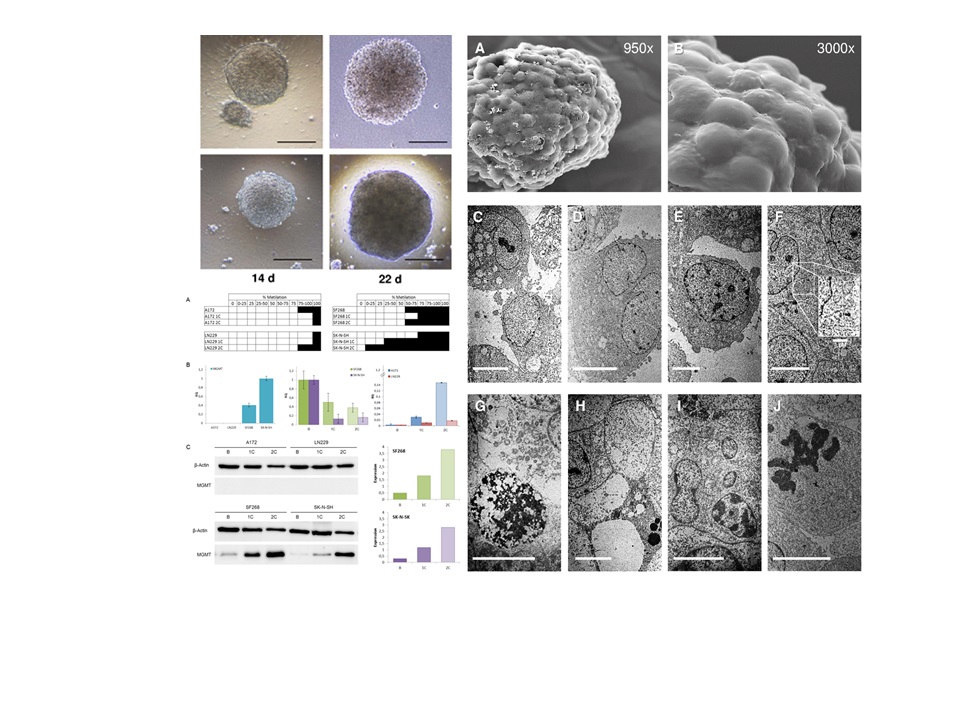
Two small structural elements, called decorin and lumican, could be decisive in the development of a resistance to the drugs currently used for treating glioblastoma multiforme, such as temozolamide.  

Glioblastoma multiforme is the most frequent and aggressive tumor that affects the central nervous system, and it has a low survival rate: less than a year and a half after being diagnosed.

Dissemination of clinical trial results by leading academic medical centres in the United States remains poor, despite ethical obligations - and sometimes statutory requirements - to publish findings and report results in a timely manner, concludes a study in The BMJ this week.

Researchers found that only 29% of completed clinical trials led by investigators at major US academic centers were published within two years of completion and only 13% reported results on the largest clinical trial registry, ClinicalTrials.gov.

They say action is needed to rectify this lack of timely reporting and publication, "as they impair the research enterprise and threaten to undermine evidence based clinical decision making."

The first study to measure the full spectrum of age-related damage to all five senses found that 94 percent of older adults in the United States have at least one sensory deficit, 38 percent have two, and 28 percent have three, four or five.

The study, published in the February issue of the Journal of the American Geriatrics Society, also found that deficits in multiple senses were strongly associated with age, gender and race.

Diabetes describes a disease where the body is not receiving a sufficient supply of insulin. It commonly inflicts the pancreas, the organ responsible for insulin production. More specifically, it inflicts the cells that produce insulin, which are found in the endocrine tissue of the pancreas. However, new results from the Yoshiya Kawaguchi lab suggest the exocrine tissue, which is responsible for digestion, could have a role in treatment. "The pancreas is constituted of two tissues that are structurally and functionally distinct, which makes it unique", says Prof. Yoshiya Kawaguchi of the Center for iPS Cell Research and Application, Kyoto University, which is why most researchers attend the endocrine tissue for diabetes.

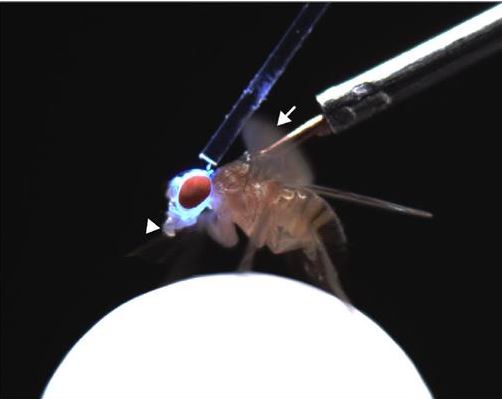
A study of mutant fruit flies discovered that homosexual behavior in groups can be altered by their environment. Specifically, they have shown that the sexual preferences of male fruit flies with a mutant version of a gene can vary depending on whether the flies are reared in groups or alone.

The neurons that express the fruitless (fru) gene "basically govern the whole aspect of male sexual behavior," explains Tohoku University neurogenetics professor Daisuke Yamamoto. Normal male fruit flies tap the abdomen of a female to get a whiff of her sex pheromones before pursuing her to mate. In contrast, males with a mutant version of the fru gene show no interest in females; instead, they set off in vigorous pursuit of other males.

PITTSBURGH, Feb. 17, 2016 - The University of Pittsburgh Graduate School of Public Health was among a dozen sites nationwide to participate in the first clinical trial to show that testosterone treatment for men aged 65 and older improves sexual function, walking ability and mood.

Results of The Testosterone Trials (TTrials), led by the Perelman School of Medicine at the University of Pennsylvania and funded by the National Institutes of Health (NIH), will be published in tomorrow's New England Journal of Medicine.

LOS ANGELES -- As men age, their testosterone levels decrease, but prior studies of the effects of administering testosterone to older men have been inconclusive. Now, research shows that testosterone treatment for men over 65 improves sexual function, walking ability and mood, according to a study published in the New England Journal of Medicine by a team of researchers that included lead researchers from Los Angeles Biomedical Research Institute (LA BioMed).
