

A new study strengthens growing evidence that Mycoplasma genitalium (MG) is a sexually transmitted infection (STI). The findings are recently published in the International Journal of Epidemiology.

Analyses of over 4500 of urine samples from Britain's third National Survey of Sexual Attitudes and Lifestyles (Natsal-3) showed that MG was prevalent in up to 1% of the general population aged 16-44, who had reported at least one sexual partner. Prevalence was much higher in those who had reported more than four sexual partners in the past year -- 5.2% in men and 3.1% in women. Absence of the infection in over 200 16-17 year olds who had not had vaginal, anal, or oral sex provided further evidence that MG is transmitted sexually.

Human remains dating back to the Late Upper Palaeolithic period over 13,000 years ago has revealed a previously unknown "fourth strand" of ancient European ancestry. 

This new lineage stems from populations of hunter-gatherers that split from western hunter-gatherers shortly after the 'out of Africa' expansion some 45,000 years ago and went on to settle in the Caucasus region, where southern Russia meets Georgia today.

Here these hunter-gatherers remained for millennia, isolated as the Ice Age culminated in the last 'Glacial Maximum' some 25,000 years ago. They weathered the cold in the relative shelter of the Caucasus mountains until eventual thawing allowed movement and brought them into contact with other populations, likely from further east. 

A recent paper examined the changing nature of family living situations. University of Melbourne
Associate Professor Cassandra Szoeke and Katherine Burn, from the University's Faculty of Medicine, Health and Dentistry Sciences, examined both 'boomerang kids' (those who return home) and 'failure to launch' kids (those who never left).

The project reviewed 20 studies involving 20 million people worldwide and was published in Maturitas.

The research shows:

  • The shifting economic climate and changes in social norms were driving the phenomenon of kids staying at home for longer.

MINNEAPOLIS - Brain scans of people in a coma may help predict who will regain consciousness, according to a study published in the November 11, 2015, online issue of Neurology®, the medical journal of the American Academy of Neurology. The study looked at connections between areas of the brain that play a role in regulating consciousness.

It may seem like bees are suddenly all the rage in environmental fundraising campaigns today but they have been important to human culture - for almost as long as modern farming, humans have been interested in bees and the products they produce. 

A new analysis of maternal mortality worldwide conducted by the United Nations found that the maternal mortality ratio saw a relative decline of 43.9 percent during the 25-year period of 1990-2015. Details appear in an early online issue of The Lancet.

The study analyzed levels and trends in maternal mortality in 183 countries and found that the maternal mortality ratio declined from 385 deaths per 100,000 live births in 1990 to 216 in 2015. They also saw great variability in progress toward reducing mortality. 

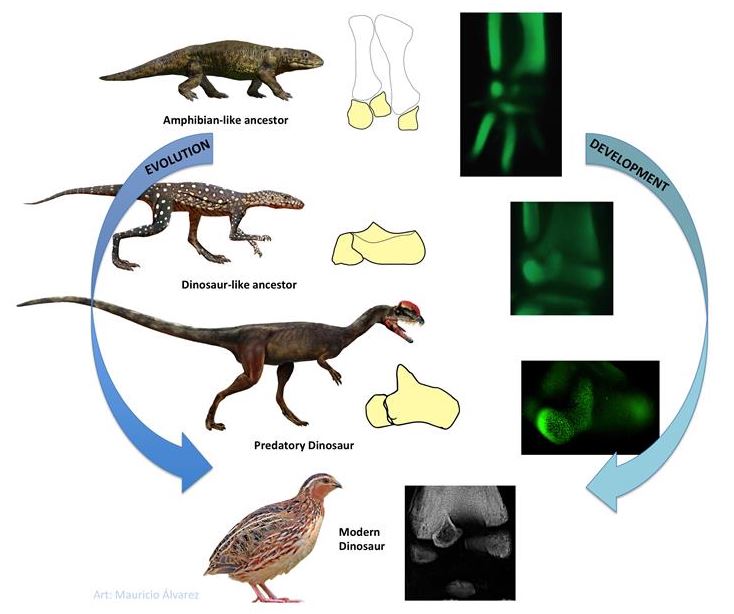
In the 19th century, Darwin’s most vocal scientific advocate was Thomas Henry Huxley, who is also remembered as a pioneer of the hypotheses that birds are living dinosaurs. He noticed several similarities of the skeleton of living birds and extinct dinosaurs, among them, a pointed portion of the anklebone projecting upwards onto the shank bone (aka drumstick).

This “ascending process” is well known to specialists as a unique trait of dinosaurs. However, until the late 20th century, many scientists were doubtful about the dinosaur-bird link. Some pointed out that the ascending process in most birds was a projection of the neighbouring heel bone, rather than the anklebone. If so, it would not be comparable, and would not support the dinosaur-bird link.

In previous posts, I've discussed the concept of protein leverage. This is an idea, put forward by two Australian scientists, Stephen Simpson and David Raubenheimer that many species, including humans, regulate appetite with a higher sensitivity to protein than other nutrients. We each need some amount of calories, carbohydrate, fat and protein each day. Simpson and Raubenheimer showed through a host of experiments that it seems we are willing to overeat energy (excess carbs or fat) in order to get enough protein.

PHILADELPHIA, PA, Nov. 9, 2015 - Self-weighing can be a useful tool to help adults control their weight, but for adolescents and young adults this behavior may have negative psychological outcomes. Researchers from the University of Minnesota tracked the self-weighing behaviors of more than 1,900 young adults as part of Project EAT (Eating and Activity in Teens and Young Adults) and found increases in self-weighing to be significantly related to increases in weight concern and depression and decreases in body satisfaction and self-esteem among females.

Would your ability to resist a tantalizing cookie improve if you had to wait a few seconds before you could reach for it? The idea that natural urges 'die down' with time seems intuitive, but new research shows that it's being reminded about what not to do, not the passage of time, that actually helps young children control their impulsive behavior.

The findings are published in Psychological Science, a journal of the Association for Psychological Science.


