


The Sea of Galilee, located in the North of Israel, has numerous significant archaeological sites and an ancient structure underneath the waves adds to its mysteries.

The cone-shaped monument, approximately 230 feet in diameter, 39 feet high, and weighing an estimated 60,000 tons, was found while conducting a geophysical survey on the southern Sea of Galilee, reports Prof. Shmulik Marco of TAU's Department of Geophysics and Planetary Sciences. 

While the universe is littered with planets, comets and lots of other rocky bodies, how tiny grains of dust in the disc around a young star grow bigger and bigger, to eventually become rubble and even boulders well beyond a meter in size, is a mystery.

Computer models suggest that dust grains grow when they collide and stick together. However, when these bigger grains collide again at high speed they are often smashed to pieces and sent back to square one. Even when this does not happen, the models show that the larger grains would quickly move inwards because of friction between the dust and gas and fall onto their parent star, leaving no chance that they could grow even further.

I’ve already mentioned the nonsensical paper “published” in (surprise, surprise) arXiv in which the authors claim that the origin of life occurred long before the origin of the Earth based on the application of Moore’s Law to DNA.

I won’t go into all the reasons that this is silly — for that, you can see critiques by PZ Myers and Massimo Pigliucci. Suffice it to say that the data, the analysis, and the interpretation are all problematic.

Edward Joseph Snowden, a 29 year-old systems administrator, the whistleblower behind the NSA surveillance revelations and already called biggest scandal of them all, wants transparency; so might I. But is transparency even possible, and what does transparency entail?


Vincent J. Torley in “Bad science by Dr. Victor Stenger, arguing in the cause of atheism” argues well about quite difficult and controversial physics.

Law, Lies and Logic


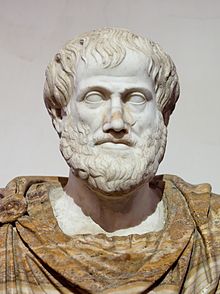
The foundations of logical science, and of that part of law which concerns itself with logic rather than rhetoric, were laid by Aristotle, in 350 B.C.E.

His analysis of reasoning with demonstrable facts, as against appeals to "reason", came in a golden age of rhetoric.  He noted that the tools of rhetoric had not been built from an analysis of how language is used, but had been built piecemeal.  He, on the other hand, built his tools of logic from an observational foundation.

Humans have long been yearning for an immortal life and everlasting youth—to continue living freely without having to confront death. A renowned novel written by Mary Shelley, Frankenstein, reveals this desire for immortality.

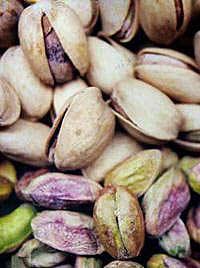
A team from the School of Family and Consumer Sciences at Eastern Illinois University have discovered a reliable method of persuading people to eat up to 50% less pistachio nuts – just leave them in their shells.
Statistics data analysis is one of those things that experimental physicists learn along the way. It is not a topic usually included in the curriculum studiorum of physics students at Universities: only few basic ingredients are taught during laboratory courses, and not much is added to that during a typical Ph.D. program.

One usually learns the most common tools to fit histograms, combine measurements, estimate uncertainties on the field, as these things are always needed to produce publishable physics results. But several key statistical concepts often remain fuzzy and obscure in the mind of a large fraction of experimental physicists throughout their career. I know this because this happened to me, too - for quite a few years after my graduation.

