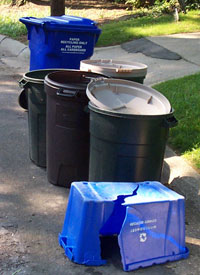






Move over Flight of the Bumblebee. Hello Flight of the Butter Tubs.

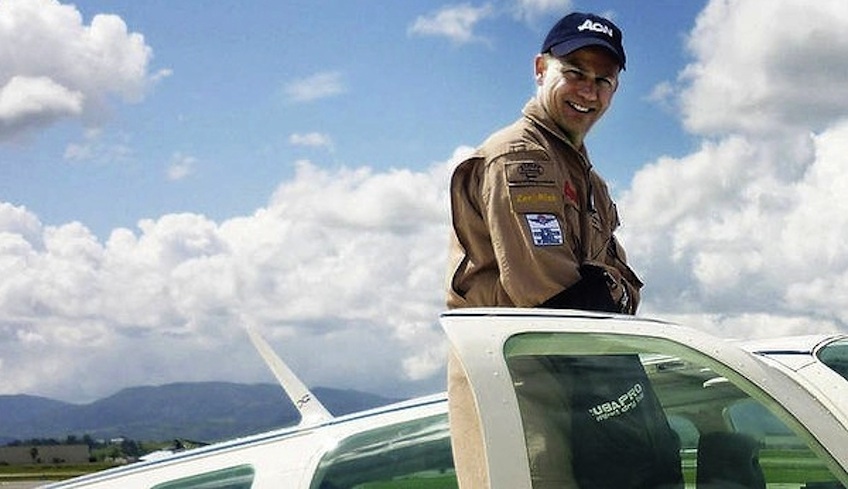
That’s what you could call the daring 12,000 mile journey that Australian pilot Jeremy Rowsell is planning for early next year, when he will fly a single engine plane from Sydney to London on fuel that’s neither gasoline, kerosene nor any other traditional aircraft propellant.

Oh, it must be aviation biofuel? Or perhaps it’s some of that discarded cooking oil that has given lift to a few recent aerial stunts?

Wrong!

ExAblate(R)MRI-guided Focused Ultrasound is effective in reducing pain from bone metastases in patients who could not undergo radiation therapy. Patients reported significant improvement in well-being, function, and reduction in medication use.

700 scientists and academicians have signed petitions calling on French researcher Gilles-Eric Seralini to release research data he claims is evidence for health problems associated with biotech crops.

The petitioners are from every continent and represent more than 40 countries. They are urging transparency in the promotion of sound science on important issues of public health and join  calls by regulatory bodies including the European Food Safety Authority (EFSA) and Food Standards Australia New Zealand (FSANZ) to Seralini and his collaborators at the Committee for Research&Independent Information on Genetic Engineering (CRIIGEN) to provide the research data to back up their allegations of health and safety risks links to GMOs.

One morning last March, engineers at General Electric’s Nela Park research lab in Cleveland, Ohio, opened a century-old time capsule hidden in a corner stone of Building 307. Inside the cavity and beneath a layer of sand was a standard 40-watt Mazda incandescent bulb made at the time of Thomas Edison.

The engineers brushed off the dirt, screwed the lamp into a socket, and slowly powered it on. The bulb’s soft yellow glow was like a faint echo from the Big Bang that set GE on course to become a global industrial powerhouse.

Which is the better use for a plot of land: growing crops to feed nations or growing crops to power them with biofuel? The answer to this question is, perhaps not surprisingly, complex and turns on the definition of “surplus” land, or idle, marginal spaces. Now, an interdisciplinary group of researchers from Europe and the US has decided to nail these concepts.

Despite the heated “food versus fuel” debates, researchers noted that there is no common language or guidelines that brings together this emerging field. Moreover, no one seemed to agree on what, exactly, defines surplus land.

There is no clear-cut definition of “surplus” land

It's a modern technology world. If you were running for president in 2008, you could just forgo public financing of your campaign and stick your opponent with a hard cap of half as much advertising money as you have - then you could spend as much money yourself as both candidates combined spent in 2004.

But in 2012 everyone has unlimited money so outspending the other guy with campaign ads won't work again. Instead, politicians are spending money on data mining, so they know what your hot buttons are.
An assembly of thousands of nano-machines has produced a coordinated contraction movement - like that of muscle fibers, and it even extended to around ten micrometers, like the movements of muscular fibers.

The work provides an experimental validation of a biomimetic approach that has been conceptualized for years in nanoscience and the researchers believe this broadens applications in robotics, information storage and obviously artificial muscles themselves.
Physics professor Paul Frampton of UNC Chapel Hill is sitting in an Argentine jail, busted for trying to smuggle out 2 kilos of cocaine, but that hasn’t stopped him from asking for a raise on his $107,000 annual salary - raise as in he wants it doubled.

Hey, he has tenure. And a lot of citations.

Frampton is in a spat with the school because he says they are improperly withholding his salary. They contend his being in an Argentine prison cell for virtually all of this year means he can't possibly be doing any work, even for a tenured professor.
Dogs are susceptible to contagious yawning just like people, says an article in Animal Cognition, but only after they get older. Dogs, like humans, show a gradual development of susceptibility to contagious yawning and the new paper says dogs catch yawns from humans. But Only dogs above seven months of age catch these human yawns - younger dogs are immune to the contagion.

Contagious yawning has been researched in humans, adult chimpanzees, baboons and dogs, some speculate it can be used as a measure of empathy. Empathy, mimicking the emotional responses of others, is difficult to measure directly, but contagious yawning allows assessment of a behavioral empathetic response, the Swedish researchers say.