Secondary organic materials (SOM) in the atmosphere form two distinct types, liquids and jellies, and these airborne particles have begun to react with gases in the atmosphere. In the last 20 years' research and climate modeling, these SOM particles have been assumed to drift as liquids. In a liquid phase, the organic materials would absorb other compounds like ammonia or ozone very easily and then progress through a series of chemical changes, known as chemical aging, to form particles that reflect or absorb sunlight, or form clouds.
You may have heard of superfluids and superconductors, so why not supersolids? In 2004 Moses Chan and Eunseong Kim thought they had discovered that super-cooled helium ice could essentially walk through walls – a defining characteristic of a supersolid.
The experiment was to make a cylinder with tiny nanopores in its walls, fill the pores with solid helium ice, suspend the cylinder from a torsional spring, and then give it a little twist. Like a kid on a swing set, the cylinder started rotating back and forth, with a frequency depending on its mass. As they supercooled the cylinder even further, they saw that the oscillation frequency changed, as if it had less mass!
Even today, landmines planted as far back as World War II are still being discovered, posing a serious threat to civilians in 69 countries worldwide. Approximately 70 people are killed every day as a result of a landmine explosion in accidents that should be avoidable; a lack of efficiency in clearing out areas which have been covered with landmines and the difficulty of detecting hidden and buried landmines make them a persistent threat to innocent men, woman, and children.
To people who are brand new to the culture wars, California's Proposition 37 might be scary. It has demonstrated that the world is a very small place, lies and hysteria can travel around the world and be perpetuated by the blogosphere, the Tweety pages and the Faceyspaceys well before there can be any fact checking or even common sense checking.
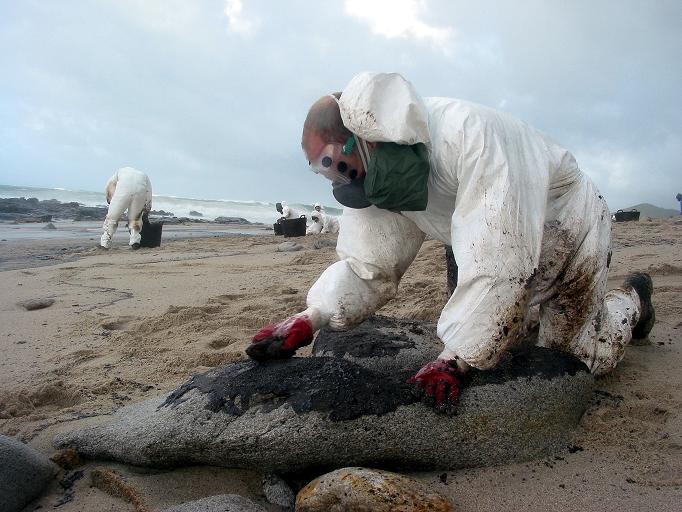
Next month will be the ten year anniversary of the Prestige sinking, which caused one of Spain's largest ecological disasters. The oil spill reached the coasts of Galicia and the rest of the Cantabrian coast, right up to the Landes area of France and Portugal. Thousands of people aided in the cleaning of the contaminated beaches and were exposed to the fuel for prolonged periods.
An experiment carried out on rodents exposed to fuel similar to that of the Prestige tanker oil spill concluded that inhalation of the fuel causes damage to genetic material. They say the results could be used to help people who carry out the industrial cleaning of coasts.
The best reasons to allow hunting in animal-heavy states are that they get hit by cars a lot and they starve. When it comes to cars, some areas are going to be a lot more dangerous than others and it is not a question of how many animals are there but simply where the road is. They have done things their way for 6,000 years and don't want to change, regardless of what automobiles might like.
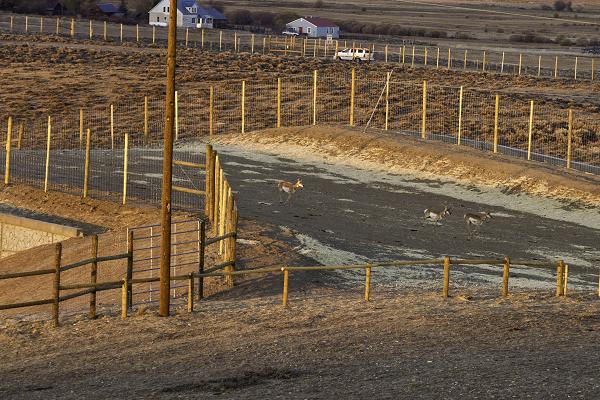
But the animals will go over. Case in point: The Wildlife Conservation Society (WCS) has announced the successful use of newly constructed overpasses that provide safe passage for thousands of migrating pronghorn over U.S. Highway 191 in Trapper’s Point, Wyoming, and surrounding areas.
Greenland has areas of very clean water, the like of which just does not exist in developed nations, but also highly polluted water, making it an excellent location for studying the environmental impacts of chemicals
More than 10,000 tons of antibiotics are consumed in Europe each year and an estimated 30-60% of those pass through animals and humans completely unchanged. These different substances can then reach the ocean via hospitals, municipal sewage, fish farms and run-off from agriculture and landfills.
A research group from the University of Gothenburg wanted to examine the potential effects of accumulating antibiotics in the seabed, so off to Greenland they went.
New research findings show that immune system development is affected by gravity changes when astronauts are exposed to stresses during launch and landing which disrupts their body’s natural defenses against infection. Changes to the immune system need to be investigated before astronauts undergo longer space missions.
Researchers looked at how antibody production is affected when animal development occurs on board a space station and which part of space travel has the greatest impact on antibodies, which are the proteins that the immune system uses to protect us from diseases.
See, this is what I really like of a blog: when readers contribute significantly!
Fusion is the super-clean energy we would be thinking about if government-controlled energy science were about the best long-term solutions and not political pet projects - alas, its share of the $72 billion spent on alternate energy the last three years is negligible.
But something is better than nothing and some recent research revealed at the International Atomic Energy Association's Fusion Energy Conference in San Diego may be worth getting excited about.