
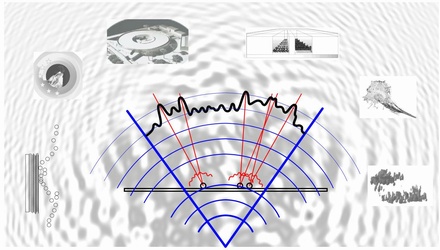



Is it feasible to use dead stars to navigate spacecraft in deep space? Long-term space travel may be a pipe dream outside science fiction math but people inside science are at least thinking about how to make navigation possible. 

When temperatures get low, close to absolute zero, some chemical reactions still occur at a much higher rate than classical chemistry says they should – in that extreme chill, quantum effects enter the picture. Researchers have now confirmed this experimentally, providing insight into processes in the intriguing quantum world in which particles act as waves and perhaps also explaining how chemical reactions occur in the vast frigid regions of interstellar space.

It is clear from many discussions that there is a split between things people consider to be "natural" versus those that are the products of technology, or man-made.  Obviously no one would consider a computer to be natural, nor would anyone suggest that a tree is man-made.  These differences are intuitive.
Researchers from the University of Southampton have published a study in which they argue that crowdsourcing information can be improved through use of incentives.  In "Making crowdsourcing more reliable" Dr Victor Naroditskiy and Professor Nick Jennings and others propose to incentivize crowdsourcing tasks to improve the verification of credible contributors.
Is karaoke a passing fad? Kevin Brown PhD. Associate Professor of Theatre History, Theory, Criticism, Performance Studies, New Media, Non-Western Theatre, and Popular Culture at the University of Missouri, US. believes not. For his doctoral dissertation, he conducted a two-year ethnographic study of karaoke in America, a portion of which is: ‘Liveness Anxiety: Karaoke and the Performance of Class‘, and is published in Vol. 1, Issue 2, of the academic journal Popular Entertainment Studies.

“It is very tempting to dismiss karaoke as a passing fad.”

explains the professor.

The biggest feel-good fallacy perpetuated by some in science media today is that "the right", whoever they are, is anti-science, while "the left", whoever they are, is pro-science. 

It's exactly the opposite.  The right historically has been more pro-science than anyone since World War II, they just recently adopted more positions labeled anti-science as science academia skewed left. 40 years ago conservatives were the most pro-science of any group and 40 years ago there was also political parity in science academia; science was a politically agnostic endeavor for the common good, only the humanities had been hijacked by partisans.
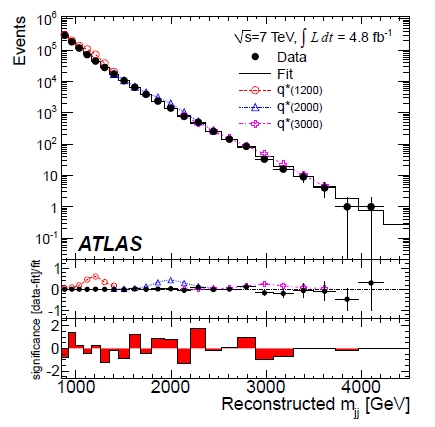
Two papers describing results of searches for high-mass resonances decaying into jet pairs have appeared on the arxiv this week. They are authored by the CMS and ATLAS collaborations, and they both report lower limits on the mass of hypothetical particles predicted by several new physics signatures. Both collaborations base their results on the analysis of their full 2011 datasets.
Body hair in mammals is typically thought to have evolved to keep us warm in colder prehistoric periods but in elephants it may do the opposite.  A new study contends epidermal hair may have evolved to help the animals keep cool in the hot regions they live in.

Low surface densities of hair can help dissipate heat but the biological and evolutionary significance of sparse skin hair is not well known. The authors of the new paper studied the effects of skin hair densities in Asian and African elephants on thermoregulation in these animals, and concluded that elephant skin hair significantly enhances their capacity to keep cool under different scenarios like higher daytime temperatures or less windy days. 
Synthetic biology uses genes as interchangeable parts to design cellular circuits that can perform new functions, such as sensing environmental conditions. But their complexity is limited by a critical bottleneck: the difficulty in assembling genetic components that don't interfere with each other.

Unlike electronic circuits on a silicon chip, biological circuits inside a cell cannot be physically isolated from one another. Because all the cellular machinery for reading genes and synthesizing proteins is jumbled together, researchers have to be careful that proteins that control one part of their synthetic circuit don't hinder other parts of the circuit.
Researchers say that a form of oxytocin — the hormone correlated with human love — has a similar effect on fish, suggesting it is a key regulator of social behavior that has evolved and endured since ancient times.

The findings may help answer an evolutionary psychology question: why do some species develop complex social behaviors while others spend much of their lives alone? To find some clues, they examined the cichlid fish Neolamprologus pulcher, a highly social species found in Lake Tanganyika in Africa. These cichlids are unusual because they form permanent hierarchical social groups made up of a dominant breeding pair and many helpers that look after the young and defend their territory.


