A gene mutation dating back to 11,600 B.C. is the second oldest human disease mutation discovered so far. The investigators described the mutation in people of Arabic, Turkish and Jewish ancestry, which causes a rare, inherited vitamin B12 deficiency called Imerslund-Gräsbeck Syndrome (IGS).
The mutation is found in different ethnic populations but it originated in a single, prehistoric individual and was passed down to that individual's descendants. The researchers say this is unusual because such "founder mutations" usually are restricted to specific ethnic groups or relatively isolated populations.
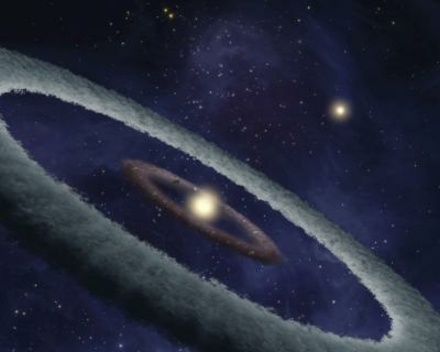
Galaxies are theorized to have massive black holes at their centers but the one in the Milky Way is the only supermassive black hole close enough for astronomers to study in detail. A recent violent encounter is a unique chance to observe how a black hole gulps gas, dust and stars as it grows ever bigger.
The normally quiet neighborhood around the massive black hole at the center of our Milky Way Galaxy is being invaded by a gas cloud that is destined in just a few years to be ripped, shredded and largely eaten. The Chandra X-ray satellite has already scheduled its largest single chunk of observation time in 2012 near the Milky Way's central black hole.
To recap: in 2011, the California market squid fishery caught tons of squid (118,000 tonnes to be exact) and was
all set to close. However, some fishers noted the continued abundance of squid in the ocean and petitioned to
keep catching.
Then Oceana spoke up on behalf of the squid, with an argument neatly summarized by Geoff Shester, Oceana's California program director, as
Protect Calamari, Save the Whales:
Scientists aren't sure what causes clogs in flowing macroscopic particles, like corn, coffee beans and coal chunks. But new experiments suggest that when particles undergo shear strain, they jam sooner than expected.
Shear strain is sort of like cupping sand between your hands, and then, without changing the width between them, moving one hand forward and the other hand backward. Not much sand flows between your hands with a force like this.
Type Ia supernovae, the extraordinarily bright "standard candles" astronomers use to measure cosmic growth which led to the theory of dark energy in 1998 and 13 years later to a Nobel Prize "for the discovery of the accelerating expansion of the universe" have remained mysterious – how they detonate and what the star systems that produce them actually look like before they explode - has been unknown.
Green solutions have made lofty claims in the last few decades but they have been optimistic hope more than reality. Simulations from the University at Buffalo may change that; they say it's possible for drivers to cut their tailpipe emissions without significantly slowing travel time.
In computer models of traffic in Upstate New York's Buffalo Niagara region, they found that green routing could reduce overall emissions of carbon monoxide by 27 percent for area drivers, though they did it by increasing the length of trips an average of 11 percent.
Particle physics experiments usually invest a considerable part of the time used to produce a measurement in the task of determining the corresponding uncertainty on the estimate, or -when a new effect is observed (say a quantity is measured away from zero, when zero would be the "null hypothesis", predicted by the current model)- estimating the statistical significance of the observation.
It's two weeks until Christmas and if you are a Science 2.0 reader, that means it is at least time to think about shopping for a Christmas gift. Demographically, not a lot of you were lining up to gratefully overpay for Apple's latest offering or whatever else obedient Oprah viewers are expected to buy on Black Friday.
Here are three nifty ideas that are science related for your consideration, in three age ranges. If you just like gadgets you can check out the Top Gadgets of 2011 instead.
For The Young
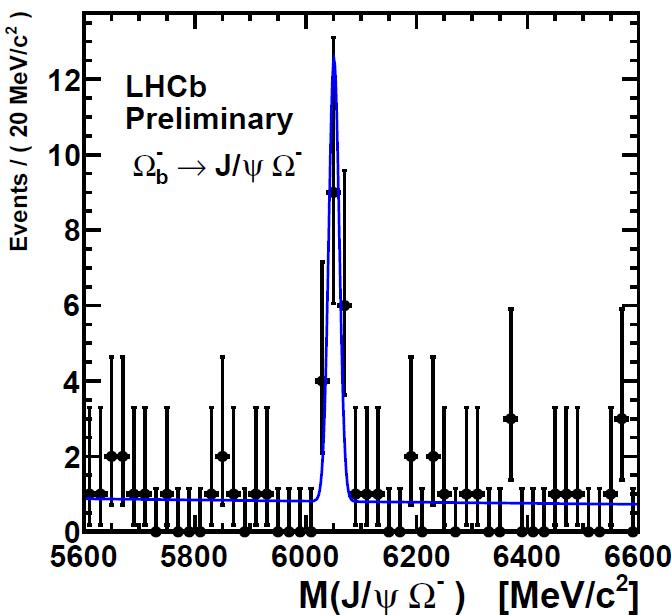
Another confirmation of correct evaluation of controversial HEP measurements awaited me just after the Higgs evidence was presented at CERN. I am sort of embarassed by this compulsory self-promotion, but this is my blog so I will excuse myself ;-)
So the story is the following... Some of you might still remember the controversy over the Omega b discovery, at the Tevatron a couple of years ago.
So much sound and fury over the Higgs Boson, signifying what? A complete understanding of the fundamental constituents of the world in which we live? Of the universe of which we are an integral part? No … and yes.
High-energy physicists at CERN, the European Center for Nuclear Research, announced this week they are closer than ever to detecting the apparently hallowed boson — or possibly it is called God Particle merely for mass consumption. Its quantification would at once provide breathtaking insights into the infinitesimal domain affecting Earthly life and to the composition of the entire universe, a broad range, indeed.
Rewards of Basic Science