Cornelius McGillicuddy, Sr., better known as Connie Mack, once said that pitching is 75 percent of baseball. He was speaking from experience, not data, and looks can be deceiving, as people who think a curve ball move two feet can attest, but science is about understanding the world according to data, and that includes baseball. The data say he is wrong, according to a new analysis by a University of Delaware professor. Pitching is just 25 percent of a team's success.
A recent study fed rats homobrassinolide, found in the mustard plant, which produced an anabolic effect, and increased appetite and muscle mass, as well as the number and size of muscle fibers.
So maybe you can get ripped by gardening a little more. Homobrassinolide, a type of brassinosteroid found in plants, given orally to rats triggered a response similar to anabolic steroids, with minimal side effects. In addition, the research found that the stimulatory effect of homobrassinolide on protein synthesis in muscle cells led to increases in lean body mass, muscle mass and physical performance.
Efforts have long been underway to make the Système Internationale d'unités (SI Units) more accurate. If you know your science history, SI units were devised during the French Revolution as an alternative to the British System. And so the French Academy of Sciences was tasked with the new system and promptly got the whole thing wrong.
But SI units caught on and so efforts have been ongoing to make them more accurate. Scientists like the idea to relate all of the unit definitions to fundamental constants of nature, making them stable and universal and giving them closer links to each other and the quantities they measure.
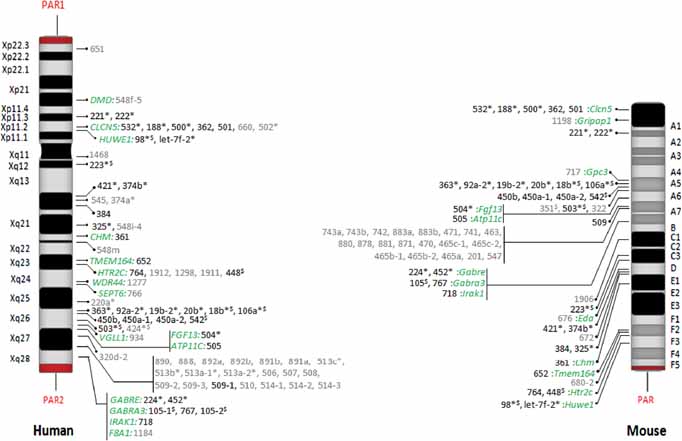
Well, according to a new study, blame the micro RNAs (miRNAs) linked to the X chromosome. The study, published in BioEssays, investigated the observation that women live longer than males and are more able to fight off shock episodes of sepsis, infection or trauma. Thus, the researchers from Ghent University, Belgium, decided to take a look at the X chromosome and the miRNAs linked to it.

Tomorrow is the last day on duty. For twenty-six years the Tevatron collider, the four-mile-long accelerator of the Fermi laboratory in Batavia (IL), has provided the CDF and DZERO experiments with proton-antiproton collisions at 1.8 and then 1.96 Tera-electron-Volts, allowing the investigation of fundamental physics at the highest available energy.
I received today a very nice video which commemorates the Tevatron collider. The video was produced by a colleague, Rob Snihur, together with an artist friend of his, Maria Scileppi. I hope you like it! A
text is also available on Maria's site.
Drawn by the newly arrived throngs of Humboldt squid in Southern California, an underwater photographer
hopped in the water with them to snap some photos.

They're smallish for Humboldts, but note how he's grabbing this one--and he didn't get bitten, not even a little bit!
Of course, Schwartz was not without trepidation, especially when he snapped this shot:
Where would we be without relativity? Observations in astronomy are based on light emitted from stars and galaxies and the light will be affected by gravity, according to the General Theory of Relativity, which is actually quite special, despite its name.
Observations are one thing, but interpretations in astronomy are based on the correctness of the theory of relatively, yet it has never been possible to test Einstein's theory of gravity on scales larger than the solar system.
Astrophysicists at the Dark Cosmology Centre at the Niels Bohr Institute say they have managed to get much bigger - 'grotesquely' bigger in their terms - and measure how the light is affected by gravity on its way out of galaxy clusters.
The first video of tool use by a fish has been published in the journal Coral Reefs by Giacomo Bernardi, professor of ecology and evolutionary biology at the University of California, Santa Cruz.
In the video, an orange-dotted tuskfish digs a clam out of the sand, carries it over to a rock, and repeatedly throws the clam against the rock to crush it.
Tool use was once considered an exclusively human trait, but Jane Goodall's reports of tool use in chimpanzees in the 1960s changed that. Since then, many other animals have been observed using tools, including various primates, several kinds of birds, dolphins, elephants, and other animals.
Ice cream is big business in America. Sales of ice cream and frozen desserts top $20 billion annually, according to the International Dairy Food Association, which is about 1.6 billion gallons per year or 23 quarts per person per year. It's consumed by nearly 90 percent of households (vegans - bah). According to the National Ice Cream Retailers Association, ice cream consumption grew nearly 25 percent from a year ago and nearly 10 percent of American milk goes into frozen treats.
It's too late for this summer, but some time soon you could be enjoying an experimental ice cream that starts as one flavor then shifts to another before being swallowed.
It's not vanilla and chocolate mixed, it's vanilla transformed.