Planetary waves, named Rossby waves because they were discovered by
Carl-Gustav Rossby in the 1930s,
are intriguing natural phenomena that travel from East to West.
A new NASA study suggests two of the most destructive natural disasters of 2010 were completely natural and closely linked even though they occurred 1,500 miles apart.
As solar power continues to grow in popularity, science issues like pollution are being swept under the rug in hopes future technology will solve it before it becomes a crisis, much like with ethanol, MTBE, PBDEs and other once-popular efforts environmental lobbyists spent millions promoting.
Chris Cherry, assistant professor in civil and environmental engineering at University of Tennessee-Knoxville, says solar power's reliance s on lead batteries has the potential to release more than 2.4 million tons of lead pollution in China and India, a pattern likely to be repeated throughout much of the developing world, such as in Africa.
It seems trees have the ability to tap into nitrogen found in rocks, boosting the trees’
growth and their ability to pull more carbon dioxide from the
atmosphere.
That's good news in the short term. Carbon dioxide is the greenhouse gas most are worried about so that means nitrogen in rocks can significantly affect how rapidly the earth will warm in
the future, the U.C. Davis researchers say.
Nitrogen, found in such vital molecules as DNA and protein, is necessary for all life and is used worldwide as a fertilizer for food crops. It is the nutrient that most often limits plant growth in natural ecosystems.
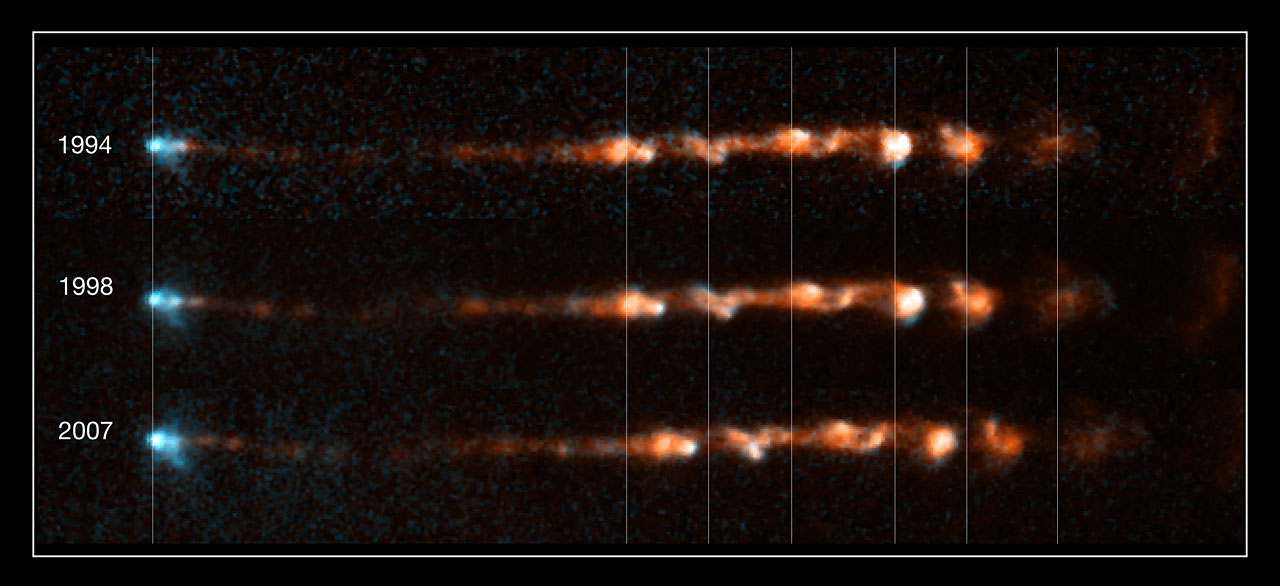
1350 light-years from Earth, near the Orion Nebula, a bright, clumpy jet called called Herbig-Haro 34 (HH 34) ejected from a young star has changed over time - a signpost of star birth.
Stars aren't shy about sending out birth announcements. They fire off energetic jets of glowing gas travellng at supersonic speeds in opposite directions through space. Although astronomers have looked at still pictures of stellar jets for decades, now they can watch movies, thanks to the NASA/ESA Hubble Space Telescope.
Increasing resistance of pathogens to antibiotics is an important issue. The hunt for new antibiotics/antimicrobials is on. For example, the 10X’20 Initiative aims to develop 10 new antimicrobial drugs by 2020. But where will these new drugs come from?
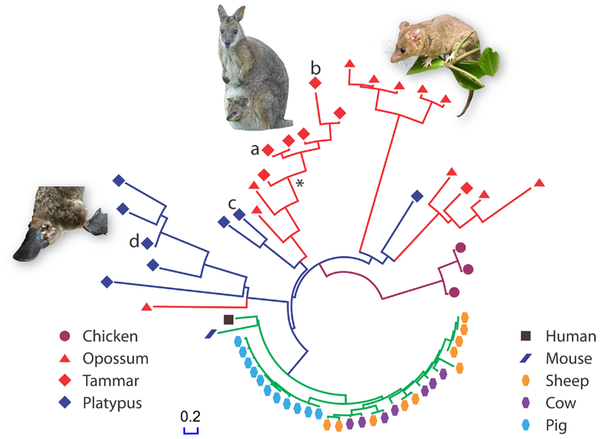
The recent efforts in sequencing marsupial genomes might prove helpful. Since the young of marsupials and monotremes are relatively little developed at birth, and have to survive outside of the sterile environment of the uterus, their immune system has to be capable of dealing with potential pathogens in their environment.
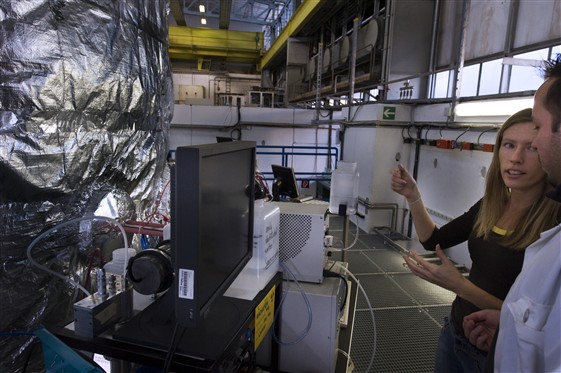
When I saw some preliminary results in Nature about CERN's CLOUD experiment a while ago, I didn't regard it as interesting enough to write about.
Seriously, does anyone not think the Sun impacts the climate by now?
I know, I know, in the 1990s it was all carbon dioxide, but it's no longer 2006 - anyone gullible enough to believe the French and the Germans insisted on a 1990 date in the Kyoto protocol based on science, rather than the fact that Germany simply had to close a few post-unification Soviet-era factories from World War II and France had already brought more nuclear plants online to more easily meet their goals, well, they were too stupid to keep their money anyway.
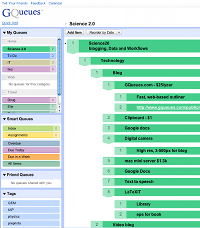
To celebrate a half year of effort, this is a blog on weekly blogging. Three tangibles are created by the process: the Science20 blog, a YouTube videoblog, and a chapter in a book of blogs (still under development). I will go through my technical suite used in production. The 20-25 hours per week will be broken down. Some data on the level of interest will be shown. Finally, the rewards of this work will be reviewed.
The LA Times has a
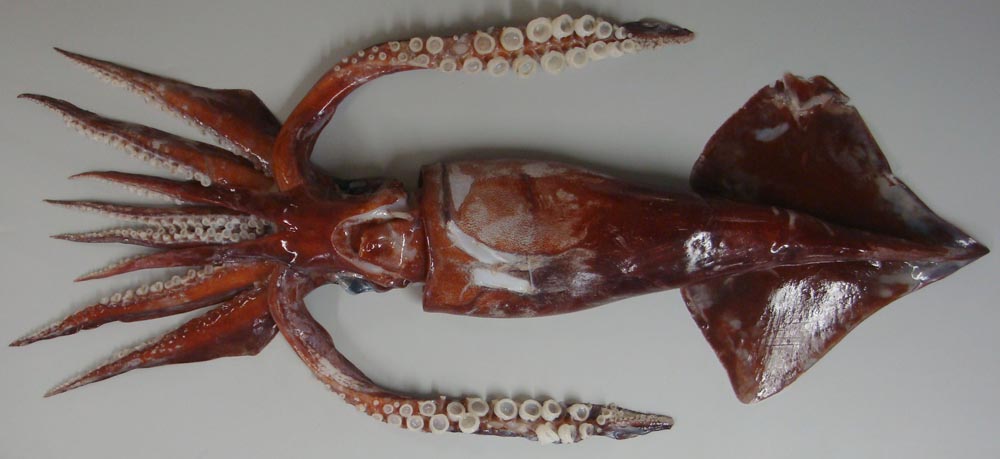
really wonderful story about a small island off the coast of South Korea and an old woman who makes her living there by selling dried squid.
I can't be sure what species of sq
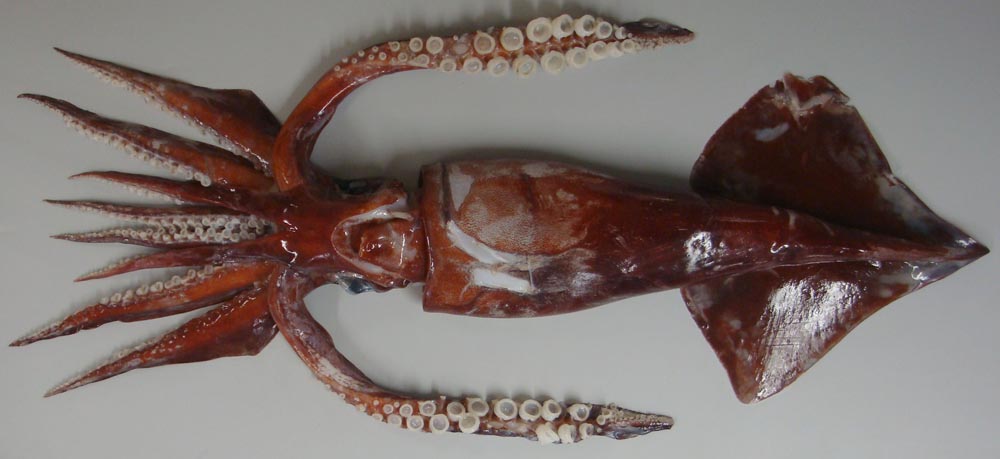
uid, but almost certainly an ommstrephid--the squid family that includes our friend the Humboldt squid. Probably
Ommastrephes or
Todarodes, based on geography.
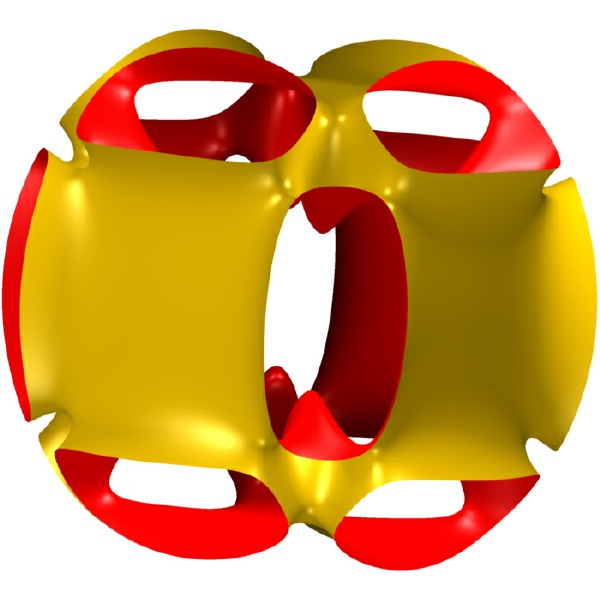
A research project aims to improve the control of robot movements with the help of new mathematical approaches.
New developments in the areas of motion planning, computer-aided design and algebraic geometry aim to help in the identification of situations in which a collision may occur for a robot and the planning of an optimal motion path. Algebraic methods for the control of robot motions are being used for the first time in combination with numeric and geometric methods.