






Show Me The Science Month Day 5

Speciation Genetics is, in a sense, an oxymoron. Genetics is the study of heritable characteristics, but the researchers who study speciation genetics are looking for genes that cause inheritance to fail. They are looking for the genetic incompatibilities that keep species apart.

Speciation is about how a population of similar, interbreeding organisms becomes two or more populations so different from each other that they no longer form a common gene pool. Species' differences can be extremely subtle. In fact, an evolutionary process of speciation means that there must be a point at which the physical differences between two species is hard to discern, as well as a point when two populations aren't quite different species, but well on their way to becoming separate. At some point, when one gene pool splits into two, genetic incompatibilities arise that make cross-breeding between two populations a doomed enterprise.

What kinds of genetic incompatibilities first arise in the process of speciation? What types of genes are involved? A paper in the January 16th issue of Science reports on the discovery of a 'speciation gene' keeping two mouse sub-species from producing viable offspring.
If you're a woman and need an excuse not to clean the carpet, it's your lucky day.   The bad news is, whatever you may already have done may have an impact on having kids.   Researchers at the UCLA School of Public Health have found the first evidence that perfluorinated chemicals, or PFCs — chemicals that are widely used in everyday items such as food packaging, pesticides, clothing, upholstery, carpets and personal care products — may be associated with infertility in women. 
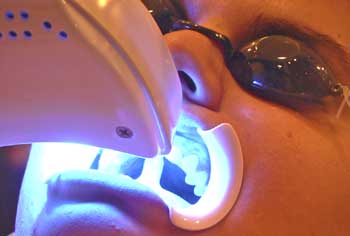
Want to know if you have an honest dentist?   Tell him you want to try UV tooth bleaching.   A study in Photochemical&Photobiological Sciences writes the lack of any enhanced bleaching effect is bad enough but it also damages skin and eyes up to four times as much as sunbathing.

And as with sunbathing, fair-skinned or light-sensitive people are at even greater risk, said lead author Ellen Bruzell of the Nordic Institute of Dental Materials.  

Bruzell also found that bleaching damaged teeth. She saw more exposed grooves on the enamel surface of bleached teeth than on unbleached teeth. These grooves make the teeth more vulnerable to mechanical stress.


Want skin damage?
Creationism, the rejection of the scientific basis of  evolutionary theory, is experiencing a resurgence among Europeans. The Department of Biology and Didactics of Biology at the TU Dortmund has organized an international conference addressing the issue, titled “Attitude and Knowledge concerning Evolution and Science in Europe (AKESE)”, funded by the German Federal Ministry of Research and Education.

On February 20th, researchers from different scientific backgrounds and seven European countries will meet at the Max Planck Institute for Molecular Physiology in Dortmund to discuss the scientific significance of evolutionary theory, its lack of social acceptance and the negative attitude towards science that rejection of evolution entails.
It would seem that in a bad economy, tax cuts make the most sense.    Letting people keep their money instead of letting the government spend money to collect taxes, spend money to institute government programs and then pay government employees to write checks is believed to lead to a great deal of waste.
Show Me The Science Month Day 4

How did we become human? You can ask the same question in a slightly different way: how did we become different from chimps?  Although the common ancestor that we shared with chimps 5-7 million years ago was not itself a chimp, it probably resembled modern-day chimps much more than it resembled us. Both humans and chimps have been changing under evolutionary pressure since our lineages split, but humans have obviously picked up traits that make us stand out from other modern apes, most notably our intelligence.
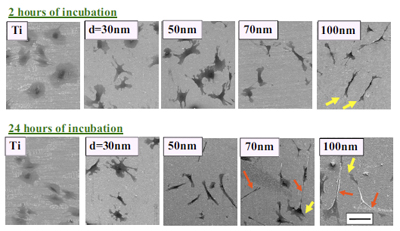
Nanotubes are often regarded as a precursor to nanocircuitry.  A group at UC San Diego has found that they work pretty well for transferring biological information, too.  Oh, et al. showed that selective differentiation of stem cells into bone cells could be achieved on titanium nanowires of approximately 70-100 nanometers in diameter.  Using smaller nanowires caused less selectivity and slower differentiation. This suggests that the shape of the nanowires provided a signal to metamorphose into bone cells.


Stem cells incubated on nanowires. Oh, et al.

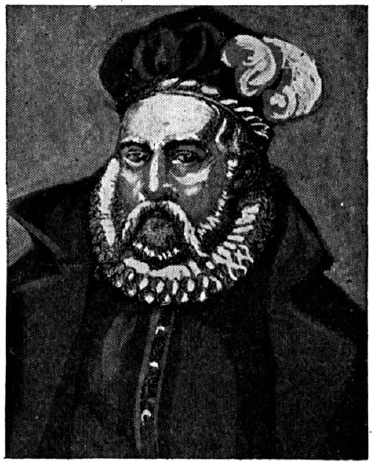
  Tycho Brahe was a sixteenth-century Danish, astronomer, astrologer and alchemist, most famous as the mentor of Johannes Kepler. In 1566 after a rousing night of drinking, Tycho lost a good part of his nose in a duel. Tycho was also the patron of whom he believed to be a clairvoyant dwarf and kept a tame moose, which died after consuming an enormous quantity of beer and falling down the stairs.
If you've ever been to a windy beach or a snow-blown landscape, you may have noticed a useless-looking fence with a pile of snow or sand on one side. The fence looks useless because it's full of holes - they're usually about 50% porous - and you might wonder what on earth they could be meant to control. It turns out that in windy conditions such a fence can cause a buildup of snow (or sand) on the downwind side, and that these fences are commonly used to prevent snowdrift across roadways as well as provide a measure of control over where snow or sand might build up.
Mold is icky. However, it has yielded one of the most important advances in medicine: antibiotics. There was a time when penicillin was the cure-all antibiotic, capable of quelling almost any one-celled invader.
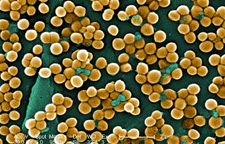
However, today this is not the case. Today’s bacteria are getting faster, stronger and more resistant to even our most aggressive antibiotics. This has prompted scientists to look in other nooks and crannies of our world to find the next solution to our growing resistant population of angry bacteria.

