Brown dwarfs, objects that are less massive than stars but larger than planets, just got more elusive, based on a study of 233 nearby multiple-star systems by NASA's Hubble Space Telescope. Hubble found only two brown dwarfs as companions to normal stars. This means the so-called "brown dwarf desert" (the absence of brown dwarfs around solar-type stars) extends to the smallest stars in the universe.
The 233 stars surveyed are part of the RECONS (Research Consortium on Nearby Stars) survey meant to understand the nature of the sun's nearest stellar neighbors, both individually and as a population. The current primary goals are to discover and characterize "missing" members of the sample of stars within 32.6 light-years (10 parsecs) of Earth.
Big volcanic eruptions over the past 450 years have temporarily cooled weather in the tropics but suggest that such effects may have been masked in the 20th century by rising global temperatures, say researchers. The paper, which shows that higher latitudes can be even more sensitive to volcanism, appears in the current issue of Nature Geoscience.
Ian Ramjohn recently posted an interesting (but far too short) article on Scientific Blogging titled Competition and Coexistence in which he discussed various theoretical scenarios that could develop if a new species formed and began competing with its parent species for resources.
Brian Swimme is fond of saying, "Four billion years ago, the earth was molten rock and now it sings opera." In their 1992 book "The Universe Story," Swimme and Thomas Berry attempted to bridge the gap between science, religion and the humanities. When Michael Dowd read it, he got goose bumps and says he wept at the realization that "this is what I’m going to spend the rest of my life doing, popularizing this perspective."
Researchers at the Salk Institute for Biological Studies say they have developed a new mouse model of glioblastoma, the most common and deadly brain cancer in humans, that more closely resembles the development and progression of human brain tumors that arise in people.
Trying to mimic randomly occurring mutations that lie at the heart of all tumors, the Salk researchers used modified viruses to shuttle cancer-causing oncogenes into a handful of cells in adult mice. Their strategy, described in Nature Medicine, could prove a useful method to faithfully reproduce different types of tumors.
Researchers have developed a new, highly efficient way to pair up cells so they can be fused together into a hybrid cell. The new technique should make it much easier for scientists to study what happens when two cells are combined. For example, fusing an adult cell and an embryonic stem cell allows researchers to study the genetic reprogramming that occurs in such hybrids.
The researchers, led by a collaboration between Joel Voldman, associate professor of electrical engineering and computer science at MIT, and Rudolf Jaenisch, professor of biology and a member of the Whitehead Institute, report the new technique in the Jan. 4 online edition of Nature Methods.
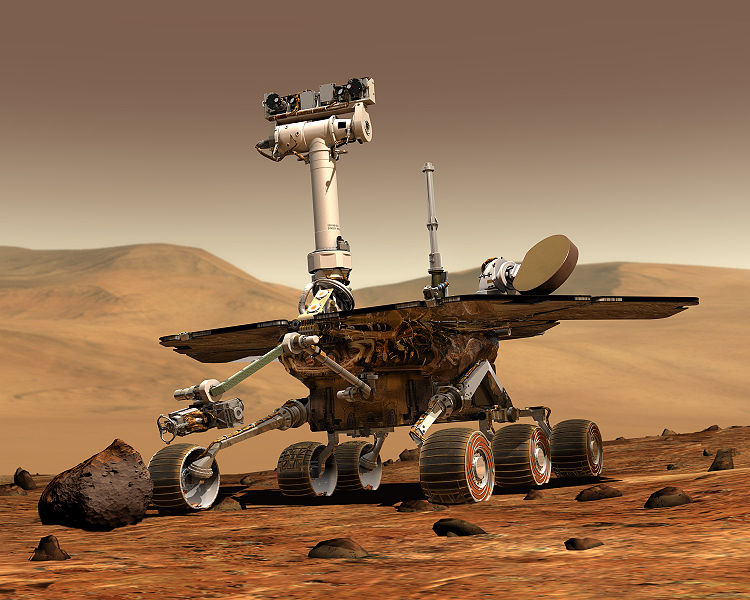
Spirit (Mars Exporation Rover-A, or MER-A), is the first of two rovers which are part of NASA's Mars Exploration Rover Mission. Today marks the 5-year anniversary of Spirit's successful landing on Mars. Of the hundreds of engineers and scientists who cheered at NASA's Jet Propulsion Laboratory in Pasadena, CA when Spirit landed safely on January 4th, 2004, - and 21 days later when its twin Opportunity (MER-B) followed suit - none predicted the team would still be operating both rovers in 2009.
People with a sleep disorder that causes them to kick or cry out during their sleep may be at greater risk of developing dementia or Parkinson’s disease, according to a study published in Neurology.
The sleep disorder is called REM sleep behavior disorder. People with the disorder do not have the normal lack of muscle tone that occurs during REM sleep, often known as the dream stage of sleep. Instead, they have excessive muscle activity such as punching, kicking, or crying out, essentially acting out their dreams.
While examining patterns of DNA modification in lung cancer, a team of international researchers has discovered what they say is a surprising new mechanism. They say that "silencing" of a single gene in lung cancer led to a general impairment in genome-wide changes in cells, contributing to cancer development and progression.
In the Cancer Research study they also say they found a link between modification of the key gene, MTHFR, and smoking by lung cancer patients – even if the patient had smoked for a short period of time.
Variants of numerous DNA repair genes initially appeared to be statistically significantly associated with cancer risk in epidemiological studies. When the data from individual studies are pooled, however, few DNA repair gene variants appear truly associated with increased cancer risk, according to a field synopsis published in the Journal of the National Cancer Institute.
Because DNA damage is associated with cancer development, researchers hypothesized that genes required for DNA repair may influence risk of cancer. Initial reports supported the idea. A comprehensive review of the data has not been available previously.