

You can't stop cancer.   The nature of mutations is that they aren't predictable so they can't be vaccinated against or prevented in any way we understand those terms today.   Stopping cancer from killing people is another matter.   Metastasis is the ability of cancer cells to move from a primary site to form more tumors at distant sites and it's how cancer spreads and eventually kills. It is a complex process in which cell motility and invasion play a fundamental role.

Essential to our understanding of how metastasis develops is identification of the molecules, and characterisation of the mechanisms that regulate cell motility.  These mechanisms have been poorly understood.

LONDON, December 15 /PRNewswire/ --

- New Payment Processing Service Provides Opportunity for Broadcasters and Online Businesses to Create Sales and Fully Utilise Video Advertising

Voice Commerce Group, a leader in payment systems, today announces the launch of VoicePay TV (http://www.voicepay.tv), a new payment processing service that enables any product or service to be sold instantly via any TV or IPTV programme.

LONDON, December 15 /PRNewswire/ --

LONDON, December 15 /PRNewswire/ --

- World Leading Treatment Programme for Premature Ejaculation and Erectile Dysfunction Launch Large-Scale Billboard Campaign in the UK

The Advanced Medical Institute (AMI), will today launch a bold and direct billboard campaign across 196 sites across London, emblazoned with the slogan Want Longer Lasting Sex? targeted at men and women who suffer with problems of sexual dysfunction.


The Journey of Man: A Genetic Odyssey, Spencer Wells
Random House, 2002

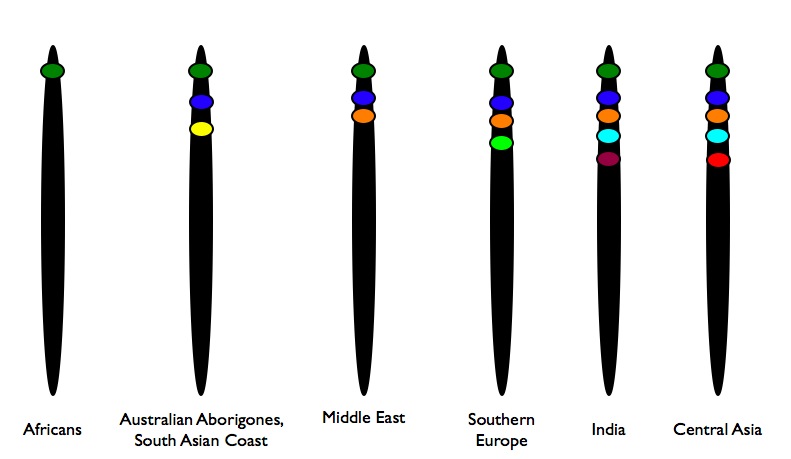
Spencer Wells, in his short, accessible book designed to accompany a similarly titled documentary film, describes the deep history of humans as it has been inscribed in Y chromosomes. This history has only recently become decipherable through modern genetic tools, and the results have settled some centuries-old controversies about how humans in different parts of the world have become so diverse. The biggest surprise is that our differences are recent: the dramatic differences that distinguish Kenyans, Swedes, Han Chinese, and Polynesians all arose less than 50,000 years ago.
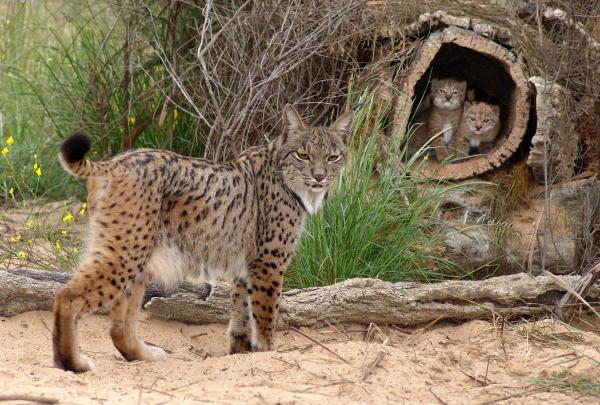
The Iberian Lynx is now the most endangered cat in the world with only about 160 animals remaining in the wild and, despite extensive research and millions of Euros spent in decades of protection, nothing seems capable to stop this decline.


I’m used to some American media outlets shamelessly feeding crap to the public. Think Fox so-called News, for instance. But the Los Angeles Times? That’s supposed to be one of the most highly respectable papers in the country, on par with the New York Times, the Washington Post, the Chicago Tribune or the Boston Globe. Well, once again I was wrong. David Klinghoffer published an opinion piecein the LA Times that argued that belief in the paranormal is not just, well, normal, but actually good for you.
This week I participated in a Social Media Day at NIST. During my talk I provided an overview of our current work in using Web2.0 tools for doing Open Notebook Science in fields related to chemical synthesis and drug discovery.

During my talks I generally try to place our work in context and give the audience a sense of where I see science evolving. I often start with the increasingly important role of openness and at some point follow up with this slide showing the shift of scientific communication from human-to-human to machine-to-machine.
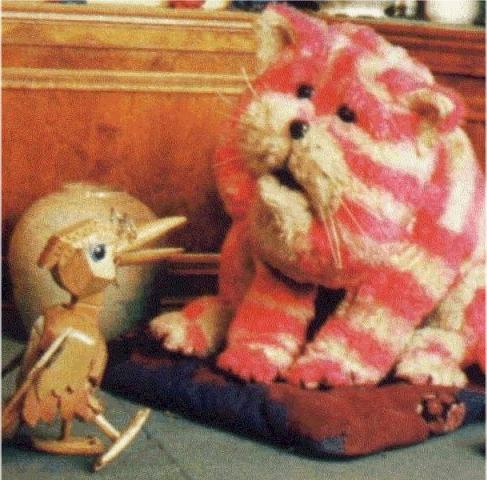
So says an article in the Sunday Telegraph, following the death of Oliver Postgate, creator and writer of some of Britain’s most popular children’s television programmes, namely Pingwings, Pogles’ Wood, Noggin the Nog, Ivor the Engine, Clangers and Bagpuss, of which the last was voted in a 1999 poll to be the most popular children’s television programme of all time.
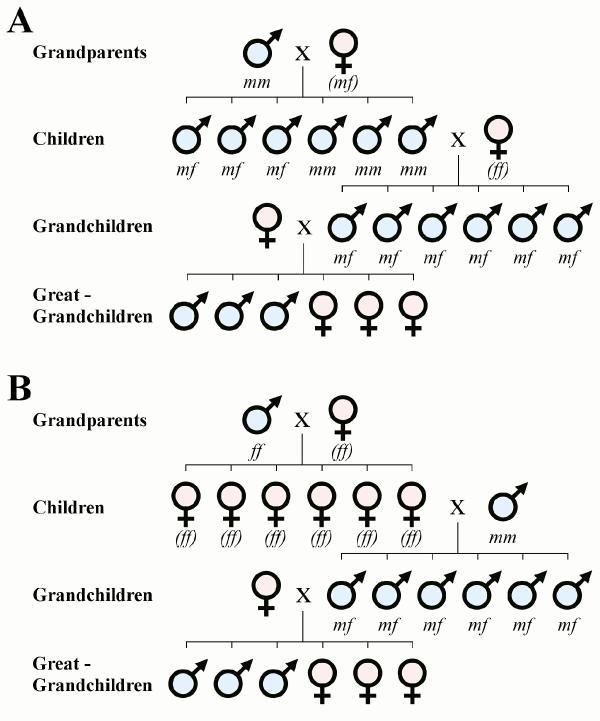
Men determine the sex of a baby depending on whether their sperm is carrying an X or Y chromosome. An X chromosome combines with the mother's X chromosome to make a baby girl (XX) and a Y chromosome will combine with the mother's to make a boy (XY).

A Newcastle University study suggests that an as-yet undiscovered gene controls whether a man's sperm contains more X or more Y chromosomes, which affects the sex of his children. On a larger scale, the number of men with more X sperm compared to the number of men with more Y sperm affects the sex ratio of children born each year.

