





WORCESTER, Massachusetts, February 1 /PRNewswire/ --

- ENDORSE Global Findings Highlight the Need to Urgently Implement Hospital-Wide Strategies to Optimize VTE Management: Systematically Assess Patient Risk for VTE and Provide Appropriate Prophylaxis to Prevent VTE

ENDORSE multinational study (Epidemiologic International Day for the Evaluation of Patients at Risk for Venous Thromboembolism in the Acute Hospital Care Setting) published today in the LANCET(1) demonstrates the high prevalence of patients at risk for VTE (according to the ACCP guidelines) in the world: 52% of hospitalized patients surveyed were at risk for VTE, corresponding to 64% of surgical patients and 42% of medical patients.

LONDON, February 1 /PRNewswire/ --

- With Over 1,500 Google Searches on Gastric Band Surgery Performed Each Month in UK, This new Online Resource Plugs the 'Information gap'

Today saw the launch of an innovative new website http://www.loseweightgainlife.co.uk which provides clear information and support to people considering obesity surgery. To coincide with the launch of the website, findings from a new survey reveal widespread confusion over the causes of obesity in the UK with nearly 8 in 10 people (79%) believing obesity is caused purely by 'lifestyle choices', rather than being a serious medical condition, and 50% also associating the condition with 'greediness'.

The White House Office of Management and Budget (OMB) evaluates research at the U.S. Environmental Protection Agency and other federal agencies using the Program Assessment Rating Tool (PART), a set of questions that asks agencies about many aspects of their programs, including whether they can measure and demonstrate annual improvements in efficiency.

Based on the answers, OMB rates research programs as effective, ineffective, or somewhere in between. An "ineffective" rating can have serious adverse consequences for a program or agency. After experiencing difficulty meeting OMB's requirements to demonstrate the efficiency of its research programs, EPA asked a National Research Council committee for guidance on how to measure efficiency.

As large, visually-oriented mammals, we have long had a tendency to consider biological diversity primarily in terms of what we can see. There is, however, an entire world of creatures rarely encountered but no less unique and intriguing for it. Sometimes, one only needs the right tools, or the proper motivation, to recognize a group of organisms well worth our attention.

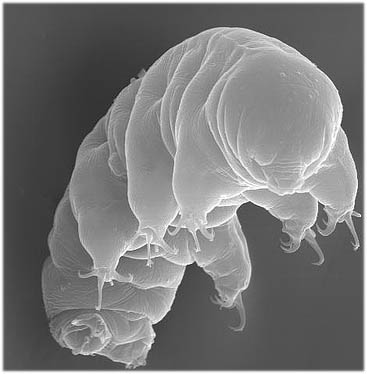
It is in this spirit that I am pleased to introduce you to Hypsibius dujardini, one of about 700 known species in the Phylum Tardigrada, commonly known as a "water bears" due to their ursine appearance.

The Rocky Mountains have warmed by 2 degrees Fahrenheit. The snowpack in the Sierras has dwindled by 20 percent and the temperatures there have heated up by 1.7 degrees Fahrenheit.

All could lead to dire consequences for the water supply in the Western United States, including California. Scientists have noted that water flow in the West has decreased for the last 20 to 30 years, but had never explained why it was happening.

Until now. Scientists from Lawrence Livermore National Laboratory’s Program for Climate Model Diagnosis and Intercomparison in collaboration with Scripps Institution of Oceanography have pinpointed the cause of that diminishing water flow on a regional scale: humans.

In the US, most deaths are attributable to chronic afflictions, such as heart disease and cancer. Typically the medical community has attributed these diseases to accumulated damage, such as plaque formation in arteries or mutations in genes controlling cellular replication. This view is changing. Scientists are now beginning to recognize that many of these chronic illnesses are due to microbial infections.

An unusual new species of whirligig beetle from India is being named Orectochilus orbisonorum in honor of the late rock ‘n’ roll legend Roy Orbison and his widow Barbara.

Arizona State University entomologist Quentin Wheeler announced the description and discovery of the beetle species Jan. 25 during a Roy Orbison Tribute Concert, part of a weekend of tribute events hosted by ASU’s Center for Film, Media and Popular Culture and the Tempe Center for the Arts.

Barbara Orbison attended the concert, as well as hundreds of fans, Orbison’s sons Wesley and Roy Kelton Orbison Jr., and songwriters and filmmakers who worked with the legendary musician.

“I have never seen an honor like that,” Barbara Orbison said in expressing her appreciation for the species naming.

Water has some amazing properties. It is the only natural substance found in all three states — solid, liquid and gas — within the range of natural Earth temperatures. Its solid form is less dense than its liquid form, which is why ice floats. It can absorb a great deal of heat without getting hot, has very high surface tension (helping it move through roots and capillaries — vital to maintaining life on Earth) and is virtually incompressible.

A less commonly known distinction of water, but one of great interest to physical chemists, is its odd behavior at its transition to the glassy phase. The “glassy state” is a sub-state of matter — glassy water and ice, for example, are chemically identical and have the same state (solid), but have a different structure.

In the first study to use imaging technology to see what goes on in the brain when we scratch, researchers at Wake Forest University Baptist Medical Center have uncovered new clues about why scratching may be so relieving – and why it can be hard to stop. The work is reported online in the Journal of Investigative Dermatology and will appear in a future print issue.

“Our study shows for the first time how scratching may relieve itch,” said lead author Gil Yosipovitch, M.D., a dermatologist who specializes in itch. “It’s important to understand the mechanism of relief so we can develop more effective treatments. For some people, itch is a chronic condition that affects overall health.”

Tropical forests are immensely species-rich. The question of what causes this diversity is a perennial one in tropical biology. In the 1970s Daniel Janzen and Joseph Connell independently came up with the same explanation - if the seeds or seedlings of more common species have a higher probability of being killed by a pest or pathogen (what is known as density-dependent mortality), then less common species will be favoured. If the organisms that are responsible for most seed and seedling mortality are specialists - if they focus on just a few plant species - then the pathogens and seed predators that specialise on common tree species should be more abundant (since there’s more food for them). Janzen was able to demonstrate this with a few species of beetle whose larvae fed on (and killed) seeds. When seeds of the Hog Plum (Spondias mombin) were abundant, female bruchid beetles laid their eggs on (and ended up killed) well over 90% of the seeds. When the seeds were scattered, mortality rates were reduced. Unfortunately, while there were several good anecdotes, there was little evidence of density-dependent mortality playing a role at the community level. In fact, there was evidence that trees were more likely to be clumped than scattered, a finding which was not in keeping with Janzen and Connell’s hypothesis.

