Truth is under attack. It has always been, of course, because truth has always been a mortal enemy for those who attempt to seize or keep power in their hands. But the amplification of the phenomenon by today's information technology is extremely worrisome. AI today can generate fake videos and images that even experts have trouble flagging as such. This, combined with the different news value and propagation potential of false information with respect to typically less attention-grabbing true facts has created an explosive situation. What to do?
People are concerned about cranberries again this November, but it isn't a new phenomenon.
Cranberries were actually the first modern chemophobia scare, when anti-science activists got government to first do what they have since done to weedkillers, trans fats, ultraprocessed foods, BPA, you name it - terrify the public about a product using bad epidemiology despite there being no science basis for it.(1)

1980s photo of the author, right; his father, center; and his sister, left.
At the upcoming American Heart Association meeting, participants will learn of the epidemiological
results of 63,656 military veterans with Type 2 diabetes in the Million Veteran Program who took GLP-1 receptor agonists (semaglutide - "Wegovy", dulaglutide - "Trulicity", etc.). The survey analysis found that those who also changed their lifestyle habits had a 50% lower risk of serious cardiovascular events(1) compared to those who didn't report a healthier lifestyle and received diabetes care without GLP-1 RA medication.
In the various 'Predator' films, the alien hunter can see across various spectra while enabling camouflage from our vision.
That happens in nature. Octopuses, squids, and the scariest of them all, cuttlefish, in the cephalopod family have evolved the ablity to modify their skin to blend in with the environment. That is due to the presence of xanthommatin, a natural pigment with color-shifting capabilities.
America uses less energy per capita than we did in World War II, and even World War I. Thanks to natural gas, we provide energy in most states at an affordable cost.(1) With the help of a new data set that shows where air conditioning is used, it will be even easier to know where things can be improved.
In France, you have to get permission from both the government and your neighbors to put in air conditioning. You will also want to be wealthy because it is more profitable to sell it to the rest of Europe than domestically.(2) America has far more equity, about 90% of people have air conditioning but the new AC Map shows that not all of it is optimal. Portable units in a humid area are not very effective, for example.
Today is November 1st, the day dedicated to the dead, and I am in northern Sweden where daylight is scarce this time of the year. The two things conjure to arise thoughts of a darkish nature.
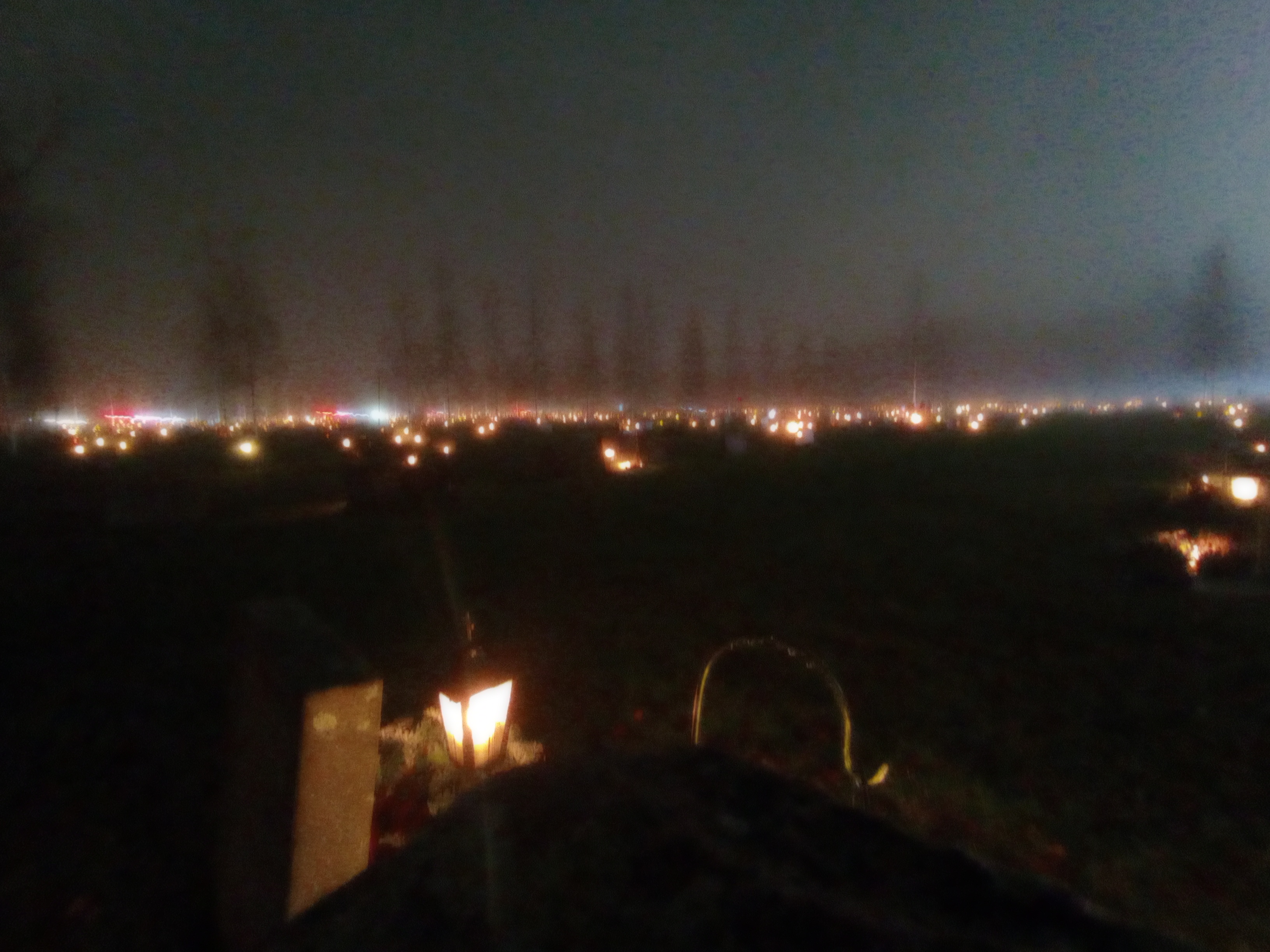 [Above, a lousy picture taken this evening in a cemetery in Gammelstad, close to Lulea, in Norrbotten, Sweden. Sorry for the bad quality... Yet the landscape with all those small lights was really inspiring.]

A commenter contested my statement that gang murders are a much greater menace to public safety than homelessness – at least, here in Albuquerque. So let’s unpack.
Preliminaries
When I wrote
Halloween Science 2.0, I wanted to get it down to a brisk 150 pages, which means taking a chainsaw to a lot of the material I had.(1)
Like the woman who left her corporeal significant other to become a ghost groupie. Amethyst Realm, that is not her Dungeons&Dragons name, she calls herself that for real, cheated on her totally organic fiancé with a ghost but she suggested it was kind of his fault. He moved them into a haunted house.
There is legitimate concern about increased social authoritarianism in governments worldwide. The state has gained more financial control everywhere. Even in the U.S nearly 60% of wealth is controlled by politicians, and it is the most "capitalist" country.
It led to a culture where the American federal government forced employees to get a COVID-19 vaccine or be fired. Yet 20,000,000 government employees were not given that same ultimatum.
The same mentality has led to countries where companies in the organ transplant business want you to be an organ donor by law. It would create another schism in U.S. culture, where body autonomy remains an issue. There can be no body autonomy if the government can force you to donate your organs.








