






Using mice as models, researchers at the Max Planck Institute for Evolutionary Anthropology traced some of the differences between humans and chimpanzees to differences in our diet.

Humans consume a distinct diet compared to other apes. Not only do we consume much more meat and fat, but we also cook our food. It has been hypothesized that adopting these dietary patterns played a key role during human evolution. However, to date, the influence of diet on the physiological and genetic differences between humans and other apes has not been widely examined.

By feeding laboratory mice different human and chimp diets over a mere two week period, researchers at the Max-Planck-Institute for Evolutionary Anthropology in Leipzig, Germany, were able to reconstruct some of the physiological and genetic differences observed between humans and chimpanzees.

Deep brain stimulation (DBS) surgery, which is used to treat Parkinson’s disease and other movement disorders, is now being studied for its potential to treat a variety of conditions. For example, DBS of the hypothalamus has been used to treat cluster headaches and aggressiveness in humans, and stimulating this area influences feeding behavior in animals.

A new study in the Annals of Neurology found that hypothalamic DBS performed in the treatment of a patient with morbid obesity unexpectedly evoked detailed autobiographical memories.

Using functional magnetic resonance imaging (fMRI), scientists have discovered that cocaine-related images trigger the emotional centers of the brains of patients addicted to drugs, even when the subjects are unaware they’ve seen anything - and the regions of the brain activated by drug images overlapped substantially with those activated by sexual ones.

A team of researchers at the University of Pennsylvania, led by Dr. Anna Rose Childress and Dr. Charles O’Brien, showed cocaine patients photos of drug-related cues like crack pipes and chunks of cocaine. The images flashed by in just 33 milliseconds - so quickly that the patients were not consciously aware of seeing them.

For most people, the name “E. coli” is synonymous with food poisoning and product recalls, but a professor in Texas A&M University’s chemical engineering department envisions the bacteria as a future source of energy, helping to power our cars, homes and more.

By genetically modifying the bacteria, Thomas Wood, a professor in the Artie McFerrin Department of Chemical Engineering, has “tweaked” a strain of E. coli so that it produces substantial amounts of hydrogen. Specifically, Wood’s strain produces 140 times more hydrogen than is created in a naturally occurring process, according to an article in “Microbial Biotechnology,” detailing his research.

After using a previous equation to pair parenting styles with a parenting method book, I thought it might be fun to use a similar format to pair political ideas with a candidate.

The following equation is as non-partisan as I could possibly make it, and does more to measure and define your personal opinion than to choose candidates in the abstract. The crux, of course, is nailing down politicians' beliefs enough to accurately chart their numbers (though letting your bias, beliefs and opinions peek through this equation is as telling as the eventual result, itself).


The Equation - Who Should You Vote For?

First, order the following traits or political issues according to how central they are to the candidate’s message, or at least how important you think they should be in their central message ; 1 through 7 with 1 being most important and 7 least.

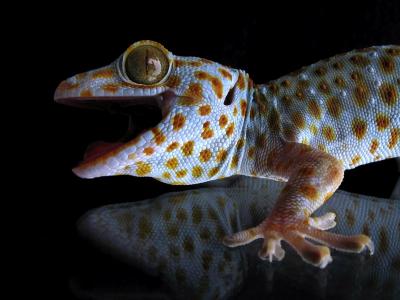
Building upon several years of research into the gecko's uncanny ability to climb sheer walls, researchers at the University of California, Berkeley writing in the Journal of the Royal Society Interface have developed an adhesive that is the first to master the easy attach and easy release of the reptile's padded feet. The material could prove useful for a range of products, from climbing equipment to medical devices.

Unlike duct tape or glue, the new material is crafted from millions of tiny, hard, plastic fibers that establish grip; a mere square two centimeters on a side can support 400 grams (close to a pound).

In a study presented Jan. 29 at the 44th annual meeting of the Society of Thoracic Surgeons in Fort Lauderdale, Fla., a Johns Hopkins team recommends that the benchmark for designation as a high-volume hospital rise from 10 heart transplants per year to 14. High-volume centers consistently show higher survival and fewer complication rates.

However, the standard, which is officially set by the U.S. Centers for Medicare and Medicaid Services and which qualifies medical centers for federal reimbursement, was recently lowered from 12 per year to 10.

In other words, require them to do more or don't let them do any at all to insure more safety.

A Purdue University archaeologist discovered an intact ancient iron ore mine in South America that shows how civilizations before the Inca Empire were mining this valuable ore.

"Archaeologists know people in the Old and New worlds have mined minerals for thousands and thousands of years," said Kevin J. Vaughn, an assistant professor of anthropology who studies the Nasca civilization, which existed from A.D. 1 to A.D. 750. "Iron mining in the Old World, specifically in Africa, goes back 40,000 years. And we know the ancient people in Mexico, Central America and North America were mining for various materials. There isn't much evidence for these types of mines.

"What we found is the only hematite mine, a type of iron also known as ochre, recorded in South America prior to the Spanish conquest. This discovery demonstrates that iron ores were important to ancient Andean civilizations."

The Fertile Crescent of the Middle East has long been identified as a “cradle of civilization” for humans. In a new genetic study, researchers at the University of California, Davis, have concluded that all ancestral roads for the modern day domestic cat also lead back to the same locale.

Findings of the study, involving more than 11,000 cats, are reported in the cover article of the January issue of the journal Genomics.

“This study confirms earlier research suggesting that the domestication of the cat started in the Fertile Crescent region,” said Monika Lipinski, lead researcher on the study and a doctoral candidate in the School of Veterinary Medicine. “It also provides a warning for modern cat fanciers to make sure they maintain a broad genetic base as they further develop their breeds.”

We might think we control the climate but unless we harness the powers of our microbial co-habitants on this planet we might be fighting a losing battle.

Humans mostly affect the atmosphere indirectly by our activities. Most human-induced methane comes from livestock, rice fields and landfill but in all of those places, microbes are actually responsible for producing the methane, 150 million tons per year. Microbes in wetlands produce an additional 100 million tons and those that live inside termites release 20 million tons of methane annually.


