



Varanus komodoensis, the fearsome Komodo dragon, is the world's largest living lizard and, with 60 razor-sharp serrated teeth, can take on very large animal prey.

A new international study has revealed how it can be such an efficient killing machine despite having a wimpy bite and a featherweight skull - clever engineering.

The Komodo dragon grows to an average length of two to three meters and weighing around 70 kilograms. The reptile's unusual size is attributed to island gigantism, since there are no other carnivorous mammals to fill the niche on the islands where they live. As a result of their size, these lizards are apex predators, dominating the ecosystems in which they live.

TAIPEI, Taiwan, April 14 /PRNewswire/ --

Accton Technology (TAIEX: 2345) is proud to announce the availability of its Internet radio modules, integrating WiFi, Ethernet, and multimedia capabilities into one module. This enables radio and audio equipment manufacturers to upgrade their devices to support multimedia and Internet radio functions an electronic BOM cost approaching USD15 (note) per module.

DÜSSELDORF, Germany, April 14 /PRNewswire/ --

- Sales Increase by 18.2% to EUR239.1m in the First Quarter of 2008

- Operating Result (Adjusted EBITDA) Improves by 20.4% to EUR43.0m

- Integration of the Acquisitions EDP and Allplas Progressing in Line With Plan

- CEO Dr. Axel Herberg: "We Have Again Substantially Increased our Sales and Earnings, and Results are Fully in Line With our Forecasts."

DÜSSELDORF, Germany, April 14 /PRNewswire/ -- The rating agency Standard & Poor's has raised the Gerresheimer Group's rating from BB to BB+ with "Outlook stable". This means that Gerresheimer is now only one step away from an investment grade rating.

In its justification for the upgrade, Standard & Poor's emphasises the positive operating trend for the Group, with rising sales and EBITDA. Gerresheimer, it says, will be able to sustain this growth in the short to medium term. It notes that Gerresheimer enjoys leading positions in a growing market characterised by high entry barriers.

Researchers at The University of Texas M. D. Anderson Cancer Center report that a restricted-calorie diet inhibited the development of precancerous growths in a two-step model of skin cancer, reducing the activation of two signaling pathways known to contribute to cancer growth and development, while an obesity-inducing diet activated those pathways.

Epithelial cancers arise in the epithelium - the tissue that lines the surfaces and cavities of the body's organs. They comprise 80 percent of all cancers.

"Calorie restriction and obesity directly affect activation of the cell surface receptors epidermal growth factor (EGFR) and insulin-like growth factor (IGF-1R)," said first author Tricia Moore, a graduate student in M. D. Anderson's Department of Carcinogenesis. "These receptors then affect signaling in downstream molecular pathways such as Akt and mTOR.

A study by scientists from the Max Planck Institute for Human Cognitive and Brain Sciences in Leipzig, in collaboration with the Charite University Hospital and the Bernstein Center for Computational Neuroscience in Berlin says that several seconds before we consciously make a decision its outcome can be predicted by unconscious activity in the brain.

The researchers from the group of Professor John-Dylan Haynes used a brain scanner to investigate what happens in the human brain just before a decision is made. "Many processes in the brain occur automatically and without involvement of our consciousness. This prevents our mind from being overloaded by simple routine tasks. But when it comes to decisions we tend to assume they are made by our conscious mind. This is questioned by our current findings."

Even in new designs, it's not a bad idea to see how old Mother Nature does it. Using that principle, a group of researchers at the U.S. Department of Energy’s Ames Laboratory is mimicking bacteria to synthesize magnetic nanoparticles that could be used for drug targeting and delivery, in applications such as magnetic inks, high-density memory devices and magnetic seals in motors.

Commercial room-temperature synthesis of ferromagnetic nanoparticles is difficult because the particles form rapidly, resulting in agglomerated clusters of particles with less than ideal crystalline and magnetic properties. Size also matters. As particles get smaller, their magnetic properties, particularly with regard to temperature, also diminish.

LONDON, April 14 /PRNewswire/ --

Chiltern, a leading global research organization, announced that it has opened a new office in St. Petersburg, Russia following the recent appointment of Dr. Alexey V. Kornilov as General Manager of its Russian operations.

This office is expected to grow rapidly under the leadership of Alexey V. Kornilov, MD and will be primarily focused on supporting our Global Clinical Development brand. Dr. Kornilov brings over 10 years of clinical experience to Chiltern and is a member of the St. Petersburg Society of Anesthesiology.

Over the last few years, Chiltern has conducted many trials in Russia to fulfill sponsors' demands in the region and to take advantage of highly qualified investigator sites generating high quality data.

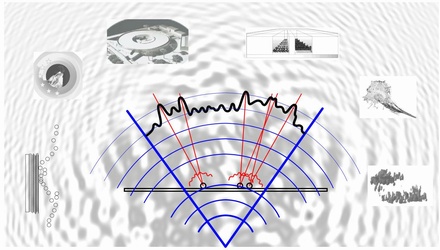
A team of European scientists has triggered electrical activity in thunderclouds for the first time - deliberately.

They did it by aiming high-power pulses of laser light into a thunderstorm. Next, they say, could be man-made lightning.

At the top of South Baldy Peak in New Mexico during two passing thunderstorms, the researchers used laser pulses to create plasma filaments that could conduct electricity akin to Benjamin Franklin's silk kite string. No air-to-ground lightning was triggered because the filaments were too short-lived, but the laser pulses generated discharges in the thunderclouds themselves.

The nature vs. nurture debate is familiar to most people, and modern conclusions usually predict a balance between the two. A new paper shows that there is a similar balance between inherited genes - nature - and the environment - nurture - in determining thousands of traits in yeast.

As we approach the age of personal genomics, in which each of us knows something about the genetic variations we carry, it is important to understand how genes and the environment interact in order to draw medically sound conclusions from the information available, e.g. whether exercise can reduce risks that are increased because of a genetic predisposition towards a certain illness.


