








Skeptic Society’s mastermind and author Michael Shermer is about to release a review of the latest nonsense entry in the evolution-creation wars: Ben Stein’s movie entitled “Expelled: No Intelligence Allowed.”

In mice, child neglect is a product of both nature and nurture, according to a new study.

Researchers from the University of Wisconsin-Madison describe a strain of mice that exhibit unusually high rates of maternal neglect, with approximately one out of every five females failing to care for her offspring. By comparing the good mothers to their less attentive relatives, the group has found that negligent parenting seems to have both genetic and non-genetic influences, and may be linked to dysregulation of the brain signaling chemical dopamine.

As a possible model for human child neglect, these mice offer a valuable opportunity to investigate the biological and behavioral bases of naturally occurring maternal neglect, say UW-Madison zoology professor Stephen Gammie, who led the study, and co-author psychology professor Anthony Auger.

Suitors can tell a young person’s attitude toward sexual relationships by the look on their face, according to new research which researchers say gives deeper insight into mate attractiveness.

The study of 700 heterosexual participants also found that young men and women look for complete opposites when it comes to relationships with the other sex.

In no great shock to anyone who is now or has ever been young, men generally prefer women who they perceive are open to short-term sexual relationships whilst women are usually interested in men who appear to have potential to be long-term relationship material.


Quiz. What do you think his attitude is?

Everyone has heard of superconductors but a superinsulator is a newly-discovered fundamental state of matter created by scientists at Argonne National Laboratory in collaboration with several European institutions that opens new directions of inquiry in condensed matter physics and breaks ground for a new generation of microelectronics.

Led by Argonne senior scientist Valerii Vinokur and Russian scientist Tatyana Baturina, the international team fashioned a thin film of titanium nitride with they then chilled to near absolute zero.

When they tried to pass a current through the material, the researchers noticed that its resistance suddenly increased by a factor of 100,000 once the temperature dropped below a certain threshold. The same sudden change also occurred when the researchers decreased the external magnetic field.

Carbon dioxide removed from smokestack emissions in order to slow global warming could be used as a valuable raw material for the production of DVDs, beverage bottles and other products made from polycarbonate plastics, chemists are reporting.

In separate reports scheduled for presentation at the meeting of the American Chemical Society, Thomas E. Müller, Ph.D., and Toshiyasu Sakakura, Ph.D., described innovative ways of making polycarbonate plastics from CO2. Those processes offer consumers the potential for less expensive, safer and greener products compared to current production methods, the researchers agreed.

“Carbon dioxide is so readily available, especially from the smokestack of industries that burn coal and other fossil fuels,” Müller said. He is at the new research center for catalysis CAT, a joint 5-year project of RWTH Aachen and industrial giant Bayer Material Science AG and Bayer Technology Services GmbH. “And it’s a very cheap starting material. If we can replace more expensive starting materials with CO2, then you’ll have an economic driving force.”

Ethanol is not great. Even Al Gore had to eventually concede he had made a mistake in promoting it for almost two decades once it became common knowledge that driving food prices up for a costly, energy-negative alternative to gasoline that didn't improve the environment was a bad idea.

But what if it weren't energy negative or costly and used a lot less corn?

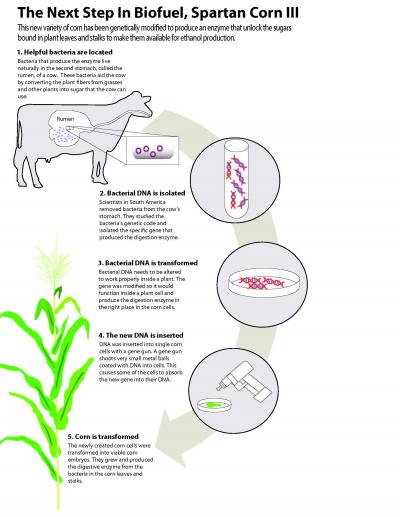
Cows, with help from bacteria, convert plant fibers, called cellulose, into energy, but this is a big, expensive step for biofuel production. In the commercial biofuel industry, only the kernels of corn plants can be used to make ethanol, but this new discovery would allow the entire corn plant to be used – so more fuel can be produced with less cost.

Scientists from UCL (University College London) have identified a key difference between people who can fight the Hepatitis B virus (HBV) off successfully and those who fail to do so – that a group of cells important in controlling the disease are triggered to ‘commit suicide’ in patients who are chronically infected. This discovery provides an important new focus for developing therapies or vaccines that boost the body’s ability to manage this infection.

The researchers analysed thousands of genes in T cells, critical players of the immune system required for control of HBV. They found that T cells from patients who were chronically infected were triggered to ‘commit suicide’. This could be an important factor in determining why these patients’ immune systems cannot fight the infection, and a process which could be a useful target for new treatments. Their findings are published today in the Journal of Clinical Investigation.

Researchers from Washington University in St. Louis and the Israeli Institute of Technology (Technion) in Haifa have developed a technique called expected mutual information (EMI)to detect the ancestry of disease genes in hybrid, or mixed, human populations.

EMI determines how a set of DNA markers is likely to show the ancestral origin of locations on each chromosome. The team constructed an algorithm for the technique that selects panels of DNA markers that render the best picture of ancestral origin of disease genes. They then tested the algorithm to show that it is more powerful and accurate than standard algorithms that currently select for markers.

The Human Genome Project revealed that only a small fraction of the 3 billion “letter” DNA code actually instructs cells to manufacture proteins, the workhorses of most life processes. This has raised the question of what the remaining part of the human genome does. How much of the rest performs other biological functions, and how much is merely residue of prior genetic events"

Scientists from Cold Spring Harbor Laboratory (CSHL) and the University of Chicago now report that one of the steps in turning genetic information into proteins leaves genetic fingerprints, even on regions of the DNA that are not involved in coding for the final protein. They estimate that such fingerprints affect at least a third of the genome, suggesting that while most DNA does not code for proteins, much of it is nonetheless biologically important – important enough, that is, to persist during evolution.

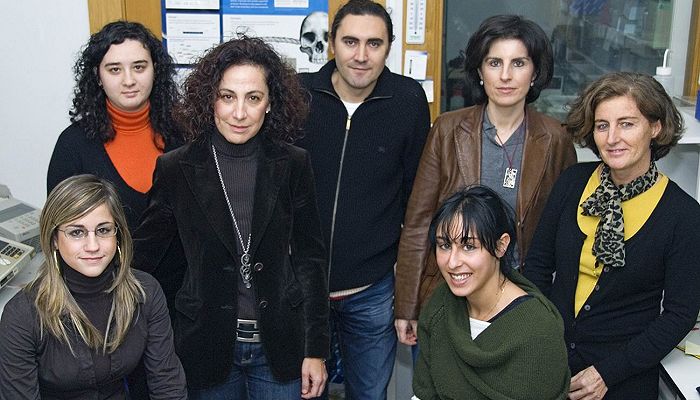
A research team from the Leioa campus of the University of the Basque Country (UPV/EHU), and led by Ms Concepción de la Rúa, has reconstructed the history of the evolution of human population and answered questions about history, using DNA extracted from skeleton remains.

Knowing the history of past populations and answering unresolved questions about them is highly interesting, more so when the information is obtained from the extraction of genetic material from historical remains. An example is the necropolis at Aldaieta (Araba) where some of these mysteries about these peoples have been answered – thanks to the study of their DNA.

