







MUMBAI, India, March 31 /PRNewswire/ --

The IBF will hold its landmark Supply Chain Forecasting & Planning Training & Forum: A Hands-On Workshop in Mumbai on 19 & 20 May 2008. This 2-day workshop will teach key forecasting methods and processes that are vital to a firm's success. The Mumbai workshop is paired with a Supply Chain Forecasting Forum where attendees can share forecasting & planning knowledge with peers in an open atmosphere.

The need to raise customer service levels and minimize costs is ever-present today. This IBF event offers an understanding of forecasting and planning to help meet those goals. Attendees will be able to use these how-to lessons immediately upon returning to their office.

It's well known that the left and right sides of the brain differ in many animal species and this is thought to influence cognitive performance and social behavior. For instance, in humans, the left half of the brain is concerned with language processing whereas the right side is better at comprehending musical melody.

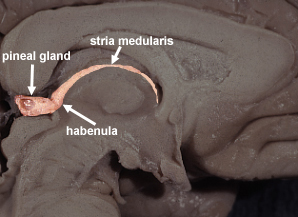
Researchers from University College London have pinpointed for the first time the left/right differences in how brains are wired at the level of individual cells. To do this, a research team led by Stephen Wilson looked at left and right-sided neurons (nerve cells) in a part of the brain called the habenula.

By causing habenular neurons to produce a bright green fluorescent protein they saw that they form remarkable "spiral-shaped" axons, the long nerve fibres that act as the nervous system's transmission lines.

Nitrous oxide, laughing gas, can't get any respect. Unlike carbon dioxide and methane, laughing gas has been largely ignored by world leaders as a worrying greenhouse gas but nitrous oxide must be taken more seriously, said Professor David Richardson from the University of East Anglia at the Society for General Microbiology’s 162nd meeting this week.

The potent gas is mainly coming from waste treatment plants and agriculture. Its release is increasing at the rate of 50 parts per billion or 0.25% every year. This means that it can be better controlled with suitable management strategies, but only if the importance of nitrous oxide (N2O) is widely recognised first.

“It only makes up 9% of total greenhouse gas emissions, but it’s got 300 times more global warming potential than carbon dioxide”, says Prof Richardson. “It can survive in the atmosphere for 150 years, and it’s recognised in the Kyoto protocol as one of the key gases we need to limit.”

"Awake", a film starring Hayden Christenson and Jessica Alba, is a psychological thriller about a horrifying phenomenon called "anesthetic awareness" where a patient's failed anesthesia leaves him fully conscious but physically paralyzed.

How common is it? Research shows that between one and three in every 1,000 patients experience some form of wakefulness during operations.

Some may not remember a period of consciousness during an operation – anesthetic drugs can interfere with recall – but they may still suffer subsequent psychological difficulties. In some cases patients aren't given enough of the sedative element of an anesthetic to keep them asleep.

LONDON, March 30 /PRNewswire/ -- A pilot scheme for Personal Budgets for people with long term conditions has been discussed in the media today (Sunday) after the Department of Health confirmed it was considering the plan.

Also known as Individual Budgets, the scheme could mean people with multiple sclerosis (MS) will be able to plan what health care they receive and when they receive it.

The Government is already trialling Personal Budgets in social care and this will extend the scheme into the NHS.

MS Society chief executive, Simon Gillespie, said: "This is an opportunity to provide people with MS with the effective care they need when they need it and in the most appropriate way.

Torn posters, tape and tomato skins may seem like strange research topics for physicists and applied mathematicians, but it's perfectly normal for a team of researchers from the Centre National de la Recherche Scientifique (CNRS) in Paris, the Universidad de Santiago, Chile, and MIT.

Such real-world applications are not only fun to study, but “we can really learn things that will be useful for industry and help us understand the everyday world around us. It is also a great way to motivate students to be interested in science,” says Pedro Reis, one of the authors of the paper and an applied mathematics instructor at MIT.

So they have tackled the issue of why wallpaper never comes off the way you want it. “You want to redecorate your bedroom, so you yank down the wallpaper. You wish that the flap would tear all the way down to the floor, but it comes together in a triangle and you have to start all over again,” said

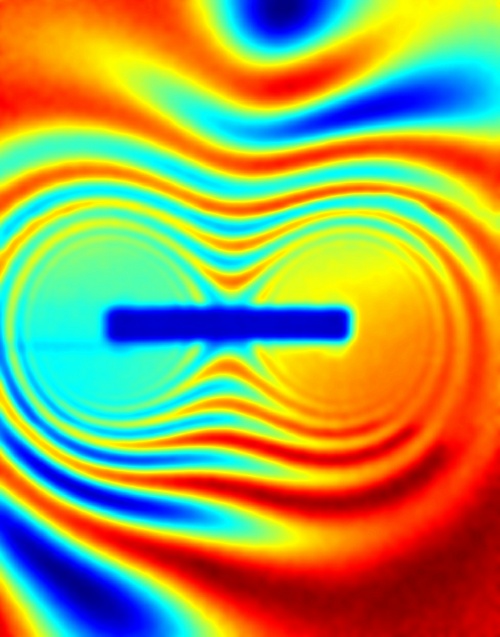
3-D images are very useful in medicine and now they're gaining ground in physics. Researchers from Hahn-Meitner-Institute (HMI) and the University of Applied Science in Berlin have succeeded in creating a direct, three-dimensional visualization of magnetic fields inside solid, non-transparent materials for the first time.

This could prove invaluable because to understand high temperature superconductivity it is vital to understand how magnetic flux lines are distributed and how these flux lines can be established in materials. With this new experimental setup, it is now possible to visualize magnetic domains in magnetic crystals three-dimensionally.

The researchers in the imaging group used neutrons, subatomic particles that have zero net charge, but do have a magnetic moment, making them ideal for investigating magnetic phenomena in magnetic materials.

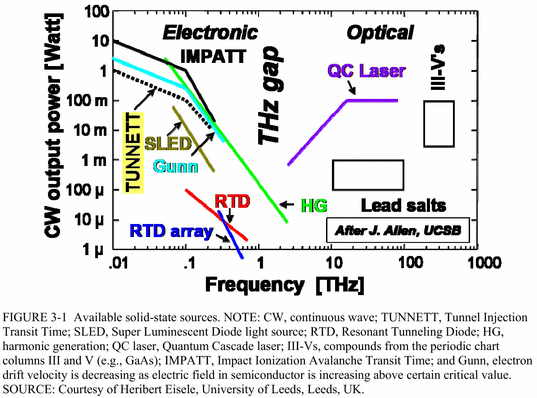
While space science has long been excited about advancements in the millimeter-wavelength/terahertz spectra, its potential in biology has been largely untapped. However, since THz radiation primarily excites vibrational modes present in water, imaging of soft tissues could also show a lot of improvement.

Terahertz systems are currently used to do things like examine hidden layers under old artwork and stop terrorists by seeing through clothes but they could be used in bio-technology to find genetic mutations without using invasive or toxic fluorescent dyes.

An important step toward that is development of handheld terahertz devices that could replace the bulky, expensive systems available now. Researchers at the the Universities of Leeds and Harvard say a quantum cascade laser is the way to go for small and portable terahertz technology.

CHICAGO, March 29 /PRNewswire/ --

- Reductions seen as soon as three days and out to 450 days in patients who received either bare metal or drug-eluting stents

The investigational antiplatelet drug prasugrel plus aspirin produced a marked and highly statistically significant reduction in the risk of coronary stent thrombosis (ST) - a major concern for physicians and patients with potentially fatal consequences - in patients who received a stent as compared to standard therapy with clopidogrel (Plavix(R)) plus aspirin (1.13 percent vs. 2.35 percent, p<0.0001), according to a stent analysis from the head-to-head TRITON-TIMI 38 trial.

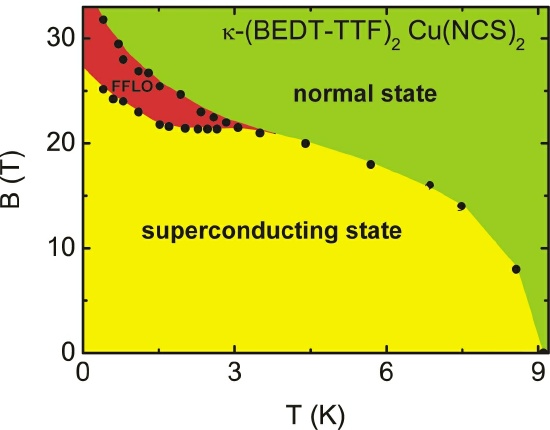
Superconductors are materials that conduct electrical currents without any loss below a certain temperature. Normally, high magnetic fields destroy superconductivity, turning the material into a normal conductor.

Novel experiments on organic superconductors revealed a new superconducting phase between the normal conducting and the superconducting state.

Prof. Peter Fulde from the Max Planck Institute for the Physics of Complex Systems in Dresden and Prof. Richard Ferrell predicted the existence of this special superconducting state in 1964, characterized by a spatial modulation of the superconductivity. At about the same time, two further researchers independently predicted the same phase. Therefore, the state is called Fulde-Ferrell-Larkin-Ovchinnikov (FFLO) state.

