



Corn has long been a primary food crop in prehistoric North and Central America but, according to a new study, it was also an important part of the South American diet for much longer than previously thought.

PhD student Sonia Zarrillo and archaeology professor Dr. Scott Raymond report that a new technique for examining ancient cooking pots has produced the earliest directly dated examples of domesticated corn (maize) being consumed on the South American continent.

As we learn more and more about the human genome and delve into specifics about what makes certain people healthier than others at the genetic levl, it becomes possible for health care providers, insurers and even employers to use genetic information against individuals even when no health issue exists.

A policy monograph highlighting the need for federal protections against genetic discrimination in employment and insurance practices was released today by the American College of Physicians (ACP). The six policy positions ACP believes should be included in the federal protections are the focus of the policy paper.

“While they’re not quite there, Congress does continue to move closer to passing federal legislation that protects the use of genetic information in employment and insurance coverage decisions,” noted David C. Dale, MD, FACP president of the 125,000 member ACP. “This monograph is important for the ongoing discussion.”

ACP’s first two positions consider insurance providers:

DETROIT, March 24 /PRNewswire/ --

Millions of people around the world have had their lives turned upside down by severe and unexpected hair loss.

This drastic change in their physical appearance was caused by various forms of a noncontagious disease generally known as alopecia, which presently can be treated but not cured.

Many of them have never met or spoken with someone else with the same condition and have kept their condition a secret for fear of being ridiculed or rejected.

So, imagine the joy of meeting scores of people from all over the world who are not only coping with such hair loss, but also living life to the fullest regardless of it.

LAKE WORTH, Florida, March 24 /PRNewswire/ --

- New Belgian passport introduces technological breakthrough in verifying covert data -

Graphic Security Systems Corporation (GSSC) and F. C. Oberthur (FCO) have teamed to produce the world's first self-authenticating passport. It was introduced in the new Belgian passport released on February 1, 2008.

FCO, the French security printer which produces the Belgian passport, has added an optical decoder page in the passport opposite the data page. When placed over the photo, the decoder page verifies the presence of GSSC's Scrambled Indicia feature hidden in the holder's photo. The Scrambled Indicia feature reveals any fraudulent changes to the photo or information printed on the data page.

LAKE WORTH, Florida, March 24 /PRNewswire/ --

- iDetector(TM) wireless network capabilities

Graphic Security Systems Corporation (GSSC) today announced it will include the Eye-Fi Card for its iDetector(TM) authentication device.

On September 17, 2007 Graphic Security Systems Corporation (GSSC) and Aven, Inc. (Aven) announced a technical world wide exclusive cooperation to offer an effective tool for counterfeit detection called the iDetector(TM). The iDetector(TM) attachment utilizes a Canon digital camera as its base hardware and software technology. GSSC, knowing the power of integrating its technology with Canon's digital cameras, anticipated third party upgrades to expand the iDetector's(TM) capabilities.

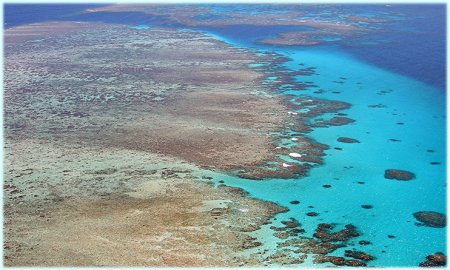
There's no McAlgae drive-through, but coral have their own addiction to 'junk food' and, say researchers, we may be in the position of needing to halt global warming in order to keep that fast food coming. 200 million humans depend on it for their subsistence.

The symbiosis between coral, a primitive animal, and zooxanthellae, tiny one-celled plants, is not only powerful enough to build the largest living organism on the planet, the Great Barrier Reef, but also underpins the economies and living standards of many tropical nations and societies who harvest their food from the reefs or have developing tourism industries.

Enzymes are biological catalysts that are made from a string of amino acids, which fold into specific three-dimensional protein structures. Without them, life would not exist. They are a valuable model for understanding the intricate works of nature. These molecular machines are responsible for initiating chemical reactions within the body. Millions of years of natural selection have fine-tuned the activity of such enzymes, allowing chemical reactions to take place millions of times faster.

In order to create artificial enzymes, a comprehensive understanding of the structure of natural enzymes, their mode of action, as well as advanced protein engineering techniques is needed. A team of scientists from the University of Washington, Seattle, and the Weizmann Institute of Science, Israel, made a crucial breakthrough toward this endeavor.

They have succeeded in creating a new type of enzyme for a reaction for which no naturally occurring enzyme has evolved.

Using classical coding, a single photon will convey only one of two messages - one bit of information. In dense coding, a single photon can convey one of four messages - two bits of information.

University of Illinois researchers say they have broken the record for the most amount of information sent by a single photon using the direction of “wiggling” and “twisting” of a pair of hyper-entangled photons. Doing so, they have beaten a fundamental limit on the channel capacity for dense coding with linear optics.

“Dense coding is arguably the protocol that launched the field of quantum communication,” said Paul Kwiat, a John Bardeen Professor of Physics and Electrical and Computer Engineering. “Today, however, more than a decade after its initial experimental realization, channel capacity has remained fundamentally limited as conceived for photons using conventional linear elements.”

TOKYO, March 24 /PRNewswire/ --

NTT Communications (NTT Com) announced today that it will establish a physical presence in the Russian market by opening a representative office in Moscow on April 1.

The office, which will start with a staff of five, will engage primarily in researching the Russian telecommunications market and promoting NTT Com's wide variety of services for enterprise customers.

According to Kazuyoshi Terada, Vice President of Business Strategy, Global Business Division, "The NTT Communications Moscow Representative Office will strengthen NTT Com's ability to develop and serve multinational enterprise customers who require high-quality one-stop ICT solutions and network resources in the Russian market."

SANTA CLARA, California, March 24 /PRNewswire/ --

Finesse Solutions, LLC, a manufacturer of measurement and control solutions for life sciences process applications, announces the release of TruFluor(TM), a single use optical dissolved oxygen measurement system, at Interphex in Philadelphia on March 26, 2008.

The TruFluor(TM) dissolved oxygen and temperature sensor is a single-use solution consisting of a disposable sheath, an optical reader, and a transmitter. The single-use sheath can be pre-inserted in a disposable bioreactor bag port, and irradiated with the bag, in order to both preserve and guarantee the sterile barrier. All wetted materials of the sheath are USP class VI compliant.

