Before the days of mandatory underseat pet carriers, my airline colleagues received a call from a woman who needed to bring her therapy pet, a pig, on a flight. The airline didn’t see a problem, since Vietnamese pot-bellied pigs are about the size of dogs and just as well behaved. However, the animal that the woman showed up with was no potbellied pig. On the day of the flight, the woman showed up with a 300 pound barnyard pig on a leash. The pig took up the entire aisle, calmly sleeping through the flight.
Astronauts blazed through their third of five spacewalks Saturday as they continued servicing the Hubble Space Telescope, installing the new Cosmic Origins Spectrograph (COS) and repairing the main science camera of the Advanced Camera for Surveys (ACS) which has been disabled since February 2007. Initial tests verified that both instruments were alive and able to communicate with ground control.
(2007 photo: Cariana Nebula imaged with ACS and CTIO; credit: NASA, ESA, N. Smith, STScI, AURA, NOAO, NSF)
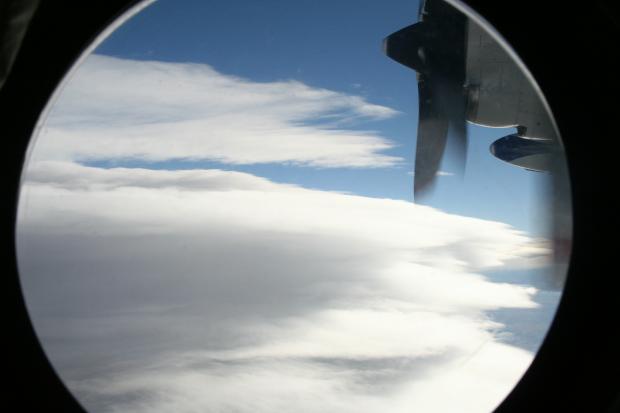
A team of atmospheric chemists say they have moved closer to what is considered the "holy grail" of climate change science; the first-ever direct detections of biological particles within ice clouds. The team, led by Kimberly Prather and Kerri Pratt of the University of California at San Diego, Scripps Institution of Oceanography, sampled water droplet and ice crystal residues at high speeds while flying through clouds in the skies over Wyoming.
Some pregnant women do not wear seat belts due to fear that the belt itself could injure the baby in a car crash. Urban myth or legitimate concern?
It is well established that seat belts save lives but if some pregnant women do not wear seat belts out of fear that the belt could harm the baby in a car crash, are they really helping or just placing themselves in danger? It's difficult to fault mothers for erring on the side of caution when it comes to unborn babies but is it actually the case that the seat belt can put the baby at risk?
Exposure to particulate matter has been recognized as a contributing factor to lung cancer development for some time, but a new study indicates inhalation of certain particulates can actually cause some genes to become reprogrammed, affecting both the development and the outcome of cancers and other diseases.
Could sleep be a critical component to maintaining a healthy body weight? Studies on subjects like this tend to have correlation arrows that point in all kinds of directions but new research presented on Sunday, May 17, at the American Thoracic Society's 105th International Conference in San Diego, says body mass index (BMI) is linked to length and quality of sleep in a surprisingly consistent fashion.
As part of the Integrative Cardiac Health Project at Walter Reed Army Medical Center, researchers analyzed the sleep, activity and energy expenditures of 14 nurses who had volunteered for a heart-health program at the Walter Reed, where the nurses were employed. The program included nutritional counseling, exercise training, stress management and sleep improvement.
A clinical study, led by researchers from University College Dublin, Ireland, and Stanford University, California, USA, with international collaborators, demonstrates that mortality rates of HIV patients can be almost halved when early antiretroviral (ARV) therapy is added to the treatment of AIDS-related opportunistic infections (OIs) such as pneumonia, meningitis or other serious bacterial infections.
The researchers are part of the AIDS Clinical Trials Group, the world’s largest clinical trial organization, and their scientific findings, published in PLosONE, recommend changes in the treatment regimes for HIV patients worldwide.
A new study using advanced cardiac imaging technology indicates that cardiac abnormalities experienced by some marathon runners following competition are temporary, and do not result in damage to the heart muscle. The study, conducted by researchers at the University of Manitoba, marked the first use of cardiac magnetic resonance imaging, or CMR, in a post-marathon setting.
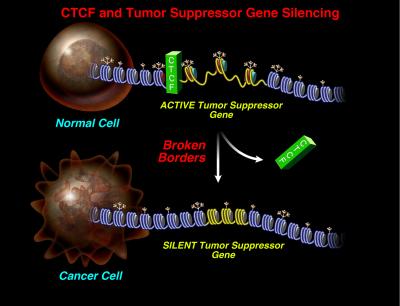
Our genome is a patchwork of neighborhoods that couldn't be more different: Some areas are hustling and bustling with gene activity, while others are sparsely populated and in perpetual lock-down. Breaking down just a few of the molecular fences that separate them blurs the lines and leads to the inactivation of at least two tumor suppressor genes, according to researchers at the Salk Institute for Biological Studies.
Their findings published in the May 15, 2009 issue of Molecular Cell explain how a single event can put a cell well ahead on the road to becoming a tumor cell.
According to a Time magazine article, “The Male Minority,” women make up almost 60 percent of undergraduate students nationwide. Science, technology and math are one of the few areas where men have superior numbers but the women are winning there too.
The Spelman College robotics team, SpelBots, tied for first place in the RoboCup Japan 2009 Standard Platform League Nao League humanoid soccer championship on May 10, 2009, in Osaka, Japan.