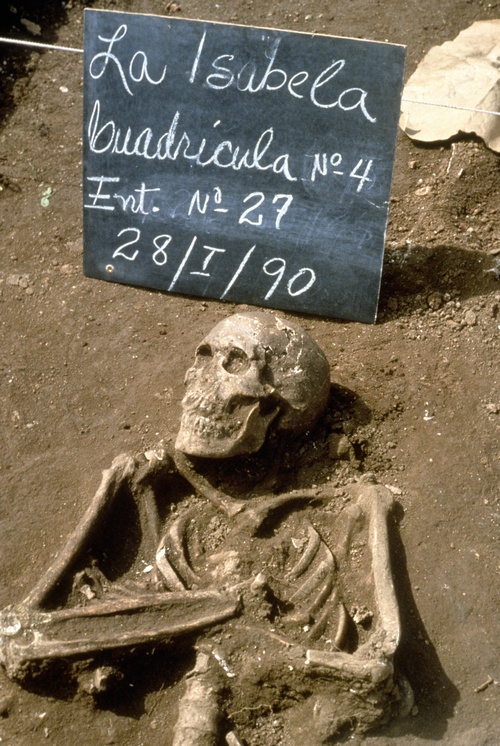
In the days of Columbus, dead men could tell no tales. Today, dead men can tell us a lot and science has just taken that forensic interrogation to new heights.
A team of researchers from the University of Wisconsin-Madison is extracting the details of the lives of crew members who remained on the island of Hispaniola after the second voyage of Christopher Columbus to America in 1493-94.
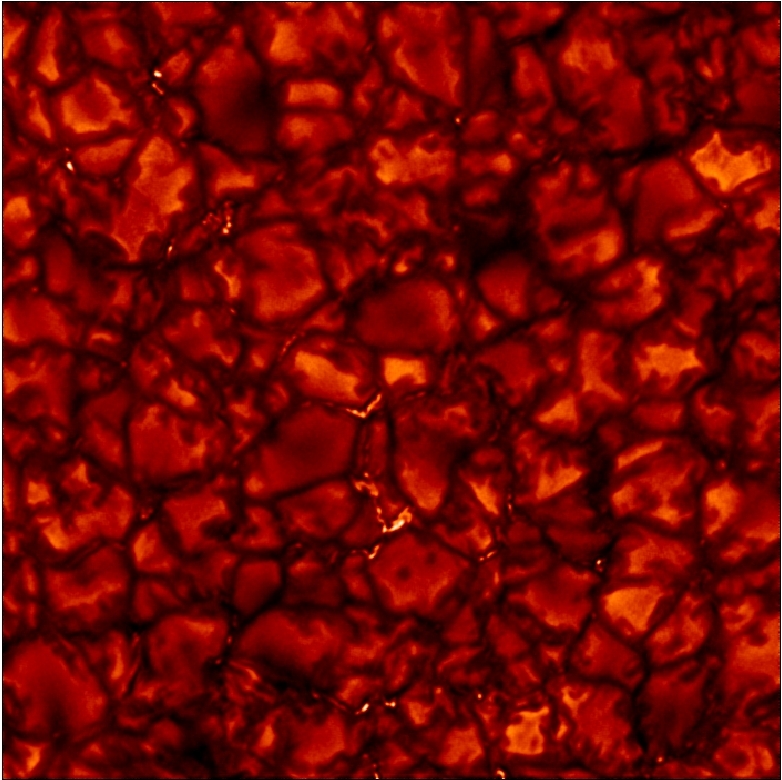
Scientists say they have detected giant twisting waves in the lower atmosphere of the Sun, shedding light on the mystery of the Sun's corona, the region around the Sun, extending more than one million kilometres from its surface, which has a vastly higher temperature than its surface. The findings of this investigation could help us understand more about the turbulent solar weather and its affect on our planet.
The massive solar twists, known as Alfvén waves, were discovered in the lower atmosphere with the Swedish Solar Telescope in the Canary Islands by scientists from Queen's University Belfast, the University of Sheffield and California State University Northridge.
New research on the reporting of medical treatments in the Australian media showed slight improvements in accuracy but the overall quality of health reporting remained poor, says a study of more than 1,200 health news stories published by Australian media outlets. It found that over the past four years there was only small improvement in quality of coverage of the availability of new treatments, the potential harm of interventions and accurate analysis of any benefits.
If you're Scottish- or Irish-born, you are twice as likely as natives to die an alcohol-related death if you move to England or Wales; surprising because most people assume if they die in Wales it will be from a beer bottle smashed over their head at a Cardiff game rather than the alcohol itself.
But it's not just a risk for natives of the British Isles; the research conducted by the University of Edinburgh and the Office for National Statistics also found that men born in India – but living in England and Wales – had similar rates of alcohol-related death as Scottish- and Irish-born people.
Tobacco isn't exactly famous for its health benefits, though the mental health effect of a Fonseca and a port after a nice steak is well-documented, but now scientists have succeeded in using genetically modified tobacco plants to produce medicines for several autoimmune and inflammatory diseases, including diabetes.
In a study published in the March issue of Cortex, researchers used a brain scanner to record the activity in each stage while people were in the process of drawing faces. The researchers found that the captured visual information is stored as a series of locations or action plans to reach those locations. It is as if the brain remembers key locations and then 'connect the dots' with a straight or curved line to achieve the desired image on the page.
Participants who had no particular expertise as artists were studied using an MRI scanner to measure levels of oxygen in the brain. They viewed black and white cartoons of faces and were asked to reproduce them using pencil and paper.
The bacterium Escherichia coli is part of the healthy human intestinal flora. However, E. coli also has pathogenic relatives that trigger diarrhea illnesses: enterohemorrhagic E.coli bacteria. During the course of an infection they infest the intestinal mucosa, causing injury in the process, in contrast to benign bacteria.
Researchers from Boston University School of Medicine (BUSM), Boston Medical Center, Harvard University and the Cambridge Health Alliance found that more than 75 percent of emergency responder candidates for fire and ambulance services in Massachusetts are either overweight or obese. The findings in the journal Obesity on March 19 may have significant consequences for public health and safety.
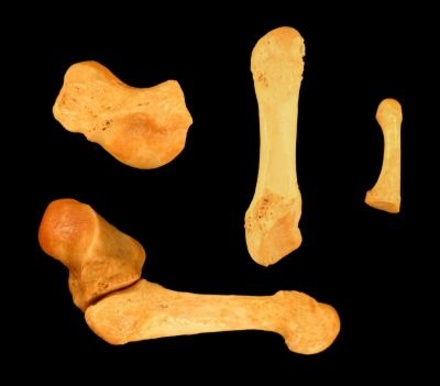
There has been a perception that running has the same metabolic cost per unit of time no matter the speed — in other words, that the energy needed to run a given distance is the same whether sprinting or jogging. Not so, says Karen Steudel, a zoology professor at the University of Wisconsin-Madison.
Though sprinting feels more demanding in the short term, the longer time and continued exertion required to cover a set distance at a slower pace were thought to balance out the difference in metabolic cost.
Hurdia victoria was originally described in 1912 as a crustacean-like animal. Now, researchers reveal it to be just one part of a complex and remarkable new animal that has an important story to tell about the origin of the largest group of living animals, the arthropods.
The fossil fragments puzzled together come from the famous 505 million year old Burgess Shale, a UNESCO World Heritage Site in British Columbia, Canada. Uppsala researchers Allison Daley and Graham Budd at the Department of Earth Sciences, together with colleagues in Canada and Britain, describe the convoluted history and unique body construction of the newly-reconstructed Hurdia victoria, which would have been a formidable predator in its time.