LUCCA, Italy and LONDON, March 17 /PRNewswire/ --
- Local Agreement Signed for a Global Business Intelligence, Performance Management and Financial Governance Solution
Tagetik, a global provider of Corporate Performance Management and Financial Governance software solutions, today announced its integration with Microsoft's SharePoint Server 2007 and Microsoft's Business Intelligence Platform. The announcement follows a comprehensive review of Microsoft's Business Intelligence roadmap, aiming to provide companies with well-known application tools such as SharePoint technologies, SQL Server and Office 2007 to support their decision making.
http://www.microsoft.com/presspass/features/2009/jan09/01-27KurtDelbeneQ...
I have a curious mind and like to find out how and why things work. Unlike my husband and my two boys, I don’t necessarily take things apart to uncover how they operate (what is it with the Y chromosome and the inherent need to do this?) – instead, I’m more of a look-it-up-and-research-it type of girl. Thank goodness for Google.
At the same time, there are some of life’s mysteries that I am happy to accept. I don’t really understand how volume control works. I mean, I know it has something to do with sound waves and amplitude – but all I really know is when I turn the knob up, I can suddenly hear my movie again over the ruckus of the kids. Mystery of how to hear the ending of “Stardust” while the boys play destruction derby in the other room – solved. **
They say a picture tells a thousand stories, but can it also tell how smart you are? Yes, say UCLA researchers.
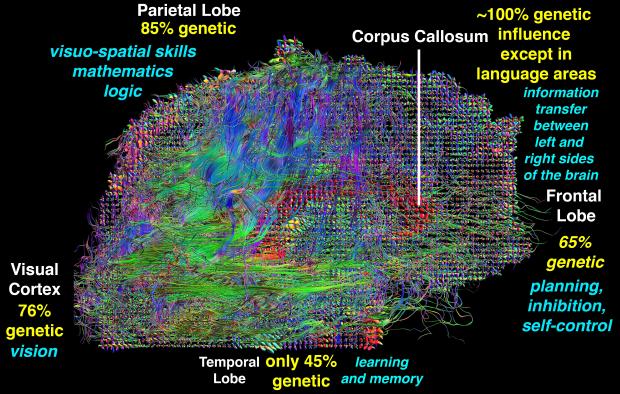
In a Journal of Neuroscience study, UCLA neurology professor Paul Thompson and colleagues used a new type of brain-imaging scanner to show that intelligence is strongly influenced by the quality of the brain's axons, or wiring that sends signals throughout the brain. The faster the signaling, the faster the brain processes information. And since the integrity of the brain's wiring is influenced by genes, the genes we inherit play a far greater role in intelligence than was previously thought.
The next time an overnight snow begins to fall, take two bricks and place them side by side a few inches apart in your yard. In the morning, the bricks will be covered with snow and barely discernible. The snowflakes will have filled every vacant space between and around the bricks.
What you will see, says Ivan Biaggio, an associate professor of physics at Lehigh University, resembles a phenomenon that, when it occurs at the smallest of scales on an integrated optical circuit, could hasten the day when the Internet works at superfast speeds.
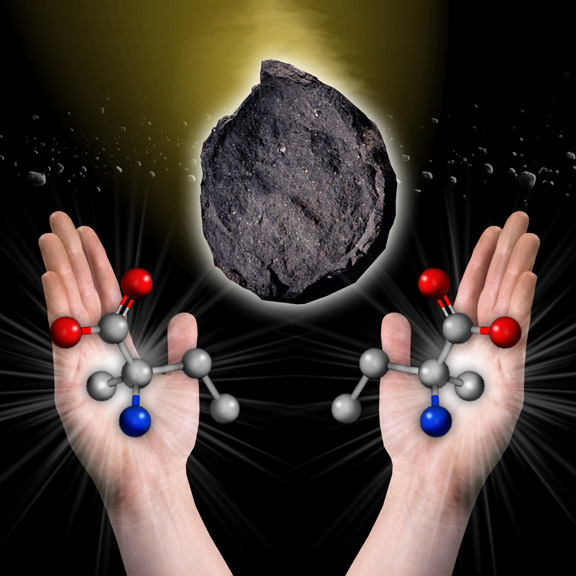
NASA scientists analyzing the dust of meteorites say they have discovered new clues to a long-standing mystery about how life works on its most basic, molecular level.
Over the last four years, the team carefully analyzed samples of meteorites with an abundance of carbon, called carbonaceous chondrites. The researchers looked for the amino acid isovaline and discovered that three types of carbonaceous meteorites had more of the left-handed version than the right-handed variety – as much as a record 18 percent more in the often-studied Murchison meteorite.
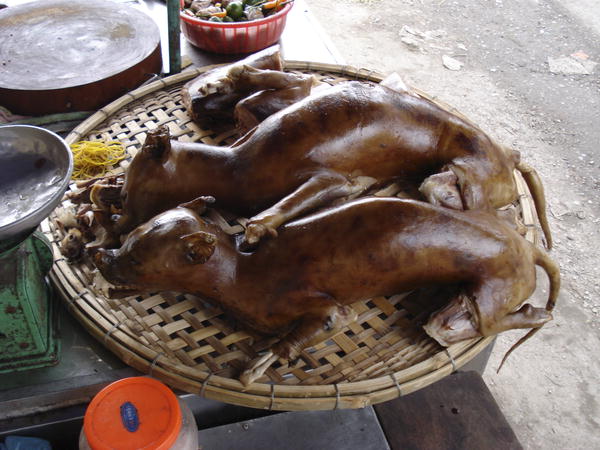
Eating dog meat is common in Asia. In two case studies published by PLoS Medicine, researchers analyzed situations in Hanoi where men died from laboratory-confirmed rabies.
The first patient was a 48-year-old male construction worker, with no preceding medical illnesses who was, among other symptoms, unable to swallow due to involuntary inspiratory muscle spasms. The second patient was a 37-year-old male farmer, without any prior medical history and similar symptoms.
The Healthcare and Science business of Thomson Reuters today announced the results of its annual roundup of the hottest researchers and research papers. In its March/April issue of Science Watch, Thomson Reuters identified the top 13 authors who fielded the highest numbers of Hot Papers in 2007-2008 as well as the most-cited research papers of 2008.
"Our annual list of those authoring multiple Hot Papers serves to highlight researchers who are leading modern scientific thought," said Christopher King, editor of Science Watch.
COPENHAGEN and ISTANBUL, March 17 /PRNewswire/ -- From golf courses to books, olive oil to vaccinations, all the goods and services that we rely on, together with many of our daily activities, require a vital resource: water. A new report by the European Environment Agency (EEA) confirms that in many parts of Europe water use is unsustainable and provides recommendations for a new approach to managing water resources.
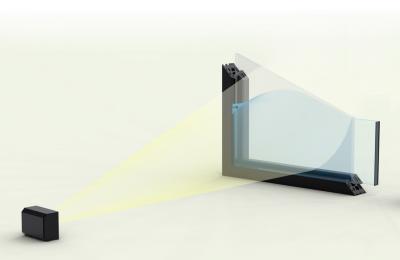
A novel motion sensor developed by the Fraunhofer Institutes for Applied Polymer Research IAP in Potsdam-Golm and for Computer Architecture and Software Technology FIRST in Berlin could enable window panes and glass doors to detect movements, thanks to a new pecial coating.
If anything changes in front of the pane, or someone sneaks up to it, an alarm signal is sent to the security guard.
Your cat is going to have a lot of fun with that, right? Luckily, threshold for the alarm can be set, so that small moving objects do not trigger an alarm.
Tiny creatures at the bottom of the food chain called diatoms suck up nearly a quarter of the atmosphere's carbon dioxide, yet research by Michigan State University scientists suggests they could become less able to "sequester" that greenhouse gas as the climate warms. The microscopic algae are a major component of plankton living in puddles, lakes and oceans.
Zoology professor Elena Litchman, with MSU colleague Christopher Klausmeier and Kohei Yoshiyama of the University of Tokyo, explored how nutrient limitation affects the evolution of the size of diatoms in different environments. Their findings underscore potential consequences for aquatic food webs and climate shifts.