





The global economic turmoil has started having an impact on the wind energy industry in Europe. Some companies are cutting down forecasts and production for 2009 and the market is showing the first signs of slowdown.

The current economic situation is slowly affecting the wind energy industry, remarks Frost Sullivan Research Analyst Gouri Nambudripad. "We are going to see a slowing down of the double-digit growth rates that were witnessed in the past few years.

Researchers at The Scripps Research Institute writing in Nature Structural&Molecular Biology say they have figured out how a macromolecular machine is able to unwind the long and twisted tangles of DNA within a cell's nucleus so that genetic information can be "read" and used to direct the synthesis of proteins, which have many specific functions in the body.
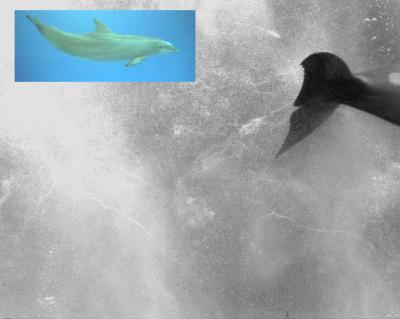
You've heard it before.   According to the laws of physics, bees can't fly.   Yet fly they do.   And British zoologist Sir James Gray noticed something strange about dolphins in 1936.  He had observed the sea mammals swimming at a swift rate of more than 20 miles per hour, but his studies had concluded that the muscles of dolphins simply weren't strong enough to support those kinds of speeds. The conundrum came to be known as "Gray's Paradox." 

For decades the puzzle prompted much attention, speculation, and conjecture in the scientific community. But now, armed with cutting-edge flow measurement technology, researchers at Rensselaer Polytechnic Institute have tackled the problem and conclusively solved Gray's Paradox. 
A new species of bacterium that causes leprosy has been identified through intensive genetic analysis of a pair of lethal infections, a research team reports in the December issue of the American Journal of Clinical Pathology.

All cases of leprosy, an ancient disease that still maims and kills in the developing world, previously had been thought to be caused by a single species of bacterium, said lead author Xiang-Yang Han, M.D., Ph.D., associate professor in Laboratory Medicine at The University of Texas M. D. Anderson Cancer Center. 
New ways of squeezing out greater efficiency from solar photovoltaic cells are emerging from computer simulations and lab tests conducted by a team of physicists and engineers at MIT.

This project, along with other research work going on now in solar cells, has the potential to get costs down "so that it becomes competitive with grid electricity," said Peter Bermel, a postdoctoral researcher in MIT's physics department who has been working on the project. While no single project is likely to achieve that goal, he said, this work is "the kind of science that needs to be explored in order to achieve that."
A study published in Journal of the American Water Resources Association states that the "Green Great Wall," a forest shelterbelt project in northern China running nearly parallel to the Great Wall, is likely to improve climatic and hydrological conditions in the area when completed. The project, which relies on afforestation (a process that changes land without dense tree cover into forest), could lead to an increase in precipitation by up to 20 percent and decrease the temperature in the area.
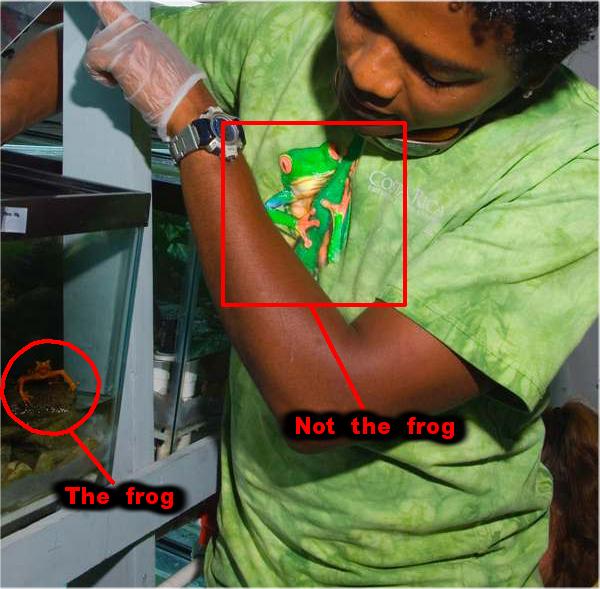
A new frog species has been discovered in Panama and will be announced in the December issue of Journal of Herpetology by a research team led by STRI former visiting scientist Joseph Mendelson, from Zoo Atlanta.

The amphibian, a type of tree frog with bright reddish- and green-colored skin that grows to a length of 122 mm was discovered by Edgardo Griffith while working with Mendelson in El Valle. Mendelson was head of the Amphibian Recovery Project in 2005 under the STRI umbrella. Today, Griffith is the director of the El Níspero zoo's Amphibian Conservation Center in the Valle de Anton, working with the Houston Zoo.
Bacteria that can cause serious heart disease in humans are being spread by rat fleas, sparking concern that the infections could become a bigger problem in humans. Research published in the December issue of the Journal of Medical Microbiology suggests that brown rats, the biggest and most common rats in Europe, may now be carrying the bacteria.

Since the early 1990s, more than 20 species of Bartonella bacteria have been discovered. They are considered to be emerging zoonotic pathogens, because they can cause serious illness in humans worldwide from heart disease to infection of the spleen and nervous system.

Bacteria that cause stomach ulcers and cancer could also be giving us bad breath, according to research published in the December issue of the Journal of Medical Microbiology. For the first time, scientists have found Helicobacter pylori living in the mouths of people who are not showing signs of stomach disease.

The mouth is home to over 600 different species of bacteria, some of which can cause disease. Helicobacter pylori has recently been shown to cause stomach ulcers and is also responsible for a large proportion of gastric cancers. Scientists estimate that between 20 and 80 % of people in the developed world and over 90 % of people in the developing world carry the bacterium.

A study of people living with the devastating effects of multiple sclerosis (MS) has provided an idea of the economic cost of living with the incurable, life-long condition.   The independent research is one of the largest ever studies into the financial impact of MS and has revealed that the cost of being diagnosed with MS is on average nearly GBP17,000 per person.

