




A cancer false alarm could put people off checking out cancer symptoms they develop in the future, according to a review of papers.

More than 80 percent of patients with potential cancer symptoms are given the all-clear after investigations. But according to the new paper, having a false alarm might discourage people from seeking help, even years later, if they notice possible symptoms of the disease again.

Facebook knows what you're doing. What you're watching. How you're feeling. Khakimullin Aleksandr/Shutter/Wired

By Paul Levy, University of Brighton

Did you recently buy a Samsung smart TV? If you are worried about privacy, you may be wondering how smart that decision was following the manufacturer’s warnings that its voice-activated televisions may record personal information – that is, your conversations – and transmit them to a third party.

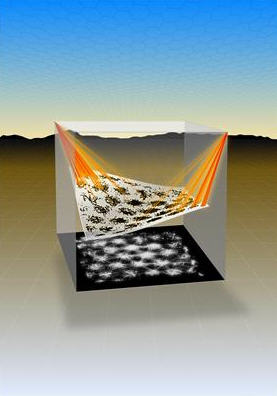
A new study links a well-known cell communication pathway called Notch to one of the most common -- but overall still rare -- brain tumors found in children.

Researchers have uncovered a pathway that's key for protecting healthy tissue from overly active immune responses. The findings, which are described in an upcoming issue of the Journal of the American Society of Nephrology, may help clinicians provide better treatments for patients with a variety of autoimmune diseases.

During inflammatory responses due to infection, trauma, or cancer, the body's immune system becomes highly activated in an attempt to fend off invading organisms, foreign bodies, or tumor cells. Excessive immune activation, however, often results in collateral damage to surrounding healthy tissues. Even worse, uncontrolled immune responses can lead to the development of self-destructive autoimmune diseases.

The brain’s GPS wouldn't be much value if its maps of our surroundings that were not calibrated to the real world - grounded in reality.

But they are, and a new study shows how this is done.

The way that the brain’s internal maps are linked and anchored to the external world has been a mystery for a decade, ever since 2014 Nobel Laureates May-Britt and Edvard Moser discovered grid cells, the key reference system of our brain’s spatial navigation system. Now, researchers at the Mosers’ Kavli Institute for Systems Neuroscience believe they have solved this mystery. 

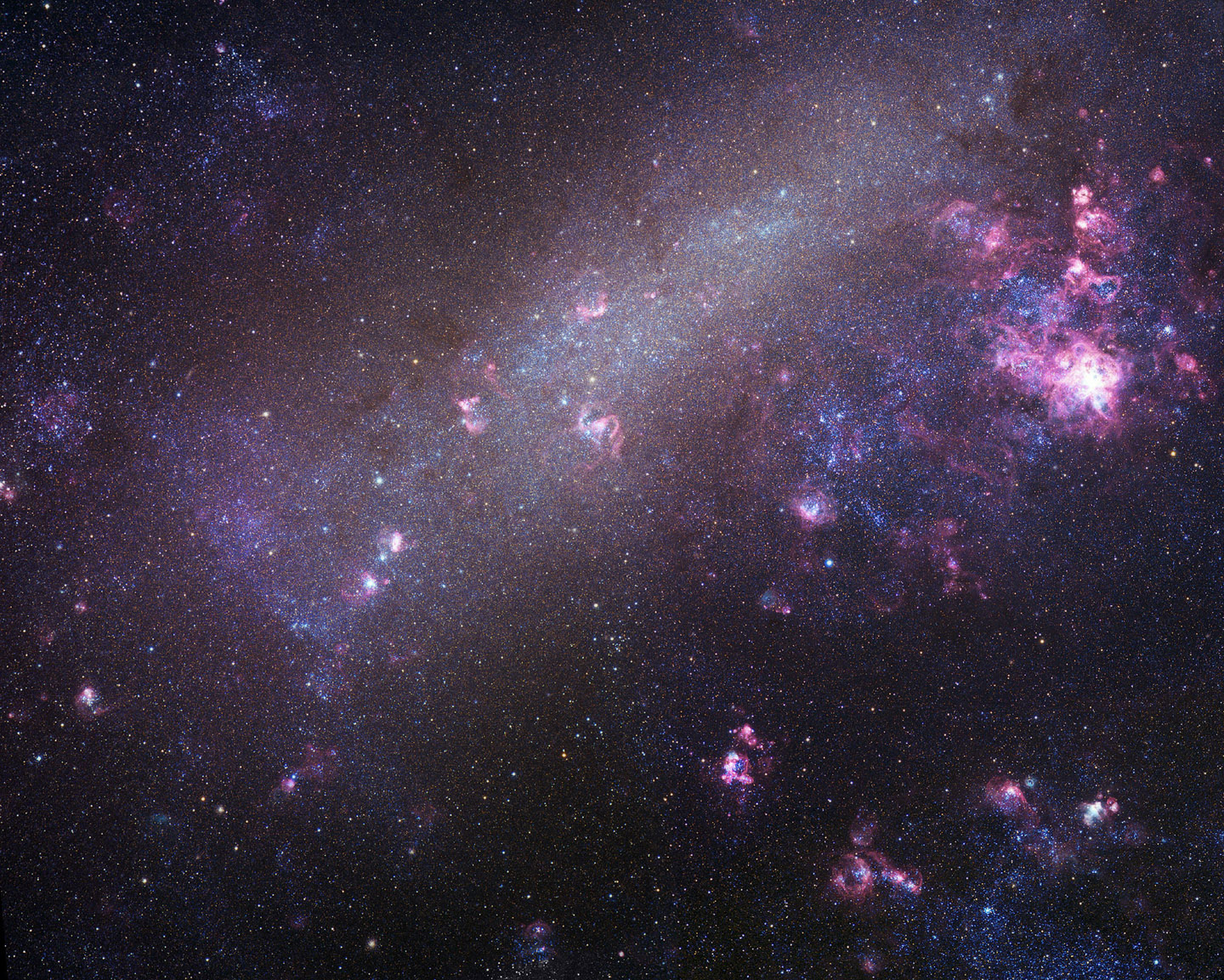
Most people don't realize it, but the majority of stars in our galaxy arrive in pairs. These fraternal twins tend to be somewhat equal partners when it comes to mass, but in a quest to find mismatched star pairs called extreme mass-ratio binaries, astronomers have discovered a new class of binary stars: One star is fully formed while the other is still in its infancy.

Osteoporosis is the most common type of bone disease, it is characterized by bones becoming so weak and brittle a simple cough can cause a fracture.  About half of all women over the age of 50 are at risk. 

It is preventable but for those who have it, existing treatments for this pathological bone loss mean inhibiting osteoclasts (bone-destroying cells) to limit bone degradation - but by doing so, they also prevent bone formation since it is stimulated by the presence of these very same osteoclast cells.

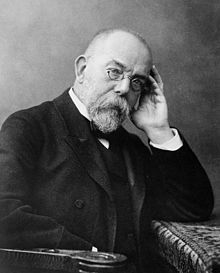
Everyone has heard of Louis Pasteur - most people know that pasteurization is a process of sterilizing food to make it safer. (1) And today is Darwin Day, when Charles Darwin is fêted for his work on evolution and natural selection.

Fewer people have heard of Robert Koch, though he is responsible for keeping billions of people alive in much the same way Pasteur is.

By Tobias Pamminger, University of Sussex

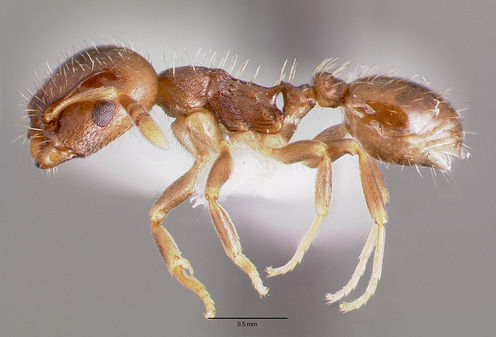
Ants have a reputation of being industrious hard-working animals, sacrificing their own benefit for the good of the colony. They live to serve their queen and take care of all essential tasks including brood care, gathering food and maintaining the nest.

However, not all ant species live up to their reputation. A handful of ant species have figured out a way to outsource all these essential tasks – by exploiting their weaker cousins.

A preprint article by the IceCube collaboration captured my attention today in the Cornell Arxiv, and even more interesting was the main result of the analysis it reports, which can be shown as a "temperature plot" on an equilateral triangle. We will get to that, but let me first explain what is the experiment, what are the goals, and what it is that was measured.

