Researchers at UT Southwestern Medical Center have found that individuals who carry a specific form of the gene PNPLA3 have more fat in their livers and a greater risk of developing liver inflammation.

They also found that Hispanics are more likely to carry the gene variant responsible for higher liver-fat content than African-Americans and Caucasians.

The new findings, published in Nature Genetics, provide a gene-based explanation for the results of a 2004 UT Southwestern-led study that determined that the propensity to develop nonalcoholic fatty liver disease differs among ethnic groups, with a higher percentage of Hispanics developing the disorder than African-Americans or Caucasians.

In marking the passing of its founder, Paul Newman, the Association of Hole in the Wall Camps has issued the following statement:

While greatly saddened by Paul's passing, the family of Hole in the Wall Camps celebrates the life of Paul Newman and the legacy he has left us and the world.

Paul's commitment to the welfare of children suffering from serious illnesses and life-threatening diseases was never-ending. His infinite passion to provide kids who are sick with a place "to kick back and raise a little hell" has touched the lives of children everywhere.

Maybe its the fear of turning 40. Maybe its the feeling of unfinished business. Maybe its the fire in the belly that has not quite extinguished. For retired elite athletes, the itch is always there to make a return after experiencing "life after sport". For some, it becomes too strong to ignore.

This year has seen the return of at least three champions, Dara Torres, Lance Armstrong and Brett Favre. As they explain their individual reasons for coming back, some similarities emerge that have more to do with psychological needs than practical needs.

In a recent Miami Herald article, Torres explained her comeback to competitive swimming at age 41, "For me, it's not like I sat around and watched swimming on TV and thought, `Oh, I wish I was still competing'. It was more gradual. But all of a sudden, something goes off inside you and you start seriously thinking about a comeback. You'd think the competitive fire would die down with maturity, but I've actually gotten worse. I wasn't satisfied with silver medals. I hate to lose now more than I did in my 20s. I'm still trying to figure out why.''

David Sloan Wilson, over at the Huffington Post, has replied to my criticism of his previous essay on why the so-called “invisible hand” guiding financial markets is, as he puts it, “morally, ethically, spiritually, physically, positively, absolutely, undeniably and reliably dead.” David and I have a good working relationship (he is one of the infamous “Altenberg 16”) and mutual respect, so the following is meant to be in the spirit of an open minded debate between two scholars. David agrees, contrary to many of our colleagues, that it is good for the public to see scientists honestly argue their diverging positions in public, so here it goes.

First off, David claims that both conservative commentator Larry Arnhart and I “have objected to [David’s] declaration that the invisible hand is dead.” Arnhart has, I certainly have not. I completely agree that this pernicious idea has gone the way of the dodos in light of the events of recent years (at least from the Enron debacle on). I simply disagree that such a conclusion has anything whatsoever to do with hypotheses on the evolution of human morality and cognitive abilities.

Wilson challenges my claim that evolutionary psychology cannot tell us much, as a science, about the evolution of social human behavior. He rhetorically asks “Would [Massimo] make the same claim about astronomy, geology, and paleobiology? Past events leave traces in the present that can be pieced together to produce solid knowledge.”

We have many great anti-tumor drugs that can do a fantastic job destroying the molecular insides of tumor cells. There is, however, a major catch: tumors have a nasty habit of become drug resistant. Such is the case with the breast cancer chemotherapeutic agent docetaxel. This drug can be effective at stopping breast cancer, but unfortunately many tumors are docetaxel-resistant. 50% of breast cancer patients receiving their initial course of chemotherapy are resistant to docetaxel, and it gets worse for patients who have already had chemotherapy - 70-80% of patients who have already received chemotherapy don't respond to this drug.

Administering docetaxel to resistant patients obviously wastes time that could be spent on other treatments. It also causes needless suffering of side effects. But is there some way to predict in advance who is going to be resistant? Or better yet, is there something we can do to eliminate docetaxel resistance altogether?

A Japanese group from the Japanese National Cancer Research Institute set out to tackle this problem, and their encouraging results have been reported in Nature Medicine. These researchers discovered a gene that makes breast cancer cells resistant to docetaxel, and they used that knowledge to knock out the source of docetaxel resistance. Although this study was largely confined to petri dishes and mice, cancer researchers can now use this result to identify patients who won't respond to docetaxel, and they are ready to test this new therapy target in real human cancers.

We read a lot about kids not being as good in science as we were back in the day. And we read a lot about women being missing from science too. You wouldn't know it by these outstanding young scientists in this year's EU contest for Young Scientists, which was held in Copenhagen, Denmark and rewarded contestants aged 14 - 19 who shared a €46,500 prize pot.

The contestants represented 39 countries across Europe - as well as special guests Brazil, Canada, China, Mexico, New Zealand and the USA - and they presented 87 winning projects from national competitions covering a wide range of scientific disciplines; from engineering and earth sciences to biology, mathematics, chemistry, physics, medicine, computer and social sciences. The standard of entries was consistently high and several past participants have achieved major scientific breakthroughs or set up businesses to market the ideas developed for the Contest.

"The EU Contest for Young Scientists is about supporting the rising stars of tomorrow's European science.” says European Science and Research Commissioner Janez Potocnik. It shows that Europe is a real reservoir of talents which is crucial at a time of global competition for knowledge. It also makes young people enjoy the experience of working together, beyond national borders, in the spirit of the European Research Area we strive to build.
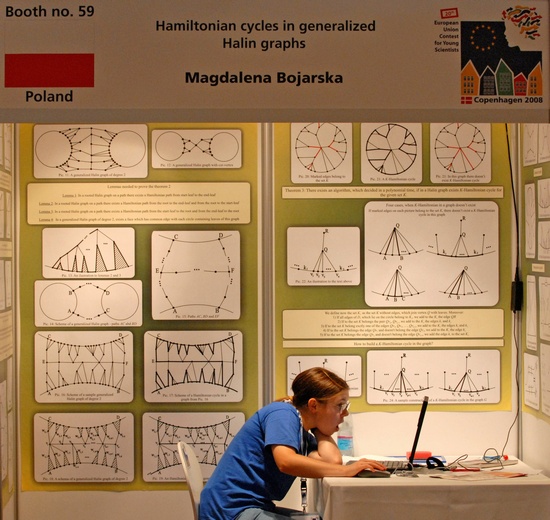

Magdalena Bojarska from Poland - “Hamiltonian cycles in generalized Halin graphs”

For decades now, cigarette makers have marketed light cigarettes, which contain less nicotine than regular smokes, with the implication that they are less harmful to smokers' health. A new UCLA study shows, however, that they deliver nearly as much nicotine to the brain.

The basic numbers would seem to bear that out the less harmful claim. Light cigarettes have nicotine levels of 0.6 to 1 milligrams, while regular cigarettes contain between 1.2 and 1.4 milligrams.

In the brain, nicotine binds to specific molecules on nerve cells called nicotinic acetylcholine receptors, or nAChRs. When nerve cells communicate, nerve impulses jump chemically across gaps between cells called synapses by means of neurotransmitters. The neurotransmitters then bind to the receptor sites on nerve cells — in the case acetylcholine resulting in the release of a pleasure-inducing chemical called dopamine. Nicotine mimics acetylcholine, but it lasts longer, releasing more dopamine. Most scientists believe that's one key reason why nicotine is so addictive.

WORCESTER, Massachusetts, September 26 /PRNewswire/ --

Verax Biomedical Inc., a pioneer of rapid tests for detecting bacterial contaminants in blood cells and tissue, announced its Platelet PGD(R) Test for bacterial detection is now CE Marked. The test, which received 510 (k) clearance from the U.S. Food and Drug Administration (FDA) in September 2007, holds potential to improve the safety of the blood supply by easily and quickly detecting a broad range of bacterial contaminants.

GENEVA, September 26 /PRNewswire/ -- Mercuria Energy Trading S.A. of Switzerland has won an auction by the Sao Paulo Municipal Government in Brazil of 713,000 certified emission reduction (CER) credits, representing 713,000 tons of CO2 equivalent. The winning bid was 19.20 Euros ($28.20) per credit-a total of over 13.68 million Euros.

The auction took place under the framework of the Kyoto Protocol, an international treaty under which signatory nations agree to create a market for carbon emissions, in order to try to reduce CO2 emissions into the earth's atmosphere.

The auction was held by the BM&FBOVESPA Exchange in Brazil. Eight bidders participated in the auction.

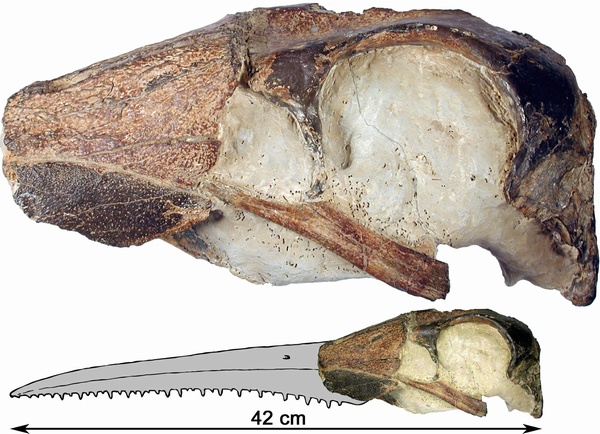
This kind of Mother Goose is no fairy tale. A 50 million year old skull reveals that huge birds with a 5 meter wingspan once skimmed across the waters that covered what is now London, Essex and Kent. These giant ocean-going relatives of ducks and geese also had a rather bizarre attribute for a bird: their beaks were lined with bony-teeth.

Described today in the journal Palaeontology, the skull belongs to Dasornis, a bony-toothed bird, or pelagornithid, and was discovered in the London Clay, which lies under much of London, Essex and northern Kent in SE England. The occurrence of bony-toothed birds in these deposits has been known for a long time, but the new fossil is one the best skulls ever found, and preserves previously unknown details of the anatomy of these strange creatures.

<