




For most people, the Jurassic period conjures up images of huge dinosaurs chomping their way through lush vegetation and each other. 

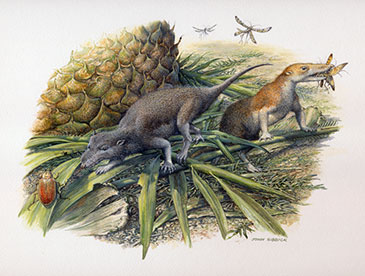
But mammals and their immediate ancestors were also around 201 to 145 million years ago, just not as spectacular as we are now. 

Early Jurassic mammals were thought to have been confined to the ecological margins, eating whatever insects they could find. However, this was also the time when new mammal characteristics – such as better hearing and teeth capable of precise chewing – were developing. So, if the earliest mammals were all small generalized insectivores, where was the competition driving the evolution of such features?

Cornell University marketing researchers recently tracked the purchasing records in a supermarket chain that uses the Guiding Stars System to rate the nutritional value of foods for sale. 

Among the popular mythologies built up around native American cultures is that they had no disease before Europeans arrived full of pathogens. It's a common narrative in anthropology, it just was never science.

A new study documents that again, finding isolated Mycobacterium pinnipedii from skeletons found in Peru which are at least 1000 years old. The pathogen is a relative of the TB bacterium that affects seals, so it likely that seals carried the pathogens from Africa to the Peruvian coast.

David Gorski of Wayne State University School of Medicine and Steven Novella of Yale University, writing in Trends in Molecular Medicine, call for an end to clinical trials of "highly implausible treatments" such as homeopathy and reiki. Over the last two decades, such complementary and alternative medicine (CAM) treatments have been embraced in medical academia despite budget constraints and the fact that they rest on dubious beliefs.

By Charis Palmer, The Conversation

Crowdsourcing competitions, popular with companies seeking to tap into groups of knowledge, are often diminished by malicious behaviour, according to a new study.

The research, published today in the Journal of the Royal Society Interface, found the opennesss of crowdsourced competitions, particularly those with a “winner takes all” prize, made them vulnerable to attack.

In a bygone era, doctors thought every life was important. Treatment was aggressive and persistent in intensive care units even when it might be futile. 

In the 21st century world, resources are the first consideration, and there are plenty of ideas about ways to curb treatment and lower costs. A new analysis finds that doctors could try a little less in the intensive care unit - because otherwise they are causing other ill patients needing medical attention to wait for critical care beds.

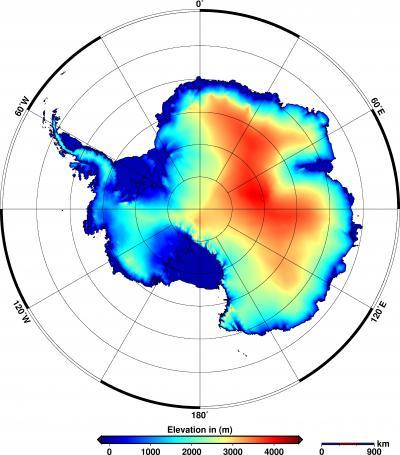
For the first time, scientists have mapped elevation changes of Greenlandic and Antarctic glaciers.

For the new digital maps, the researchers evaluated all data by the CryoSat-2 altimeter SIRAL. Satellite altimeter measure the height of an ice sheet by sending radar or laser pulses in the direction of the earth. These signals are then reflected by the surface of the glaciers or the surrounding waters and are subsequently retrieved by the satellite. This way the scientists were able to precisely determine the elevation of single glaciers and to develop detailed maps. 

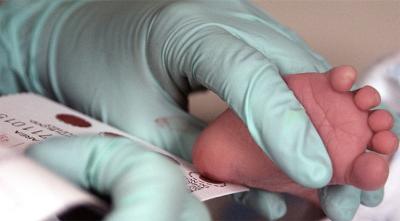
A newborn screening test for severe combined immunodeficiency (SCID) reliably identifies infants with this life-threatening inherited condition, leading to prompt treatment and high survival rates.

Severe combined immunodeficiency affects approximately 1 in 58,000 newborns, according to the paper, indicating that the disorder is less rare than previously thought. 

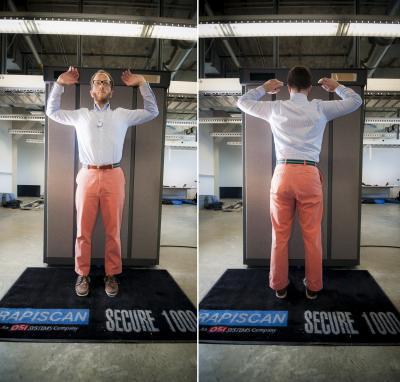
There are several security vulnerabilities in full-body backscatter X-ray scanners deployed to U.S. airports between 2009 and 2013.

In laboratory tests, researchers were able to successfully conceal firearms and plastic explosive simulants from the Rapiscan Secure 1000 scanner. The team was also able to modify the scanner operating software so it presents an "all-clear" image to the operator even when contraband was detected. "Frankly, we were shocked by what we found," said J. Alex Halderman, a professor of computer science at the University of Michigan. "A clever attacker can smuggle contraband past the machines using surprisingly low-tech techniques."

The structural components of advanced reactors such as the sodium fast reactor and the traveling wave nuclear reactor must be able to withstand the extreme levels of radioactivity from the fission reaction itself, at temperatures well above 400 Celsius. Standard tests of such components are expensive, require increasingly rare test reactors and test periods that are impractical. In addition, the samples themselves also become radioactive making subsequent studies and examination time consuming and expensive. 

Nonetheless, understanding how these structural components are affected by radiation at the microscopic level is critical to building long-lasting, robust and safe nuclear reactors.


