




Have you ever noticed that you function better when you feel comfortable and confident in your surroundings and that when you are unsure of yourself, you are more likely to stumble? The same is true for our kids. In their element, where they are sure of all the important variables and comfortable expressing themselves, they make better eye contact, engage more willingly in communication, show attachment, and function at their best.

Remove them from their comfort zones and we have vastly different children. We have children who may have been singing at the top of their lungs only an hour before now displaying selective mutism when we take them somewhere new, or who were happy and cheerful now pensive and moving towards serious meltdown.
The U.S. Federal Court of Appeals has overturned an August 2010 limitation on federal funding of human embryonic stem cell research.  Since 2001, federal funding of human embryonic stem cell research had been limited to existing lines.  Private and state funding of hESC research was unimpeded and funding was allowed for lines that had already been created prior to 2001.   In 2009, Pres. Obama issued a memorandum lifting restrictions while cautioning that policies would have to be in place to prevent use in cloning and other unethical scenarios.
"A podcaster, an editor, a policy wonk and a NASA engineer walk into a bar..."  At the DCSWA workshop, regional media talents attempted to answer the unanswerable: what is the future of science writing and science journalism?

Deborah Ager (of Bolt and also ClickWisdom), noted, without irony, that "in 2011, everyone is a newspaper (or thinks they are)".

What kind of funeral should one as a semi rational person insist on? My immediate reflexive answer is “don’t give a something, stuff me in the thrash chute if you must”. However, a burial or cremation is not about the deceased but about those left behind. I thought something up, but before writing a post, one better searches the internet - surely somebody has covered this already much better.


What I found searching for “Atheist Funeral” and similar however was a bunch of crap, like replacing religious themes with 'spiritual' ones. Toss the bible out to roll the crystal ball in – great.

I have once before put down some thoughts about computing devices and the situation for scientific use of computer technology, hoping to get some response and start some fruitful discussion. It remained with the hopes, some comments appeared there, but not really in the direction I think is important.
In his recent blog post "The World Is Not Woven From Real Stuff", Sascha Vongehr wrote:
Some merely claim that we need quantum mechanics so that the electron does not fall into the atom’s nucleus. Any classical electric charge would spiral into the atom's nucleus. The material that they make up would collapse.... Well, how convincing is this argument? Does it convince you? It would not convince me without a severe dose of already knowing at least a bunch of electromagnetism. Why could there not be some other, more intuitive explanation of why atoms do not collapse?


The last flight of the space shuttle Endeavour will be both manned and squidded.
If you are in science and you have heard the name Paul Feyerabend, it is likely because you have heard the term "post-modernist" and, if you know about post-modernism, you likely do not think much of deconstructionist silliness like that evolution and creationism are both 'cultural traditions' because sociology and psychology play a role in how science is done.
Last night on PBS's NewsHour, Robert MacNeil answered viewers' questions.

ROBERT MACNEIL: Well, perhaps he's right.
We tried to concentrate on what we thought were urgent issues, urgent problems. And a lot of adults with autism, particularly those who describe themselves as a kind of neurodiversity community, are high-functioning people with autism, who have busy and productive lives in the world, who serve a wonderful purpose of helping the community at large to understand and witness autism and be tolerant of it.
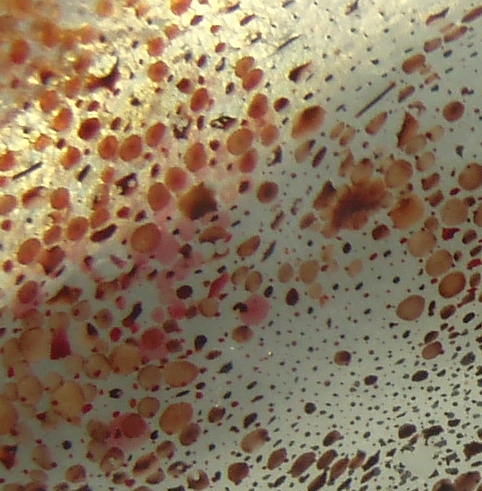
It's not exactly news--the Navy's decision to fund a huge, interdisciplinary research project on squid skin is so last year--but the topic cropped up again and started me wondering: why do squid use different techniques to make different colors?

Here's an explanatory bit from MSNBC:

