Astronomers at the Hubble Space Telescope believe they have found the most distant object ever seen in the universe, 13.2 billion light years away, some 3% of the age of universe, making it roughly 150 million light years more distant than the previous record holder, says the report in Nature.
This newly found object, named UDFj-39546284, is a compact galaxy made of blue stars that existed only 480 million years after the Big Bang - and it's tiny. Over one hundred such mini galaxies would be needed to make up our Milky Way.
This morning, as I walked out of home headed to work, the sky was clear and still dark. As I looked up, I immediately noticed the bright light of Venus above the houses of Venice. Have you ever watched Venus on a clear morning sky ? It is a marvelous sight! No wonder the planet was named after the most beautiful of all goddesses.
My trip to the University, in Padova, begins with a 7-minute walk to the Venice train station, followed by a 40 minute ride and then a further 15-minute walk in Padova to reach the Physics Department. While on the train I usually busy myself with document editing on my laptop, but on my walks I use to try and put to work the other main CPU I have got - my brain.
Frédéric Chopin, composer of "The Last Waltz" and poet of the piano, suffered from tuberculosis and regularly hallucinated.
Even for those in the Romantic Revolution, like Liszt, Schumann and Victor Hugo, among others, Chopin was considered frail and hypersensitive and somewhat of a mad genius. Tuberculosis would claim him at age 39 but a paper published in Medical Humanities says that his hallucinations were not madness, but rather temporal lobe epilepsy. Hallucinations typically feature in seizure disorders, they say.
In , it was noted that happiness spikes when wealth increases but then gradually levels off as a factor. Money does not buy happiness, it was always said, and it may be that money does not buy a better education either.
It's what happens when money is expected to increase basic education; achieving that begins to conflict with notions of diversity, equality and inclusion.
Inclusion has become a political buzzword, notes Docent Girma Berhanu from the University of Gothenburg in International Journal of Special Education, but educational reform is leading to less of it.
A software that can drastically reduce CO2 emissions (and energetic costs) on computers all over the world has been developed by Portuguese scientists
and is freely available to anyone interested.
Without question, a booming worldwide population and the need to feed them have resulted in greater greenhouse gas emissions. The goal of any civilized society has always been to make food affordable to everyone regardless of income and we are converging on that rapidly. If anything, the rising obesity problem is because we are reaching a Utopian ideal of enough food for everyone in richer countries.
Do you live for moments where "you're so absorbed by the task at hand that you lose track of time and place"? Some call this 'the zone', psychologists call it Flow, and I'll pointlessly coin a acronym, 'SPS' (super productive state). CSM guest blogger Trent Hamm has some insights on how to
flip [your] mental switch and find 'the zone'. Why flip that switch?
"figure out how to get in the zone and do it as often as possible. If you can do that, everything else really is secondary. You will find success."
The U.S. spends more per capita on health care for its citizens than any other nation and, its proponents note, the quality is higher, but where area where spending has not helped is the life expectancy of older people - at least when it comes to increases in life expectancy.
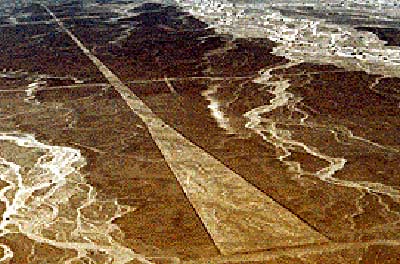
Well, we now know what a Cargo Cult is, and we are now up to date on the recent research into the Nasca Lines. What I haven’t brought you completely up to date on is the actual Ancient Alien Theory explanation of the Nazca lines.
The History Channel sums it up pretty succinctly:
“The Nazca Lines
Etched
into a high plateau in Peru’s Nazca Desert, a series of ancient designs
stretching more than 50 miles has baffled archaeologists for decades.
Along with simple lines and geometric shapes, they include drawings of
animals, birds and humans, some measuring more than 600 feet across.