Last week I told you how to
get your degree. Now it's time to look at the life of a working scientist. It's time for me to answer oft-asked questions like:
- What is a scientist's regular day at work like?
- What do you do?
- Where do you do it-- office, home, et cetera?
- Do you work alone or with others in the same enviornment?
- What got you interested in science?
- Was it easy to get a job?
- Around how much can i expect to earn?
- How many hours do you work a day?
- Do you feel you have enough time to spend with your family?
Why are we forked creatures instead of tumbling beach balls of undifferentiated cells?
An embryo begins by dividing into identical cells, but within hours these cells begin to make genetic decisions, turning off some genes and turning on others. So the ball of cells acquires a front end and a back end, a top and a bottom, nerve cells and muscles cells, all still carrying the same DNA, but DNA now packaged in such a way that some genes are shrink wrapped and silent but others are spread-eagled for easy access and active.
I am acutely aware of my advantages as a tall, white, semi-able-bodied Westerner with middle class background in a northern European culture. I had and still have it much easier than most people especially here in China. Believe me, I am 100% fully aware of how unfair life is, of how much I should not take for granted, and especially of how easy I could have had it, if I had played the usual game with the cards I was dealt. Without my unfair edge, I would not even have been able to dare play my own game.
Want to know if you can be the king of Donkey Kong? A group of researchers say they can predict "with unprecedented accuracy" how well you will do on a complex task like a strategic video game - by analyzing activity in a specific region of your brain.
Instead of measuring how brain activity differs before and after subjects learn a complex task, the researchers analyzed background activity in the basal ganglia, a group of brain structures known to be important for procedural learning, coordinated movement and feelings of reward.
Forget spray-on tans, new research in Evolution and Human Behaviour says eating carrots and tomatoes gives you a more healthy tan than even the sun.
Dr Ian Stephen, from the School of Psychology, University of Nottingham, Malaysia Campus, led the research and said, "Most people think the best way to improve skin colour is to get a suntan, but our research shows that eating lots of fruit and vegetables is actually more effective."
Stereotypes exist for a reason. They give us a comfortable idea of what we are dealing with, based on experience or at least perception. Gender stereotypes suggest that men are usually tough and women are usually tender but it turns out stereotypes may be more than experience to our brains.
In a new Psychological Science study, when subjects looked at a gender-neutral face, they were more likely to judge it as male if they were touching something hard and female if they were touching something soft.
When physicists working in a collaboration want to publish the observation of a new effect in the data, they need to first convince their peer that what they are observing is real, and not the product of a weird fluctuation.
Statistical fluctuations are everywhere, and they sometimes do produce weird results. We are only human, and when facing unlikely fluctuations we are invariably tempted to interpret them as the manifestation of something new and unknown.
When I was a younger guy, I read my astrology sign 'predictions' in the newspaper. It was in the comics section, so clearly no one took it too seriously. But astrology had at least a foundation in science. Unfortunately, like homeopathy, it has long outlived its quirky time even though it has been shown to be rubbish.
But people who do have an interest in astrology will want to take notice soon.
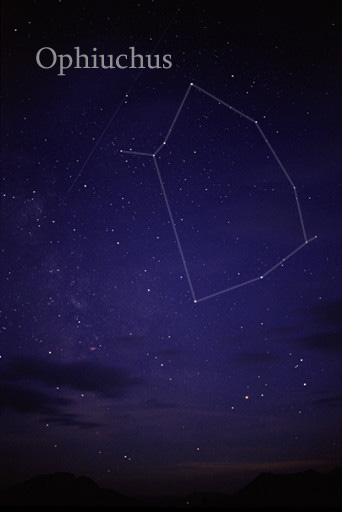
Astronomer Parke Kunkle told NBC the astrology signs have not been updated in so long they aren't really accurate. In fact, there need to be 13 instead of 12, due to changes in the Earth's alignment.
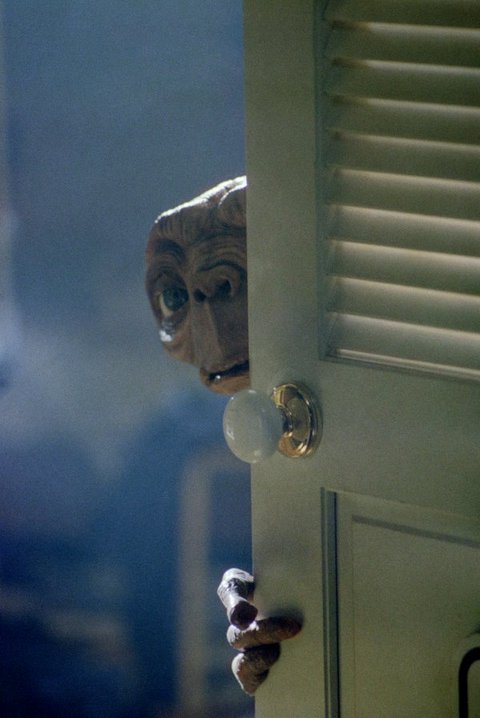
Little green men. Can they exist? Do they exist? And what do they look like?
The American Diabetes Association estimates that nearly 24 million children and adults in the U.S. have diabetes. Type 2 diabetes is the most common form of the disease and accounts for about 90 to 95 percent of these cases.
Some studies have shown that coffee may be protective against type 2 diabetes. No one has determined why but researchers at UCLA have discovered a possible molecular mechanism behind coffee's protective effect. The protein sex hormone–binding globulin (SHBG) regulates the biological activity of the body's sex hormones, testosterone and estrogen, which have long been thought to play a role in the development of type 2 diabetes. And coffee consumption, a new study in Diabetes says, increases plasma levels of SHBG.