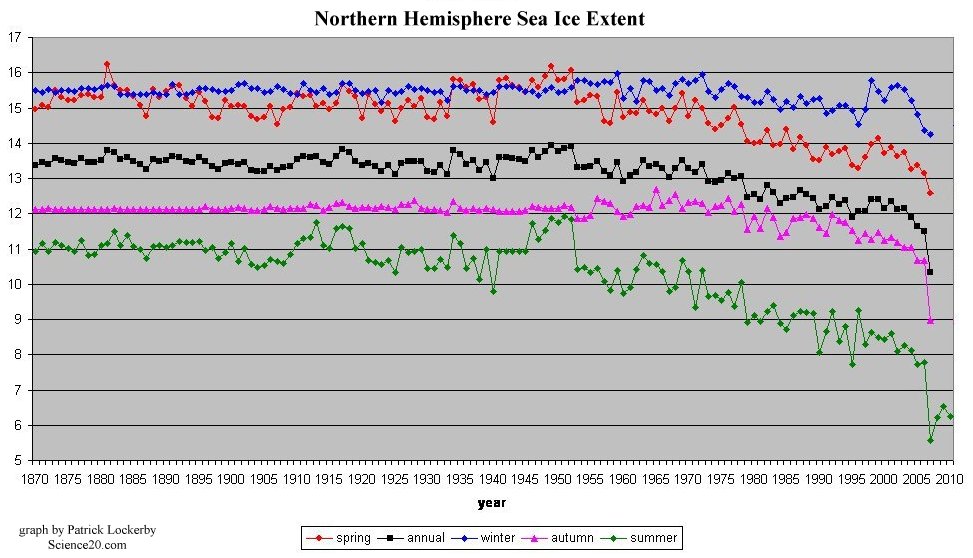
Arctic Ice October 2010... the land being very high and full of mightie mountaines all covered with snowe, no viewe of wood, grasse or earth to be seene, and the shore two leages of into the sea so full of yce as that no shipping cold by any meanes come neere the same. The lothsome viewe of the shore, and irksome noyse of the yce was such as that it bred strange conceipts among us, so that we supposed the place to be wast and voyd of any sencible or vegitable creatures, whereupon I called the same Desolation.
John_Davis, 1587
I am on a diet, to the delight of my impossibly chic wife, who has no problem at all eating cake and pasta in front of me while I consume bland chicken.
I had assumed that my increasing weight was due to eating too much and no exercise but a new Université de Montréal study says it is my job doing it to me. Whew. I dodged a bullet there.
Regardless, in two weeks I will be back where I want and if it is true that workplace related obesity is real, my job took four years to make me a weight I did not want so four weeks is not so bad to suffer.
In the debate over human embryonic stem cell research, protesters have ethical issues with experimenting on human embryos, while proponents point to the research’s huge potential to save lives. How come no one questions why we create extra cells to use or throw away in the first place?
In April of 2009, six weeks after President Obama’s executive order lifting the Bush era policy that restricted federal funding to 21 already-extant lines, the NIH published a set of criteria for ethical (and therefore fundable) stem cell research:
Software uses many kinds of data. Sometimes it concerns worksheet data and sometimes it is data that is retrieved or generated in some way or it are results of actions. Often these data are interrelated. In that case the ensemble forms a complex object. When this is the fact then it becomes worthwhile to attach the actions that are regularly applied to the data to the object that contains the data. With comparable data structures the same will happen. The object oriented software generation uses this approach intensively.
Today, October 5th, millions of teachers and education workers will be joined by children, young people and parents across the globe to celebrate World Teachers' Day. They will pay tribute to the teaching profession and its unique role - and promote their union.
From the global economic crisis which destabilized many developed economies in the last year, to humanitarian disasters such as the earthquake in Haiti and floods in Pakistan, the role of teachers is vital to the social, economic and intellectual rebuilding of communities in which we all live and work.
Sorry, cosmic acceleration,
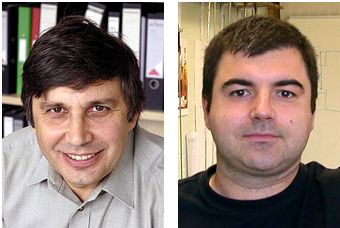
this was not your year. The Nobel Prize in Physics 2010 was awarded jointly to Andre Geim and Konstantin Novoselov "for groundbreaking experiments regarding the two-dimensional material
graphene".
Without question
ultrathin carbon is here to stay and a lot of terrific work is done with it every month. Bendable computer screens and ultralight materials could all result from graphene research.
Researchers have made environmentally-friendlier bricks that are also stronger than traditional ones. That is a big win for everyone.
Untreated clay was one of the earliest building materials to be used by humankind. The oldest examples of this can be found in houses in the Near East dating from between 11,000 and 12,000 years ago, while earthy material mixed with plants and pebbles to make them stronger has also been found in certain archaeological deposits from 1,400BC in Sardinia, Italy.
In 1995 the physicist HvL was employee of an internal software house of a large electronics company. His speciality was the creation of scientific software. Then he got the invitation from a software strategist HdV to join the semiconductor department in order to resolve a quickly emerging problem. The costs of complex embedded software were growing exponentially and this would cause severe problems in the next future.
A new poll by Nature and Scientific American, out in SA's October 2010 issue, notes that scientists have had a tough year - the "leaked 'Climategate' e-mails painted researchers as censorious," the H1N1 outbreak "led to charges that health officials exaggerated the danger to help Big Pharma sell more drugs," and the Harvard investigation that found holes in a professor's data. Nature and SA wanted to know - does the public1 still trust scientists?
The two polled readers using an internet survey on their Web sites, and more than 21,000 people responded.2 Here are the results:
How much do people trust what scientists say?
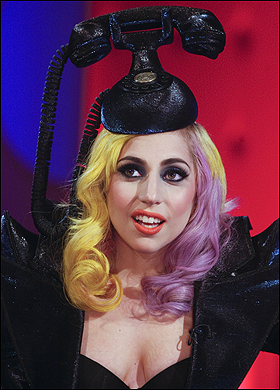
I have to be honest, if a casual question arose like 'who would you believe on science topics, Michael Shermer or Lady Gaga?' I would side with Shermer.
I know, I know, that is a vicious stereotype and I haven't read every single thing Lady Gaga has said regarding science, some of which might be correct, and then compared it to every speculation someone might have overheard Shermer say somewhere, which might have been incorrect - and because I have not been able to do that sort of comparison, some fringe pseudo-science apostates will claim it is entirely possible that Lady Gaga knows more about cell phones than Michael Shermer and therefore I am big ol' repressive science media if I do not give them equal time. So here I go.