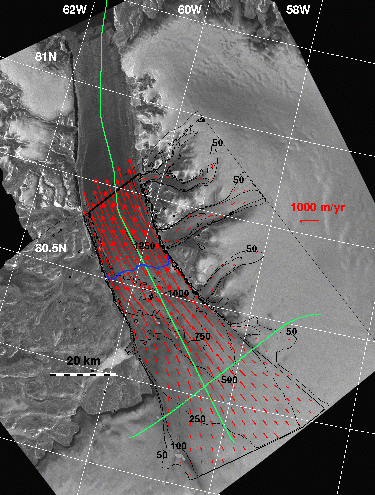
Petermann Glacier Calving 2010 - Update
Before I discuss the recent calving of the Petermann Glacier ice tongue, I want to give credit to the many scientists who were studying, predicting and observing this event. If I miss anyone out, please advise by email or comment and I will edit this article accordingly.
The scientists who deserve credit, in no particular order:
Humfrey Melling at DFO submitted a detailed science article to the Journal of Geophysical Research - Oceans just a few weeks before the event, and so missed the chance of including the calving in his article.
This is a good year for summer meteor watching. The moon, just past new, will not interfere with observations of faint meteors. And the Perseid shower, originated from the dust left behind in the orbit of comet Swift-Tuttle, will produce a nice show.
Perseids are a rather stable stream, and they produce a detectable rate of meteors from late July to late August, with peaks in the nights of August 11th and 12th, depending on the exact trajectory that the Earth takes while plunging in the dust-ridden area of the solar system. The rate is usually encoded in the acronym "ZHR", for zenith-hourly-rate. ZHR values of 100 to 150 are common for the two highest-rate nights.
But what exactly should you expect to see ?

Growing up in the Midwest of the United States, and taking several trips over my lifetime to an Atlantic or Gulf of Mexico beach, I recall the vague consideration of the floating jellyfish.
RESTON, Virginia, August 11, 2010 -- comScore, Inc. , a leader in measuring the digital world, today released a report on Twitter.com growth worldwide. The study found that in June, nearly 93 million Internet users visited Twitter.com, an increase of 109 percent from the previous year, as the social networking site achieved strong gains across all global regions. Indonesia reported the highest penetration, with 20.8 percent of Internet users in the country visiting Twitter.com that month, followed by Brazil and Venezuela, with Venezuela's growth fueled in large part by Venezuelan President Hugo Chavez's decision to join Twitter in late April.
Some people can sleep through a Who concert while others wake up if a mouse in the yard moves. A new report in Current Biology says the difference is that sound sleepers show a distinct pattern of spontaneous brain rhythms.
During sleep, brain waves become slow and organized and the thalamus, a way station for all types of sensory information except smell, spontaneously engages with the cortex. This interaction can produce transient fluctuations of the brain's electric field visible on the EEG as rhythmic spindles - brief bursts of faster-frequency waves.
Will picosatellites pollute space like in Wall-E? Why do we let amateurs kill Mother Earth? Send in the UN!
These are part of the overwhelming comments following my
Discovery interview. I am amazed at the variety of space litter connondrums presented. I thought about writing a calm, well-measured response, but you know what? If the posters can rant, so can I!
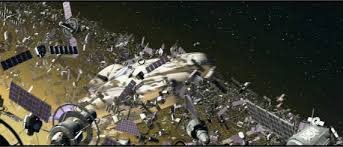
Unlike them, however, I will rant with scientific backing on my side.
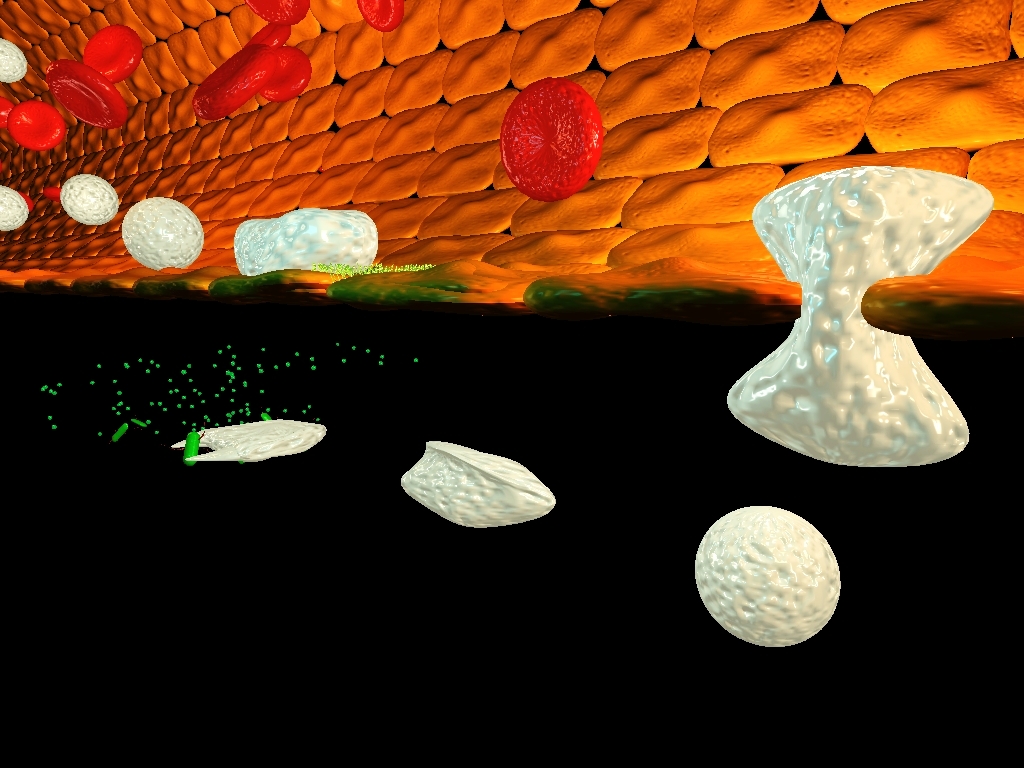
One of the biggest challenges of transplants is the need to suppress the immune response - so the new organ is not rejected - while keeping it strong enough to be able to fight all kinds of disease. As the high numbers of rejected organs show, this is a tricky balance. But a discovery by Maria Monteiro and Luis Graça, two Portuguese scientists, could help solving the problem, at least in the liver. They have found a new type of white blood cell – baptised NKTreg (reg from regulatory) – that, remarkably, once activated, migrate into this organ where it suppress any immune response in its vicinity (but not elsewhere).
CDF and DZERO, the two experiments at the Fermillab Tevatron collider, have studied top quark production since their own discovery of the heavy particle in 1995 (see
here,
here, and
here for a three-post history of the top quark quest).
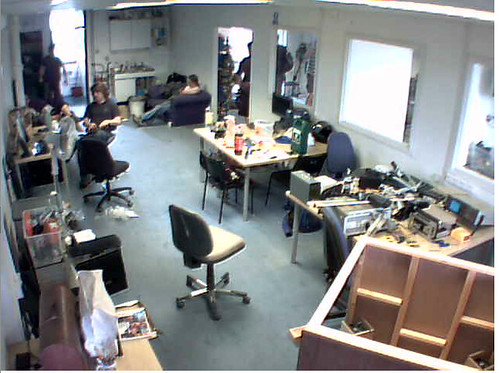
A typical dream of an active citizen scientist might be to have one's own fully-equipment research laboratory and tinkering space conveniently established in one's own garage or basement.
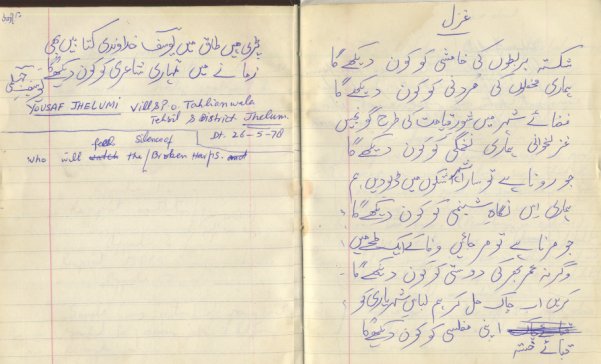
Tears For Pakistan
A great tragedy is unfolding in Pakistan.
There is not a single region of Pakistan unaffected by floods. Whole villages have been wiped out and agriculture lost. How will these people be fed. Formerly, the USA and Russia could be relied on to to send food relief. How will Russia send food aid to Pakistan when it has its own problems with grain supplies?
The world gave and gave again for Haiti. In terms of people displaced and without food, water and other supplies, the Pakistan tragedy is far worse.