If you thought that rapid and potentially catastrophic climate change was all bad, think again. High in the Mackenzie Mountains in Canada, a treasure trove of ancient hunting tools is being revealed as warming temperatures melt patches of ice that have been in place for thousands of years.
Ice patches are accumulations of annual snow that, until recently, remained frozen all year. For millennia, caribou seeking relief from summer heat and insects have made their way to ice patches where they bed down until cooler temperatures prevail. Hunters noticed caribou were, in effect, marooned on these ice islands and took advantage.
Consumption of 100 percent fruit juice is closely linked to improved nutrient intake and overall diet quality in children, according to the PR firm for the makers of apple juice.
Despite the fact that fruit juice is nutritionally very similar to
soda, two new studies from the Louisiana State University Agricultural Center and Baylor College of Medicine clearly highlight the benefits of drinking 100 percent fruit juice, say the people who want to sell more juice.
A new study in Nature Geoscience suggests that as global temperatures increase, microbes in soil become less efficient over time at converting carbon in soil into carbon dioxide, a key contributor to climate warming.
The results contradict those of earlier studies that assume microbes will continue to spew ever-increasing amounts of carbon dioxide into the atmosphere as the climate continues to warm. If microbial efficiency declines in a warmer world, carbon dioxide emissions will fall back to pre-warming levels, a pattern seen in field experiments. But if microbes manage to adapt to the warmth – for instance, through increased enzyme activity – emissions could intensify.
Scientists studying the DNA marker profiles between smokers and non-smokers have found several genetic variants that are associated with key smoking behaviors.
In a new Nature Genetics paper, the international research team reported that three genetic regions are associated with the number of cigarettes smoked per day, one with smoking initiation and one with smoking cessation.
The variants on chromosome 15 associated with heavy smoking lie within a region that contains nicotinic receptor genes, which other scientists have previously associated with nicotine dependence and lung cancer.
Physicists at Ohio University and the University of Hamburg in Germany have captured the first images of atomic spin in action.
The research indicates that scientists can observe and perhaps manipulate spin, a finding that may impact future development of nanoscale magnetic storage, quantum computers and spintronic devices.
The images have been published in a new Nature Nanotechnology study.
Researchers have discovered a new species of monitor lizard, a close relative of the Komodo dragon, on the Moluccan islands of east Indonesia. The lizard was discovered just last spring and belongs to the mangrove monitor, V. indicus group. The discovery was reported in Zootaxa this week.
Varanus obor, popularly referred to as Torch monitor and Sago monitor, has a bright orange head with a glossy black body. It is a close relative of the fruit-eating monitor lizard recently reported from the Philippines. The Torch monitor can grow to nearly four feet in length, and thrives on a diet of small animals and carrion.
Last Monday Stephen Hawking
gave a lecture at the George Washington University for the 50th anniversary of NASA. There he discussed the chance of a contact between our civilization and an extraterrestrial one. And he warned about the risks we may be facing.
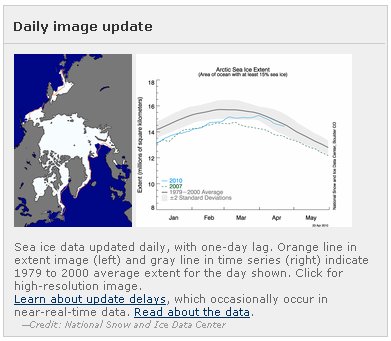
Interpreting Arctic Satellite Images And DataScience writers and media reporters owe a duty of care to their readers: a duty to present facts undistorted by personal opinion or agenda.
That duty of care extends not just to what is written, but to what is portrayed in graphs and images.
A graphic produced for a specific science-oriented context can be as misleading if taken out of context as any
cherry-picked data or quoted words.
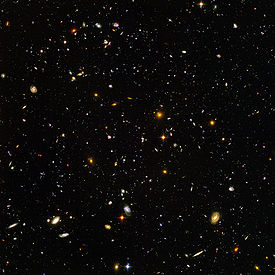
Hip, hip, hooray. The Hubble has reached its twentieth anniversary* and is still alive and kicking. Congratulations go to NASA and ESA. And to the Hubble itself. Long live the Hubble!Chances are, that by now you will be able to read more than a few blogs hailing the two decades of the Hubble as mankind's supreme window to the universe. And indeed, the Hubble has provided us with some spectacular pictures of the universe.
I get asked a lot about Science 2.0® and why I chose to start something like ScientificBlogging.com, because science is such a niche. Is it? 65 million people respond to surveys that they are interested in science. Since there are just over 300 million people in the US and 10% of those can't read due to age or infirmity, that means almost 25% of America alone considers themselves science fans.