In the field of regenerative medicine, embryonic stem cells are considered the “mother cells” that can replace virtually any type of tissue that are damaged or lost as a result of injury of degenerative diseases[1, 2]. This could be attributed to the ability of ES cells to differentiate into a wide range of cellular lineages that make up organs and tissues of the entire body.
Although this has caused much excitement in the field of regenerative medicine, a sobering fact is that ES cells are very scarce as they can only be obtained in the inner cell mass of an early stage embryo[1]. Moreover, the quest for ES cells in humans also raise ethical concerns that have driven ES cell research to a standstill.
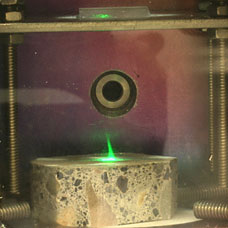
Lasers can do many things for us, from scanning barcodes at the grocery checkout to searching for life on the surface of Mars. And, according to chemists at Idaho National Laboratory, lasers might be able to help the nation respond in the case of a possible chemical or radiological attack.
Lasers, the INL scientists say, could play a big cleanup role. Lasers could help scrub chemical- or radiation-contaminated buildings clean, returning life to normal as safely and smoothly as possible.
"Lasers could be an important tool in our toolbox," says INL chemist Bob Fox.
Neutralizing dirty bombs: weapons of mass disruption
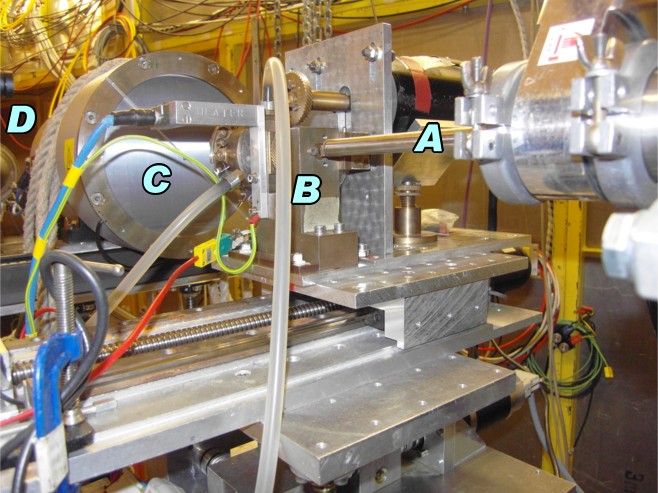
Well, who exactly is DORIS? “She” is actually the first Doppel-Ring-Speicher (which translates neatly into English as “Double-Ring Storage”) at DESY, the Deutsches Elektronen Synchrotron in Hamburg. It’s not the only one; the more recent PETRA (Positron-Elektron-Tandem-Ring-Anlage) and HERA (Hadron-Elektron-Ring-Anlage) are both storage rings.
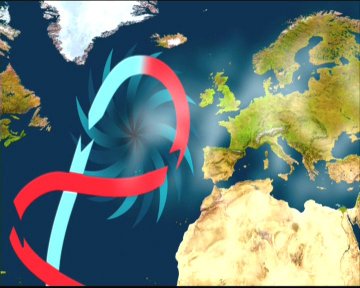
Arctic Tipping Points - #5: Where Warm Water Meets Ice
The flows of meltwater and ocean currents in the Arctic make Niagara Falls look like a kitchen tap.
Anyone who has worked with children with autism knows that, based on symptoms alone, this disorder is comprised of several different types. Yet, surprisingly, no authoritative study exists to validate this supposition. That is about to change.
For the first time ever, a long-term study of boys and girls with and without autism is being conducted. Jam-packed with scientific evaluations of each participant that will provide data scientists can use for decades to come, this study is destined to determine once and for all if there are subtypes of autism, and, if so, exactly what those subtypes are. This ambitious study is taking place at the UC Davis M.I.N.D. Institute.
Researchers who blog are a rare and endangered species.
As far as rarity is concerned, it is easy to understand why that is so. Scientific research is a round-the-clock occupation, not your regular nine-to-five job. If a researcher has spare time, he or she is expected to invest it in doing more research: for Science is a mission, not a job! Because of that, finding the time to do outreach in a blog, broadcasting recent scientific results, or just expressing one's views is a demanding challenge, especially when one also has a family to attend to.
Researchers writing in the American Journal of Physical Anthropology say they have discovered an 11 million-year-old species of Pliopithecus primate, Pliopithecus canmatensis, in the Vallès-Penedès basin in Catalonia.
Named in honor of the place they were discovered in Catalonia, the new fossil species sheds light on the evolution of the superfamily of the Pliopithecoidea, primates that include various genera of basal Catarrhini, a group that diverged before the separation of the two current superfamilies of the group: the cercopithecoids (Old World monkeys) and the hominoids (anthromorphs and humans); and which prospered in Eurasia during the Early and Late Miocene (between 23.5 and 5.3 million years ago).
A new study in the International Journal of Health Geographics has linked cold, dry weather to an increased incidence of prostate cancer in the Northern United States.
While unsure why the association exists, researchers say that meteorological effects on persistent organic pollutants, such as some pesticides and industrial by-products, may be to blame.
The current explanation for the spatial pattern of prostate cancer is low vitamin D levels in individuals living at northerly latitudes. But the authors of the new study contend that this hypothesis doesn't fully explain the higher incidence of the disease.
The ESO's VISTA telescope has captured a stunning new image of the Cat's Paw Nebula - NGC 6334.
The view in the infrared is strikingly different from that in visible light. With dust obscuring the view far less, astronomers can learn much more about how stars in the nebula form and develop in their first few million years of life.
NGC 6334 is one of the most active nurseries of massive stars in our galaxy and lies toward the heart of the Milky Way, 5500 light-years from Earth in the constellation of Scorpius (the Scorpion).
A team of chemical engineers have discovered what may be the "ancestral Eve" crystal that billions of years ago gave life on Earth its curious and exclusive preference for so-called left-handed amino acids. The results are published in Crystal Growth and Design.
Researchers used mixtures of both left- and right-handed aspartic acid (an amino acid) in laboratory experiments to see how temperature and other conditions affected formation of crystals of the material.