A new study demonstrates that when faced with a difficult decision, the human brain calls upon multiple neural systems that code for different sorts of behaviors and strategies. The research in the May 28th issue of Neuron provides intriguing insight into the mechanisms that help the human brain rise to the formidable challenge of adaptive decision making in the real world.
Are parasites evolving to be more or less aggressive depending on whether they are closely connected to their hosts or scattered among more isolated clusters of hosts? Research led by Geoff Wild, an NSERC-funded mathematician at the University of Western Ontario, with colleagues from the University of Edinburgh.
They decided to move the arguments from words to harder science and developed a formal mathematical model that incorporated variable patch sizes and the host parasite population dynamics. It was then run to determine the underlying evolutionary mechanisms.
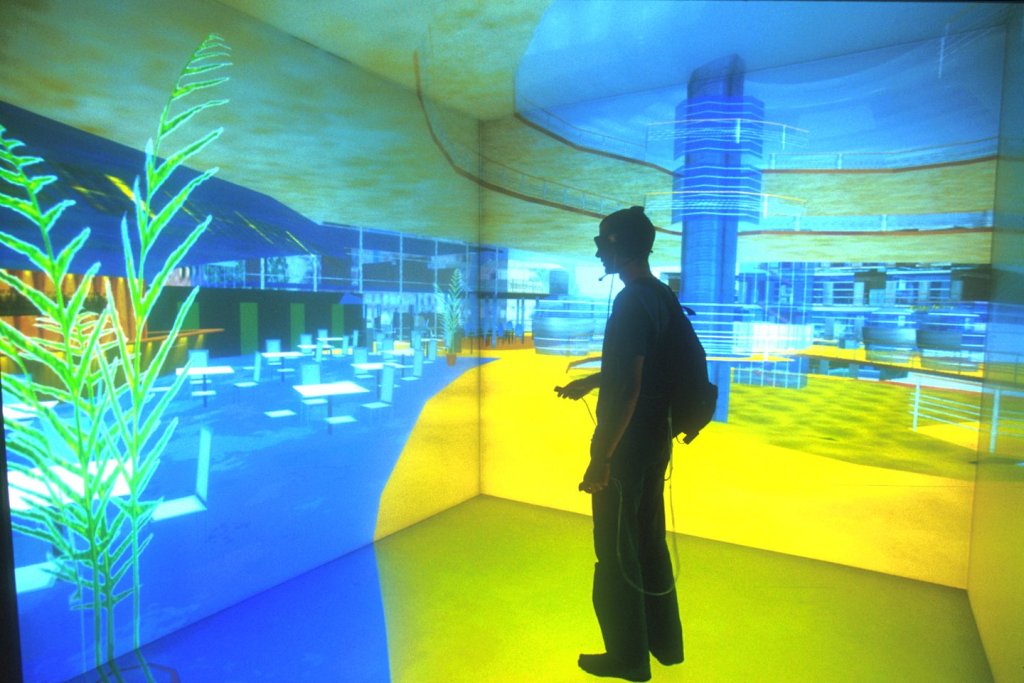
Far from being geeky and exotic, virtual reality could be the key to a new range of innovative products. European researchers and industrialists have come together to build a world-leading community ready to exploit that promise.
Made famous by the ‘holodeck’ in Star Trek: The Next Generation, virtual reality (VR) has long had the reputation of being slightly frivolous. Yet Europe’s VR industry is emerging as a world leader thanks to new efforts to coordinate developments on a continental scale.
Studies of climate evolution and the ecology of past-times are often hampered by missing information – lost variables needed to complete the picture and thought untraceable have made too many assumptions necessary. Scientists writing in in the June issue of New Journal of Physics have created a formula which they say will fill in the gaps in our knowledge and will help predict the future.
A new method of reconstructing missing data will shed new light on how and why our climate moved us on from ice ages to warmer periods as researchers will be able to calculate lost information and put together a more complete picture.
It is often envisioned that humans could return to a simpler, more rural way of life and thereby live a more environmentally friendly existence. This is not only unrealistic, but in examining the numbers it becomes clear just what a predicament our human population growth has put us in.
First let’s consider the raw numbers regarding human impact on the planet and see where that leaves us. There are about 57,500,000 square miles of land available on the entire surface of the earth. There are also about 6,671,226,000 people on the planet as of July 2007. A simple calculation shows that this results in about 116 people per square mile on the entire surface of the earth.
In general, science is like an episode of "LOST"; one question gets answered but that answer raises two more questions. The discovery of DNA and genes has answered many questions about who we are and why we are, but to what degree remains a mystery.
'Nature Versus Nurture' has been an argument for decades. Nature proponents state that genes are primarily responsible for everything, including our eventual personalities and behaviors, and that they can all be explained by certain sequences of DNA. The Nurture argument instead says that although genes and DNA play a part of our anatomy and other physical aspects, our environment, exposures and experiences are determines our personalities and behavior.
GOCE (Gravity field and steady-state Ocean Circulation Explorer), launched in March and currently progressing through the commissioning phase, has achieved a first in the history of satellite technology; an electric propulsion system able to keep the satellite completely free from drag as it cuts through the remnants of Earth's atmosphere.
GOCE is set to measure Earth's gravity field with unprecedented accuracy but doing so means that the satellite has to orbit Earth as low as possible, where the gravitational signal is stronger but also where the fringes of the atmosphere remain.
Astronomers have found more than 300 alien (extrasolar) worlds so far. Most of these are gas giants like Jupiter, and are either too hot (too close to their star) or too cold (too far away) to support life as we know it.
Sometime in the near future, however, astronomers will probably find one that's just right – a planet with a solid surface that's the right distance for a temperature that allows liquid water -- an essential ingredient in the recipe for life.
But the first picture of this world will be just a speck of light. How can we find out if it might have liquid water on its surface? If it has lots of water – oceans – we are in luck.
Employees who have some influence at work perform better service but praise and encouragement from managers has no particular significance in terms of loyalty toward the employer.
Social recognition, recognition as an individual whose expertise and input are appreciated, is crucial for how well employees in service companies perform their job assignments. Tómas Bjarnason, a doctoral student in sociology from the University of Gothenburg, Sweden, studied over 900 employees in service organizations for his thesis. He states that social recognition contributes to increased self respect, which means that employees make a greater effort to act in the company’s best interests.
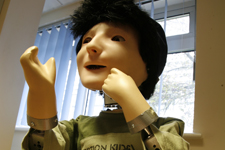
A new robot house will be launched at the University of Hertfordshire tomorrow, Wednesday 27 Mayth.
Professor Kerstin Dautenhahn and her team at the University’s School of Computer Science have taken their robots out of their laboratory and have them “living” in a house in Hatfield, so that the academics can develop them as personal companions. The academics will open the robot house to the media tomorrow, before launching it to the public in early June.
At the event, the academics will showcase the work they are doing to advance the relationship between robots and humans as part of the European project LIREC – Living with Robots and Interactive Companions. Different robots with mechanical and/or humanoid features will be shown.