The first time I experienced migraine with aura, I was shopping. I remember looking up at the fluorescent lighting overhead and wondering where that weird triangle rainbow was coming from. An hour later, I was in tears and curled up in my bed with all the lights out--I have a low threshold for pain.
After that, Excedrin became my constant companion, along with nausea and a nagging pain pushing down on my skull. I started a headache diary in an effort to avoid "triggers" that might cause my migraines: bacon, poor sleep habits, strong odors. I kept a cold pack in the freezer just in case.
Heartbreak is more than just an emotional defeat; to some the pain is very real. At one point or another, everyone must experience this mind numbing feeling (unless you confine yourself to a house and never interact with even a pet) but that's not the norm and you're probably not reading this article if you've had that kind of sheltered life.
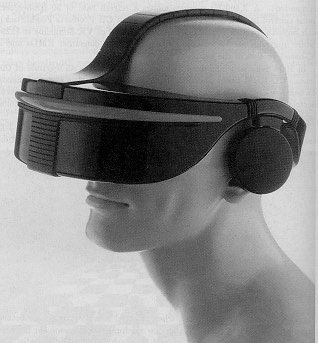
An article published electronically in the scientific journal Acta Paediatrica describes how heart rate and sleep in boys are affected by violent video games. Researchers from Stockholm University, Uppsala University and Karolinska Institutet in Sweden have worked together with this study.
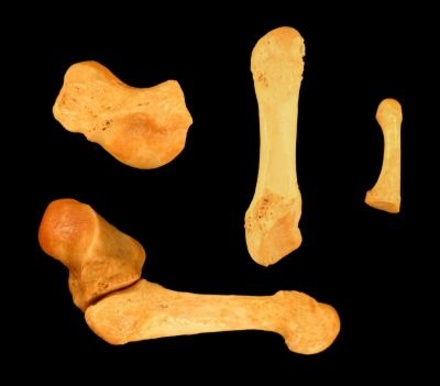
A recently discovered female pelvis is changing minds about the head size of an ancient human ancestor, Homo erectus, and consequently revising notions about how smart they may have been. The Pleistocene adult female Homo erectus pelvis was from the Busidima Formation of Gona, Afar, Ethiopia., not far from the site that yielded the 3.2 million year old remains of the famed Australopithecus afarensi "Lucy," and the pelvis indicates that Homo erectus, which lived in Africa roughly 2 million years ago, had a larger birth canal than originally suspected and could have given birth to babies with bigger brains.
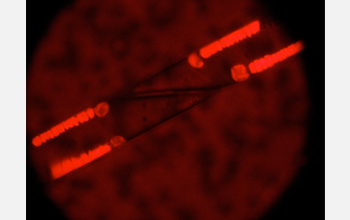
An unusual microorganism discovered in the open ocean may force scientists to rethink their understanding of how carbon and nitrogen cycle through ocean ecosystems.
A research team led by Jonathan Zehr, a marine scientist at the University of California, Santa Cruz, characterized the new microbe by analyzing its genetic material, even though researchers have not been able to grow it in the laboratory. Zehr said the newly described organism seems to be an atypical member of the cyanobacteria, a group of photosynthetic bacteria formerly known as blue-green algae.
We are now in the transition from the Information Age to the Shift Age. In
recent columns I have positioned the recent financial melt down and global economic collapse as the beginning of a painful transitional restructuring between ages. Just as the 1970s with all its stagflation and unprecedented turmoil was the transitional period between the Industrial Age and the Information Age, so is this time a transitional period between the Information Age and the Shift Age.
Autoimmune diseases are some of the most confounding diseases that affect the human body. Viruses, bacteria and parasites are all simple compared to the complexities and complications that arise when faced with treating an autoimmune disease. Researchers and physicians alike are unsure of the root of most autoimmune diseases and can only guess as to what specifically triggers our immune system to turn on itself. Treatment for most autoimmune diseases is brutal, consisting of high doses of steroids which suppress immune system function.
When I write in that title, a 'new Ice Age beast', I'm talking about the Coelodonta Tologoijensis. of course! That's Woolly Rhinoceros for us non-palaeontologists. After 460,000 years of being in the great Mammoth's shadow, this giant rhino is finally receiving it's place in the spotlight.
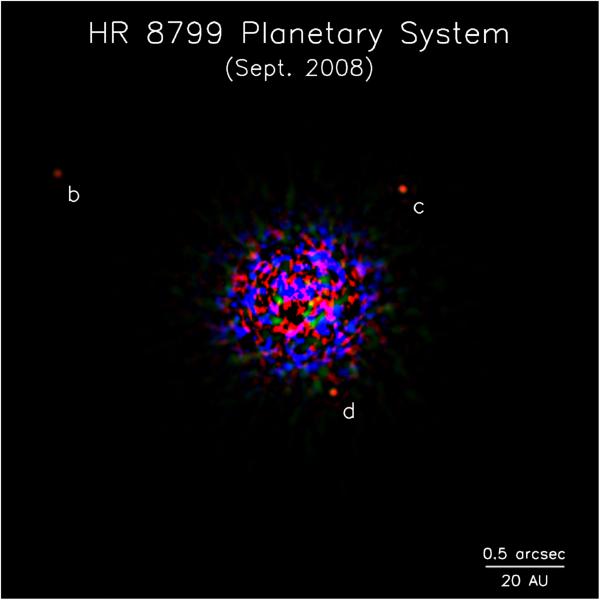
Astronomers have taken snapshots of a multi-planet solar system much like ours orbiting another star, for the first time.
The new solar system orbits a dusty young star named HR 8799, which is 140 light years away and about 1.5 times the size of our sun. Three planets, roughly 10, 10 and 7 times the mass of Jupiter, orbit the star. The size of the planets decreases with distance from the parent star, much like the giant planets do in our system.
And there may be more planets out there, but scientists say they just haven't seen them yet.
It has all the hallmarks of a Cretaceous melodrama. A dinosaur sits on her nest of a dozen eggs on a sandy river beach. Water levels rise, and the mother is faced with a dilemma: Stay or abandon her unhatched offspring to the flood and scramble to safety?
Seventy-seven million years later, scientific detective work conducted by University of Calgary and Royal Tyrrell Museum researchers used this unique fossil nest and eggs to learn more about how nest building, brooding and eggs evolved. But there is a big unresolved question: Who was the egg-layer?