


Secondhand smoke remains controversial because it takes statistical manipulation to link it to any deaths. Yes, it can be harmful to asthmatics, just like perfume or a wine cellar, but a whole advocacy industry has not been built up talking about how wine cellars must be killing people. And the most comprehensive study ever done on secondhand smoke and mortality has never been shown to be flawed. 
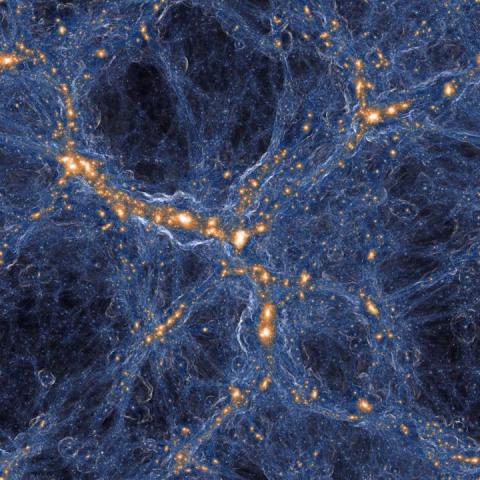
About 1 billion years after the Big Bang, the gas in deep space was highly opaque to ultraviolet light and its transparency varied widely from place to place, obscuring much of the light emitted by distant galaxies. This opaque quality contains tantalizing mysteries about the universe.

That's because now the gas between galaxies is almost totally transparent thanks to being kept ionized-- electrons detached from their atoms--by an energetic bath of ultraviolet radiation.

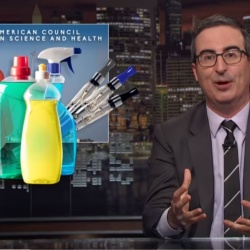
On Sunday evening, John Oliver of HBO's "Last Week Tonight" took a break from talking about Paul Manafort's clothing to talk about public trust in science. Well, sort of. Really, he claimed he wanted to expose "astroturf" groups - fake organizations that look like real "grassroots" ones. You can imagine how I surprised I was on Saturday when I found out he was going to be talking about me.

Young religious Americans are more concerned about the environment than older parishioners, and that may be thanks to religious leaders. They talk about caring for the world given to them and avoid the political activism. 
I am very happy to host here today an article by my INFN colleague Alessandro de Angelis, a well-known and authoritative italian astrophysicist. Alessandro has recently published a beautiful new book on this subject, which I invite you to have a look at (see link at the bottom of the article) - T.Dorigo .

Environmental trial lawyers are thrilled that the politically friendly 9th Circuit Court of Appeals in California

Historically, large atmospheric events like fires and volcanic eruptions have had cooling effects. It is the 200th anniversary of Mary Shelley's "Frankenstein", for example, part of which was inspired by the gloom from a volcanic eruption that led to 'a year without a summer' in Europe of 1816.

Fires and other events cause the release of soot and other aerosols to be released which can cool the planet by reflecting sunlight back into space and increasing cloud brightness. A new study finda that such a cooling effect on the planet may have been significantly underestimated by previous researchers. 

California has banned plastic bags in grocery stores, a giant subsidy and mandate for the cloth bag industry.

When government isn't manufacturing problems to solve, corporations often do it themselves. Some companies ban plastic straws now, when it is only a matter of time before environmental groups pushing paper straws claim the chemicals in those cause birth defects, and after the homeopaths behind the 'endocrine disruption' craze got corporate media to scare people about BPA - which only binds to estrogen 1/20,000th as well as actual estrogen - I was not surprised ConAgra took it out of Manwich cans.

Nor was I surprised the company responded to higher costs by laying off 1,500 people. It turns out activists were not going to ever buy it anyway.

This is scaring some people - because they describe dramatic things that could happen like floods tens of meters deep, and the world too hot for humans. Most of this is for far into the future. The sea rising 10s of meters would be thousands of years into the future - many of the news stories didn’t make that clear.

Last week I had a shocking cold. Blocked nose, sore throat, and feeling poorly. This made me think about the countless vitamins and supplements on the market that promise to ease symptoms of a cold, help you recover faster, and reduce your chance of getting another cold.

When it comes to the common cold (also called upper respiratory tract infections) there is no magic cure (I wish) but some supplements may deliver very minor improvements. Here is what the latest research evidence says.

Vitamin C

For the average person, taking vitamin C does not reduce the number of colds you get, or the severity of your cold.

