



A new paper shows that recent rises in levels of methane in our atmosphere is being driven by biological sources, such as swamp gas, cow burps, or rice fields, rather than fossil fuel emissions.

Atmospheric methane is a major greenhouse gas that traps heat in our atmosphere, contributing to global warming. Its levels have been growing strongly since 2007, and in 2014 the growth rate of methane in the atmosphere was double that of previous years, largely driven by biological sources as opposed to fossil fuel emissions.

Conventional wisdom refuted

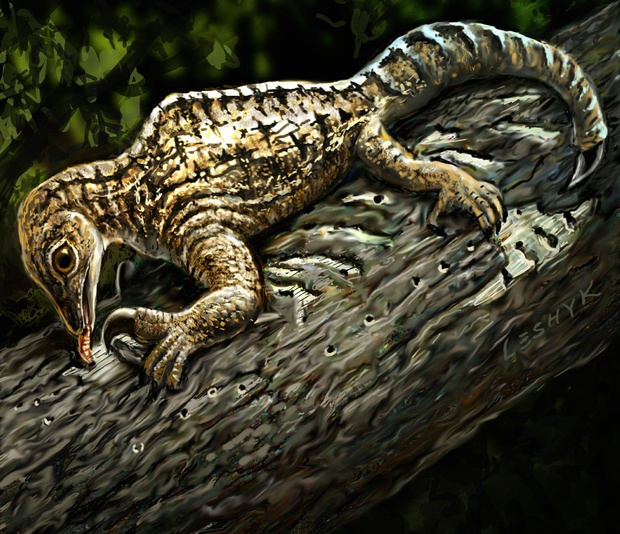
New fossils from the Late Triassic period (235 to 201 million years ago) are changing scientists' understanding of what drastically different forms can evolve in the tetrapod forelimb, including skeletal adaptations never before seen in land animals. 

51 members of the U.S. House of Representatives have signed a letter to the U.S. Drug Enforcement Agency (DEA) urging the federal agency to halt an emergency push to ban the analgesic herb kratom by as early as tomorrow. 

The gusting westerly winds that dominate the climate in central Asia, setting the pattern of dryness and location of central Asian deserts, have blown mostly unchanged for 42 million years.
A University of Washington geologist led a team that has discovered a surprising resilience to one of the world's dominant weather systems. The finding could help long-term climate forecasts, since it suggests these winds are likely to persist through radical climate shifts.

Glioblastomas exert an influence on the microglia, immune cells of the brain, which causes them to stimulate cancer growth rather than attacking it. In a study published in the journal Nature Immunology, an international research team led from Sweden's Karolinska Institutet now explains the molecular mechanisms behind this action.

Glioblastomas are one of the most malignant forms of brain tumour and are difficult to surgically remove because the tumour cells invade the surrounding healthy brain tissue. Glioblastomas also affect the microglia - immune cells of the brain - in such a way that they stimulate the tumour cells instead of attacking them.

In a randomized crossover trial, 45 healthy adults, average age 50, were asked to swap their usual loaf for bread made from ancient and modern grains during three separate interventions each lasting 8 weeks. In the first phase, participants were randomly assigned to include organically (22 participants) or conventionally cultivated (23) bread made from the ancient grain Verna in their diet.

Brown adipose tissue – important for generating heat in the body- also secretes signaling factors that activate the fat and carbohydrates metabolism, according to a new paper.

Brown adipose tissue: more than burning calories in the body

Brown adipose tissue (BAT) helps “burning more calories” and making body heat out of fat. According to the new study, this special kind of fat –the motor of thermogenesis- has an endocrine function able to activate the lipid and glucidic metabolism in the body, which has a profile for a future therapeutic target to treat pathologies like obesity.

Tumours are an accumulation of cells that divide without control, accumulating hundreds of chromosomal alterations and mutations in their DNA. These alterations are triggered in part by a type of damage to the DNA known as replicative stress. To survive in the face of this chaos, tumour cells need the intervention of the damage response protein ATR, known for its role as guardian of genome integrity, to which they become addicted. After eight years of work, Oscar Fernández-Capetillo's team at the Spanish National Cancer Research Centre (CNIO) has discovered that blocking this protein has antitumour effects in several animal models of cancer, such as an aggressive type of acute myeloid leukaemia and Ewing sarcoma.

Researchers from the University of York have helped to solve an archaeological dispute - confirming that Neanderthals were responsible for producing tools and artifacts previously argued by some to be exclusively in the realm of modern human cognitive abilities.

Using ancient protein analysis, the team took part in an international research project to confirm the disputed origins of bone fragments in Châtelperron, France.

Led by the Max Planck Institute (MPI) for Evolutionary Anthropology in Germany, researchers set out to settle the debate as to whether hominin remains in the Grotte du Renne, an archaeological site in Arcy-sur-Cure, France, date to Neanderthal ancestry or whether they indicate the first evidence of modern humans in Europe.

With over 120,000 patients in the United States waiting for a kidney transplant, scientists and physicians are constantly looking to expand the pool of available organs through increasing donation and optimizing allocation. Researchers analyzed data from thousands of transplants and developed a scoring system for donor kidneys that they hope might expand the pool of available organs in two ways. They published their findings in the Annals of Transplantation.

