Human childbirth is not only unpleasant, it's also assumed to take a toll on women's health, even while women have a greater life expectancy. A new study led by UC Santa Barbara researchers, however, finds that indigenous women in the Bolivian Amazon with some of the highest birth rates in the world today experience negligible health costs from their intense reproductive effort.

A team of researchers based in Israel and the US has found a mathematical resemblance between swarm dynamics and gravitational interactions. The study, which has just been published in the New Journal of Physics, could provide a big leap forward in understanding the mass movement of flying insects.

Scientists have long been fascinated by the collective behaviour of animals. The coordinated motion of schools of fish or flocks of birds, for example, can be built up from short-range interactions where individuals tend to move much like their neighbours. So far, so good, until you get to the swarming of insects, where a different approach is required.

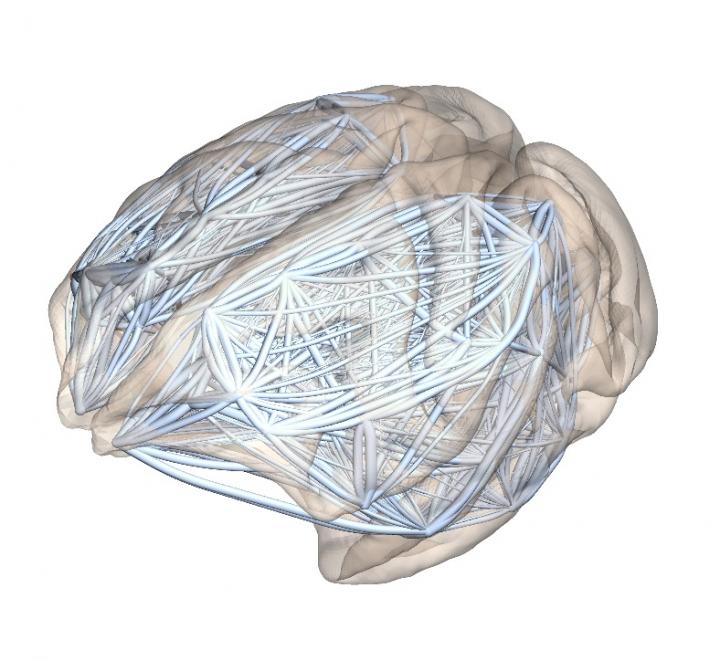
In humans and other mammals, the cerebral cortex is responsible for sensory, motor, and cognitive functions. Understanding the organization of the neuronal networks in the cortex should provide insights into the computations that they carry out.

A study shows that the global architecture of the cortical networks in primates (with large brains) and rodents (with small brains) is organized by common principles. Despite the overall network invariances, primate brains have much weaker long-distance connections, which could explain why large brains are more susceptible to certain mental illnesses such as schizophrenia and Alzheimer disease. 

Crystal Hefner, wife of Playboy entrepreneur Hugh Hefner, recently elected to have her breast implants removed because she believed that they “were slowly poisoning her.” This was after she read Internet comments from people who shared similar symptoms and said implants were the problem, and after she believed she had chronic Lyme disease.


Science is not on her side. Not even close.

If man-made greenhouse gas emissions are going to cause more droughts and storm surges on a persistent basis, why did it take so long? And why is it only a concern in the last 25 years, rather than in the 1930s, when things were really hot?

A new estimate claims it's because the natural atmosphere already contained carbon dioxide  that human-induced changes were relatively small. Had these natural concentrations been lower, the effects of the emission of harmful greenhouse gases would have been felt much earlier.

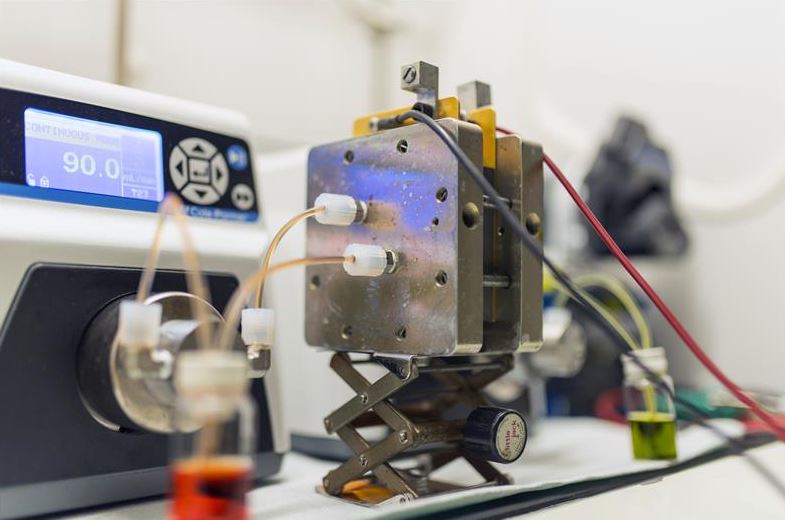
A new class of high-performing organic molecules inspired by vitamin B2 can safely store electricity from intermittent energy sources like solar and wind power in large batteries.

The high-capacity flow battery uses organic molecules called quinones, which store energy in plants and animals, and a new class of battery electrolyte material. They contend in their study that it is high-performance, non-flammable, non-toxic, non-corrosive, and its low-cost could enable large-scale, inexpensive electricity storage.

How does Zika get transmitted? In America, it seems to be sex, but in South America it is mosquitoes? While all three vectors are ecologically useless - they could be blasted out of existence with no impact at all anywhere - it is helpful to know which ones are the real culprits.

Researchers have now been able to directly connect the Aedes aegypti mosquito with Zika transmission in the Americas during an outbreak in southern Mexico. 

Gay youths are more likely to purge or take laxatives, use diet pills, or fast to lose weight than their straight peers, according to new research from the University of British Columbia which analyzed data from surveys of youths ages 12 to 18 that were administered every two years at public high schools in Massachusetts between 1999 and 2013. Students were asked about their sexual orientation, whether they used diet pills, refrained from eating for 24 hours or more, or vomited or took laxatives to lose or keep from gaining weight in the last month. 

COLUMBUS, Ohio -- Even though American consumers throw away about 80 billion pounds of food a year, only about half are aware that food waste is a problem. Even more, researchers have identified that most people perceive benefits to throwing food away, some of which have limited basis in fact.

A study published today in PLOS ONE is just the second peer-reviewed large-scale consumer survey about food waste and is the first in the U.S. to identify patterns regarding how Americans form attitudes on food waste.

Soft robots do a lot of things well but they're not exactly known for their speed. The artificial muscles that move soft robots, called actuators, tend to rely on hydraulics or pneumatics, which are slow to respond and difficult to store.

Dielectric elastomers, soft materials that have good insulating properties, could offer an alternative to pneumatic actuators but they currently require complex and inefficient circuitry to deliver high voltage as well as rigid components to maintain their form -- both of which defeat the purpose of a soft robot.


