Contrary to common belief, softball pitching subjects the biceps to high forces and torques when the player's arm swings around to release the ball, according to an analysis of muscle firing patterns conducted at Rush University Medical Center.
Published in the current issue of the American Journal of Sports Medicine, the study of the "windmill" pitching motion appears to explain the high incidence of anterior shoulder pain seen in female softball players.
"The conventional belief has been that the underhand throwing motion of softball places little stress on the arm," said Dr. Nikhil Verma, lead author and a specialist in sports medicine at Rush. "But that is not the case."

Docosahexanoic acid (DHA), an omega-3 fatty acid found in fish oils, has been shown to reduce the size of tumours and enhance the positive effects of the chemotherapy drug cisplatin, while limiting its harmful side effects. The rat experiments described in Cell Division provide some additional support for the health benefits often ascribed to omega-3 acids.
Professor A. M. El-Mowafy led a team of researchers from Mansoura University, Egypt, who studied DHA’s effects on solid tumours growing in mice, as well as investigating how this fatty acid interacts with cisplatin, a chemotherapy drug that is known to cause kidney damage.
A new University of Pennsylvania School of Medicine study will examine whether women at higher risk of breast cancer can use exercise to meaningfully reduce their risk of getting the disease. Starting from a premise that reducing estrogen in the body reduces cancer risk, and that elite female athletes experience a drop in estrogen levels that often cause them to stop ovulating and menstruating, the Women in Steady Exercise Research (WISER) Sister trial will investigate two different levels of regular treadmill exercise as a possible intervention for breast cancer risk reduction.
Can people's differing reactions to situations of stress be attributed at least in part to genetic differences and do those differences affect men and women in different ways - with the edge seemingly favoring the women? Research conducted at the Hebrew University of Jerusalem would seem to indicate that the answer to both questions is yes.
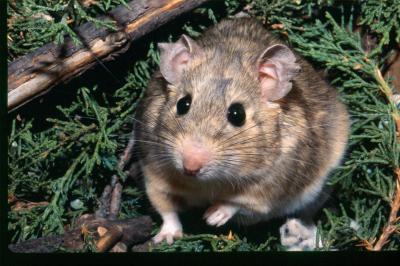
As the U.S. Southwest grew warmer from 18,700 to 10,000 years ago, juniper trees vanished from what is now the Mojave Desert, robbing packrats of their favorite food. Now, University of Utah biologists have narrowed the hunt for detoxification genes that let the rodents eat toxic creosote bushes that replaced juniper.
"It was either eat it or move out," says biology Professor Denise Dearing, senior author of the study, published online Tuesday, April 7 in the journal Molecular Ecology.
If you're a Muslim and you're worried that debating your NCAA March Madness championship tie-breaker scenarios at work will cause you to miss a prayer time ... well, okay, you're not doing that because designing technological devices for religious use is very different from designing devices for other uses, like the office, where everyone talks about sports.
A small, pilot study in 50 people in Japan suggests that eating two and a half ounces of broccoli sprouts daily for two months may confer some protection against a rampant stomach bug that causes gastritis, ulcers and even stomach cancer.
Citing their new "demonstration of principle" study, a Johns Hopkins researcher and an international team of scientists caution that eating sprouts containing sulforaphane did not cure infection by the bacterium Helicobacter pylori (H. pylori). They do not suggest that eating this or any amount of broccoli sprouts will protect anyone from stomach cancer or cure GI diseases.
Dr. Aleem Gangjee, Distinguished Professor of Medicinal Chemistry at Duquesne University’s Mylan School of Pharmacy, and his team of collaborators continue to test a compound that appears not only to prevent cancer tumors from developing but to eliminate already-existing tumors.
In 2008, tests of a new compound developed by Gangjee showed that it stifled the growth of cancer tumors, which were composed of KB tumor cells, in mice. An unexpected result also showed that the compound shrunk and eventually eliminated cancer tumors in another group of mice, which remained tumor-free for 60 days.
“What we’re seeing here is a compound that can treat early- and late-stage cancer,” Gangjee said. “There are many ramifications to that.”
As part of the International Year of Astronomy 2009 Cornerstone project, 100 Hours of Astronomy, the ambitious “Around the World in 80 Telescopes” event is a unique live webcast over 24 hours, following night and day around the globe to some of the most advanced observatories on and off the planet.
To provide a long-lasting memory of this amazing world tour, observatories worldwide are revealing wonderful, and previously unseen, astronomical images. For its part, ESO is releasing outstanding pictures of two galaxies, observed with telescopes at the La Silla and Paranal observatories.
Investigators from the Harvard School of Public Health and the University of Puerto Rico evaluated the association between different measures of obesity and risk of periodontal disease. They analyzed data from 36,903 men from the Health Professionals Follow-Up Study who were free of reported periodontal disease at the start of follow-up, and followed them for up to 16 years (1986-2002).