









In June of this year, Facebook provoked a widespread public outcry after it became known that it had tried to manipulate the emotions of nearly 700,000 of its users as part of a social “experiment.”


Coming to get you. Credit: D Simmonds, CC BY-SA

By Mark Blumberg, University of Iowa; Alexandre Tiriac, University of Iowa, and Carlos del Rio Bermudez, University of Iowa


Your gut bacteria won't change much. Credit: ponchicaBG

By Nicholas Ellaby, University of Liverpool

From eyes to the gap between the toes, we are covered in bacterial colonies.

Between 500 and 1000 unique species live in our gut alone. We provide an ideal environment for bacteria: warmth, moisture, nutrients and protection.

UCLA psychologists
using a scale of responses to scenarios are saying that white Americans may view diversity and multiculturalism negatively as the U.S. moves toward becoming a minority-majority nation.

The psychologists divided 98 white Americans from all regions of the country — half male, half female, with an average age of 37 — randomly into two groups. One group was told that whites will no longer be the majority in the U.S. by 2050; in fact, this is likely to be true as soon as 2043, according to some projections. The second group was told that whites would retain their majority status in the U.S. through at least 2050. All participants were then asked a series of questions about their views on diversity.

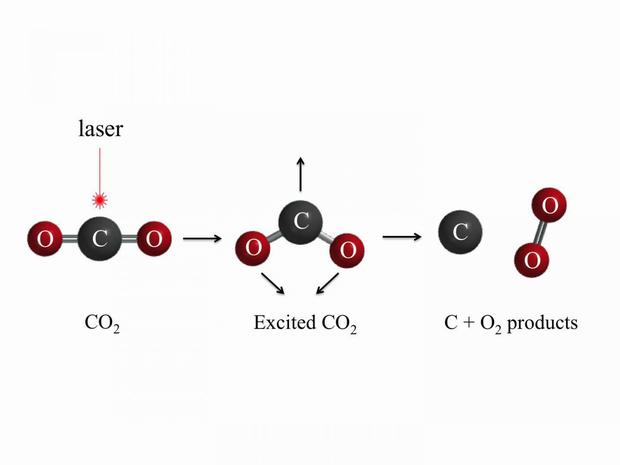
Almost 20 percent of the Earth's atmosphere is oxygen. Green plants produce it as a byproduct of photosynthesis and it, in turn, is used by most living things on the planet to keep our metabolisms running.

Yet before those photosynthesizing organisms appeared about 2.4 billion years ago, the atmosphere was mostly carbon dioxide, a lot like Mars and Venus.

The common hypothesis is that there must have been a small amount of oxygen in the early atmosphere. Where did this abiotic ("non-life") oxygen come from? Oxygen reacts quite aggressively with other compounds, so it would not persist for long without some continuous source.

Now that Major League Baseball’s regular season has ended with the wild wildcard win by the Kansas City Royals over the Oakland A’s and with the Pittsburgh Pirates being eliminated by the San Francisco Giants, I've once again begun analyzing the probability of each team advancing through each round of baseball’s postseason.

The Los Angeles Dodgers (71%) and the Washington Nationals (68%) have the greatest chance of advancing to the National League Championship Series going into their first Division Series games. The Kansas City Royals (61%) and Baltimore Orioles (64%) after winning the first game of their Division Series have turned themselves from underdogs into favorites.

A new imaging system is capable of obtaining up to twelve times more color information than the human eye and conventional cameras, which implies a total of 36 color channels.

The system involves a new generation of sensors in combination with a matrix of multispectral filters to improve their performance. 

Social network analysis could improve knowledge sharing in the healthcare sector, according to a paper which shows how knowledge management systems (KMS) can be critical in capturing, retaining and communicating project results and staff knowledge. They can prevent knowledge drain and provide training as "lessons learned" following specific occurrences and the resolution of particular problems the staff face.

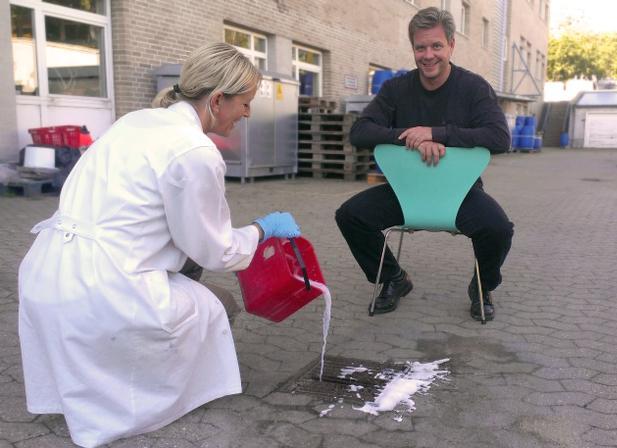
When you take a shower and use soap and then lather, rinse and repeat twice with that shampoo, it gets washed off your body and goes down the drain.

Environmentalists have claimed these soaps and shampoos and washing machine detergents - surfactants - seep into groundwater, lakes and streams, where they could pose a risk to fish and frogs.

But do they? Not likely, finds a new report of the potential impact on the environment of the enormous amounts of common surfactants used day in and day out by consumers all over the world. 


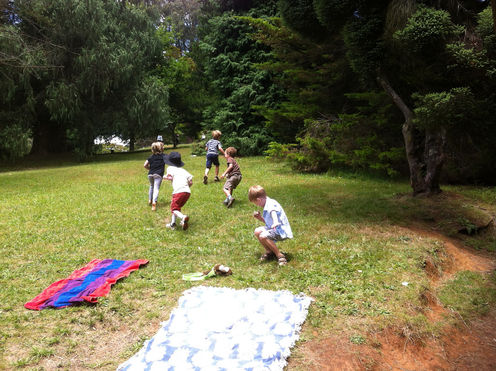
Evidence shows children are getting less unsupervised time outdoors. Credit: Brian Yap (葉)/Flickr, CC BY-NC

By Shelby Gull Laird and Laura McFarland-Piazza


