








UN Women Goodwill Ambassador and actor Emma Watson launched the HeForShe Campaign at the United Nations headquarters in New York, September 20th. Credit: EPA/JASON SZENES

By Evita March, Federation University Australia

In less than a week since actor Emma Watson’s stirring United Nations speech on gender inequality, two big things have happened – but you’ve probably only heard about one of them.


Taking over one neuron at a time. Credit: viipeer, CC BY-NC-SA

By Nick Bostrom, University of Oxford


Sympathetic or jealous? Credit: Belly by Shutterstock

By Arthur Brennan, St George's, University of London

Harry Ashby, the 29-year-old security guard who was signed off work with morning sickness, cravings, a growing stomach and breasts during his girlfriend’s pregnancy, was told he had Couvade syndrome.


Surprises in the dark. Credit: NASA GSFC, CC BY

By Rene Breton, University of Southampton

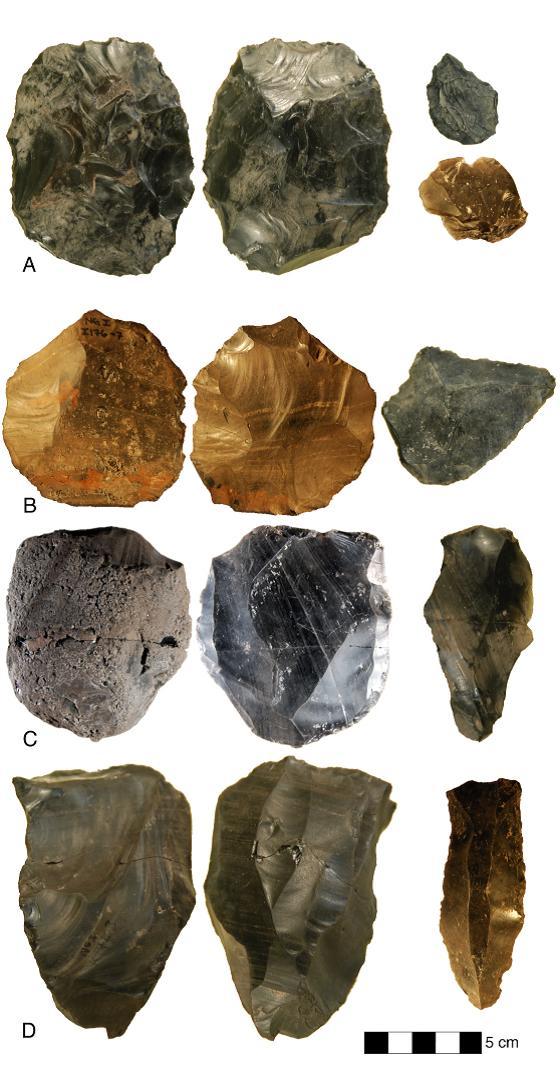
A new discovery of thousands of Stone Age tools has provided a major rethink about human innovation 325,000 years ago - and how early technological developments spread across the world. 

The researchers found evidence which challenges the belief that a type of technology known as Levallois – where the flakes and blades of stones were used to make useful products such as hunting weapons – was invented in Africa and then spread to other continents as the human population expanded.

They discovered at an archaeological site in Armenia that these types of tools already existed there between 325,000 and 335,000 years ago, suggesting that local populations developed them out of a more basic type of technology, known as biface, which was also found at the site.

Many of the choices we make are informed by experiences we've had in the past but we know that sometimes it is better to throw all that out and take a risk on something new.

Scientists at the Howard Hughes Medical Institute's Janelia Research Campus have shown that the brain can temporarily disconnect information about past experience from decision-making circuits, thereby triggering random behavior. 

You can build a simple circuit using two 555 Timer ICs to create an H-bridge that will drive a single motor in forward or reverse. An H-bridge circuit is often used in robotics to reverse the polarity of a motor. For example, if the motor is spinning in the forward direction, the robot will move forward and when the polarity of the motor is reversed, the motor will spin in the opposite direction and the robot will move backward.

Follow me on Twitter: SteveSchuler20

The diagram of the circuit resembles the letter “H” where the motor is the cross-bar and four switches form the legs.

Concrete is the world’s most-used construction material and thus a leading contributor to global warming, producing perhaps 10 percent of industry-generated greenhouse-gas emissions.

Industry is already reducing greenhouse emissions, such as by using more natural gas and less coal to generate cost-effective electricity, and a new suggests another low-impact way go green - reducing concrete emissions by more than half and getting a stronger, more durable material using science rather than rationing.

Mother Nature may be out to kill us but we shouldn't take it personally. She is out to kill everything. We just never noticed in the past. 

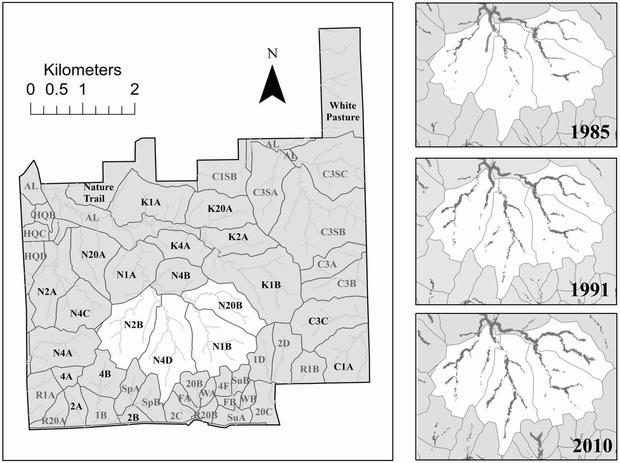
Today, thanks to long-term science projects, we can see how nature pits species off against each other. And biologists are studying streams to optimize how to prevent tallgrass prairies from turning into shrublands and forests.

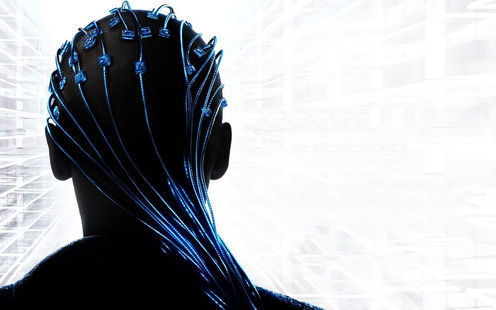
People who practice yoga and meditation long term can learn to control a computer with their minds faster and better than people with little or no yoga or meditation experience, find biomedical engineers at the University of Minnesota writing in TECHNOLOGY.

