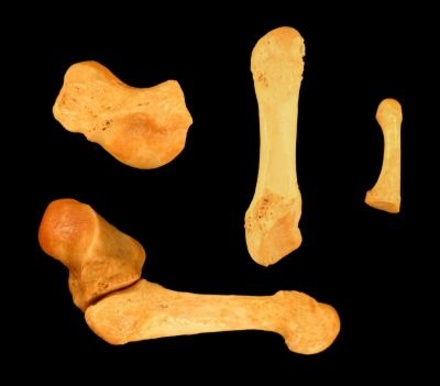
The discovery of a gruesome feeding frenzy that played out 73 million years ago in northwestern Alberta may also lead to the discovery of new dinosaur species in northwestern Alberta.

University of Alberta student Tetsuto Miyashita and Frederico Fanti, a paleontology graduate student from Italy, made the discovery near Grande Prairie, 450 kilometres northwest of Edmonton. 
With an unexpected move, the Austrian Minister of Research and Science, Johannes Hahn, announced last Friday that he intends to put an end to the 50-year-long participation of Austria to CERN.
Such a move is hard to understand, in light of the great prospects of physics that the start-up of LHC will bring at the end of this year. Losing membership to CERN would mean a downgrade of Austrian scientists in all the projects they are involved, and it would be detrimental to the experiments, to the lab, and to particle physics in general, but most of all it would be a catastrophe for Austrian research.

Frederick II (1194 –1250), Holy Roman Emperor and King of Sicily, so I have read, preferred equation-solving contests to watching knights impaling each other in jousting. Certainly, the great mathematician we know today as Fibonacci spent some time at his court.

As a result of this development, Italy became a leading centre of the mathematical arts, and by the 1530s the solving of cubic equations was all the rage in Venice, with great prize money.

A couple of entomologists at Arizona State have done what NASA famously failed to do: name a thing after Stephen Colbert. The Agaporomorphus colberti diving beetle joins the ranks of Colbert’s many namesakes: the Aptostichus stephencolberti trapdoor spider, the Diamphipnoa colberti stonefly, and just about everything else that needed naming in the last few years.

This Colbert-named arthropod series is in good company. There is a wealth of homage, wordplay, and good ol’ scientist shenanigans hiding beneath the latinized genus and species names of formal biological nomenclature. Here are a few highlights.
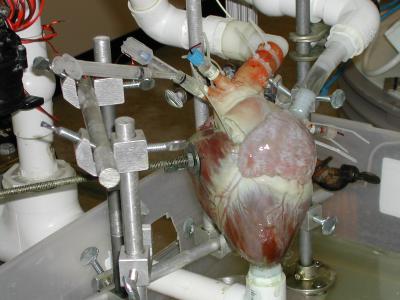
A new machine developed at North Carolina State University makes an animal heart pump much like a live heart after it has been removed from the animal's body, allowing researchers to expedite the development of new tools and techniques for heart surgery. The machine saves researchers time and money by allowing them to test and refine their technologies in a realistic surgical environment, without the cost and time associated with animal or clinical trials.

The success of religion may be the fault of non-believers (or, if you look at it the other way around, thank god for the atheists!) 

At least that is one interpretation of a recent individual-based simulation study of social evolution conducted by James Dow at Oakland University in Rochester, Michigan, and published in a recent issue of the Journal of Artificial Societies and Social Simulation (vol. 11, no.

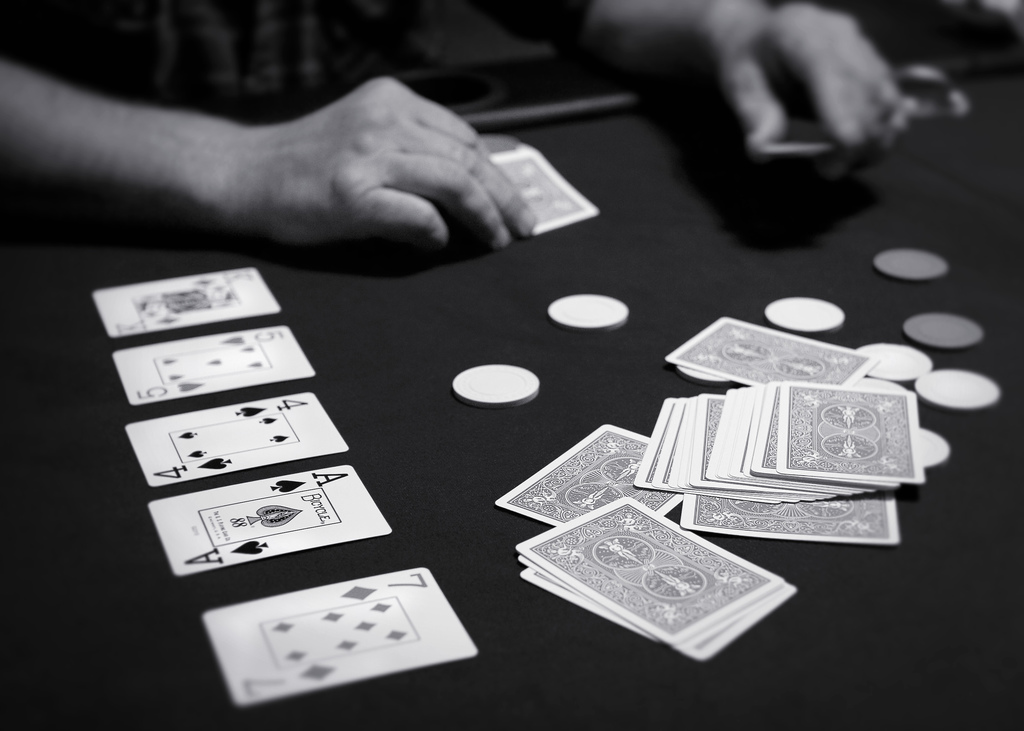
No matter what you read in the various published strategy guides and online chat rooms about pot odds, implied odds, reverse-implied odds and pot equity, there is no mathematically definite strategy for poker played in casinos. Because the best poker is unpredictable and in casinos you are likely to experience the best poker, all decisions are eventually somewhat intuitive. (Like the stock market, you can’t figure out Dan Harrington—if you could, you could beat him. Note: you can’t.)
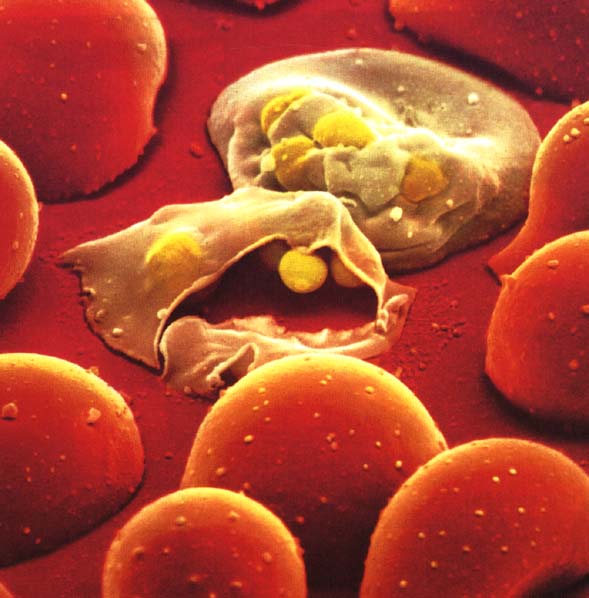
The death toll due to malaria outbreaks has reached over million lives every year with an additional 300-500 million people suffering illness from serious malaria infections. The growing pandemic and high mortality rate has caused renewed and fervent interest in creating an effective vaccine treatment for the prevention of malaria.

This interest has sparked physicians, scientists and pharmaceutical companies alike to race for the most cost-effective, efficient and overall viable vaccine against malaria.  There are currently multiple vaccines in various stages of trial and with various ranges of efficacy.

Acupuncture can help people with chronic low back pain feel less bothered by their symptoms and function better in their daily activities, according to the largest randomized trial of its kind, published in the May 11, 2009 Archives of Internal Medicine. But the SPINE (Stimulating Points to Investigate Needling Efficacy) trial raises questions about how the ancient practice actually works.

Aggressive, vengeful behavior of individuals in some South American groups has been considered the means for men to obtain more wives and more children, but an international team of anthropologists working in Ecuador among the Waorani show that sometimes the macho guy does not do better. 

The Waorani are rainforest manioc horticulturalists and foragers. When the first peaceful contact occurred in 1958, they numbered about 500 people living in an area the size of New Jersey between the Napo and Curaray rivers in the Amazon basin east of the Andes. Their abundant resources often attracted outsiders, who were promptly killed if found.