Kids love sweet-tasting foods and new research indicates that this heightened liking for sweetness has a biological basis and is related to children's high growth rate.
Liking sweets is a cross-cultural phenomenon for kids, a pattern that declines during adolescence. To explore the biological underpinnings of this shift, Researchers looked at sweet preference and biological measures of growth and physical maturation in 143 children between the ages of 11 and 15.
Bell curves are everywhere. Pick 100 random people and measure them: measure their height, their weight, their blood pressure, their time to run a mile, or to sprint 50 yards, and their IQ, and you find that most of us fall in the middle of the spectrum, while there are always some people on either extreme. Why?
The puzzle grows deeper when you think about genetics. If a trait like height is controlled largely by genes, how is it that height falls into a bell-curve pattern? Bell-curves seem completely at odds with what we learn about the discrete genetics of Mendel's round and wrinkled peas in high school biology.
It turns out that the solution to this puzzle is fairly simple (although the details get messy). In fact, Darwin's cousin hit on the right answer (long before he or anyone else knew about Mendel's genetics), with what he called the "Supreme Law of Unreason": a bell curve is exactly what you expect when you toss together "a large sample of chaotic elements." In other words, genetics is like one big game of The Price Is Right.
How did life begin, anyway?
I am a research professor at the University of California, Santa Cruz, and over the past 30 years my students and I have been working to understand how cellular life arose. The unit of all life today is the cell, a molecular system of functional polymers (proteins and nucleic acids) that is bounded by a membrane composed of lipid.
New treatments for infertility could be closer to reality, thanks to a discovery from scientists at the Université de Montréal and Maisonneuve-Rosemont Hospital Research Centre.
According to a study published in the journal Molecular Human Reproduction, the researchers have become the first to clone, produce and purify a protein important for sperm maturation, termed Binder of Sperm (BSP), which may have implications for both fertility treatments and new methods of male contraception.
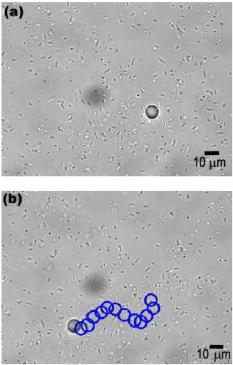
Half-biological and half-synthetic, an army of thousands of wrecking balls are contained within Dr. Metin Sitti's Carnegie Mellon laboratory. Once incited, they keep moving to the death. They run on sugar. And they can all be taken down by penicillin.
Sitti’s army is a cadre of Serratia marcensens bacteria-coated polystyrene microbeads, propelled by the bacteria’s innate restlessness. To Sitti, recruiting bacteria to form the propulsion side of a microprojectile is more than a fun day in the lab. These tiny living robots are the foundation for the future of biointegrated micromachines.
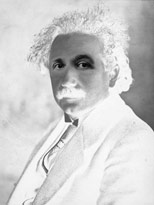
Professor Lynn Margulis is the biologist who had the incredible insight that the cells of modern organisms were originally formed by the symbiotic combination of prokaryotic cells and colonies of bacteria, and then had to battle for years to have this recognised by the science community.
The idea is so outlandish, but so significant, that it puts her right up there as one of the greats of biology.
To look at Matthew Houdek, you could never tell he was born with virtually no left ear.
A surgery at Loyola University Health System made it possible for Houdek to be fitted with a prosthetic ear that looks just like the real thing.
Ear-nose-throat surgeon Dr. Sam Marzo implanted three small metal screws in the side of Houdek's head. Each screw is fitted with a magnet, and magnetic attraction holds the prosthetic ear in place.
It takes only a few seconds for Houdek to put his prosthetic ear on in the morning and take it off when he showers or goes to bed. It doesn't fall off, and it's much more convenient than prosthetic ears that are attached with adhesive.
Humans excel at recognizing faces, but how we do this has been an abiding mystery in neuroscience and psychology. In an effort to explain our success in this area, researchers are taking a closer look at how and why we fail.
A new study from MIT looks at a particularly striking instance of failure: our impaired ability to recognize faces in photographic negatives. The study, which appears in the Proceedings of the National Academy of Sciences this week, suggests that a large part of the answer might lie in the brain's reliance on a certain kind of image feature.
FINDINGS: Scientists at the Whitehead Institute for Biomedical Research and the National University of Singapore have discovered the first microRNA (miRNA) capable of directly tamping down the activity of the well known tumor-suppressor gene, p53, While p53 functions to prevent tumor formation, the p53 gene is thought to malfunction in more than 50% of cancerous tumors.
RELEVANCE: The study reports the first time a miRNA has been shown to directly affect the p53 protein level, although researchers have previously identified other genes and miRNAs that indirectly affect p53's activity.
A group of international researchers has found the first reliable evidence that early detection of subsequent breast tumours in women who have already had the disease can halve the women's chances of death from breast cancer.
According to the research published online today (Wednesday 18 March) in the cancer journal, Annals of Oncology [1], if the second breast cancer was picked up at its early, asymptomatic stage, then the women's chances of survival were improved by between 27-47% compared to women whose second breast cancer was detected at a later stage when symptoms had started to appear.