




Researchers in Cameroon, the Democratic Republic of Congo, France, Gabon, Germany, Japan, Rwanda, the United Kingdom, and the United States have found that simian foamy virus (SFV) is widespread among wild chimpanzees throughout equatorial Africa.

Recent studies have shown that humans who hunt wild primates, including chimpanzees, can acquire SFV infections. Since the long-term consequences of these cross-species infections are not known, it is important to determine to what extent wild primates are infected with simian foamy viruses.

In this study, researchers tested this question for wild chimpanzees by using novel non-invasive methods. Analyzing over 700 fecal samples from 25 chimpanzee communities across sub-Saharan Africa, the researchers obtained viral sequences from a large proportion of these communities, showing a range of infection rates from 44% to 100%.

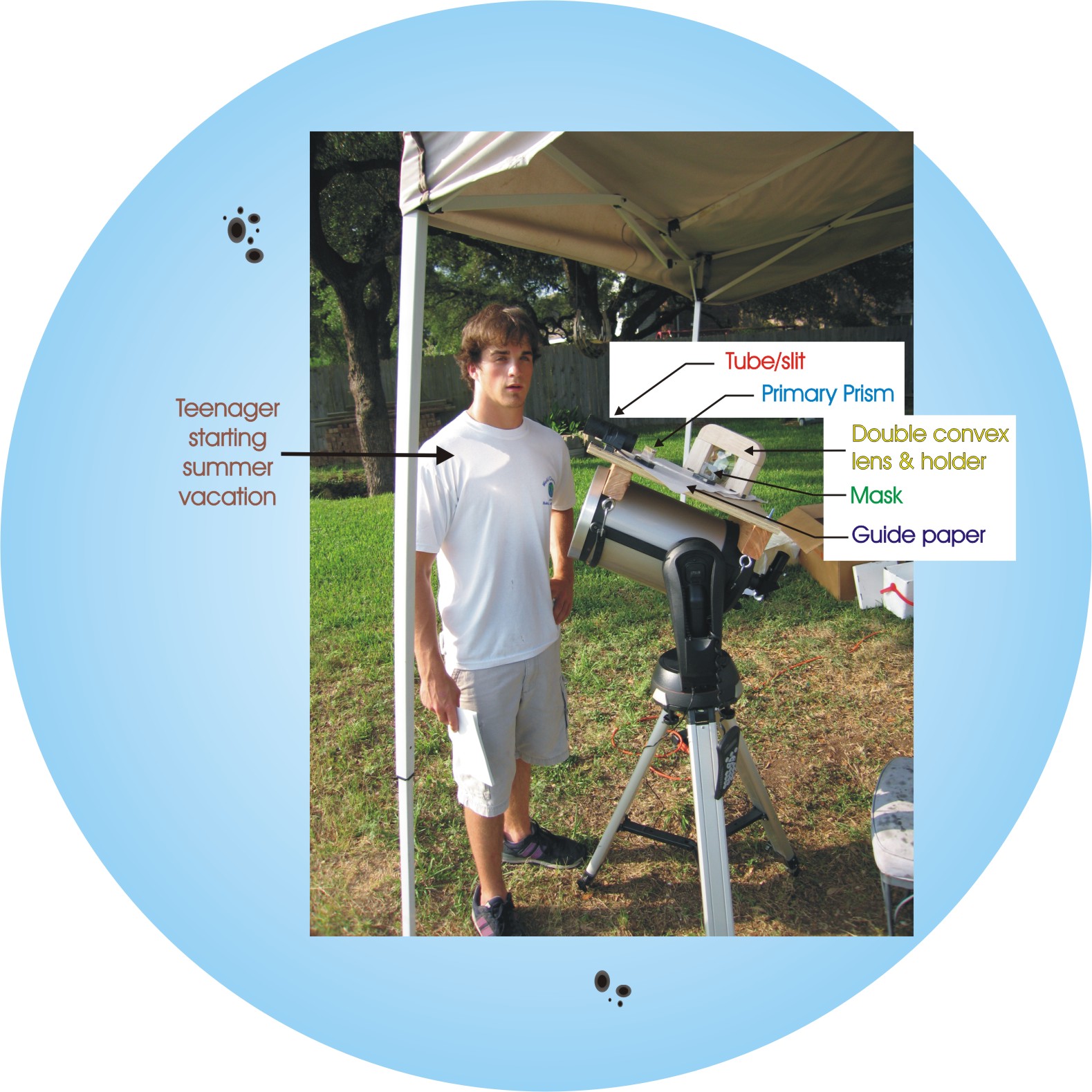
Continuing from the prior article... “The Sun Ain’t Yeller”, cries the heliochromologist.  Undaunted by tradition, dogma, or tens of thousands of erroneous magazine and textbook images of our Sun, heliochromology, a colorful heterodox, is winning the day because the Sun is what it is, color and all, regardless of other’s puerile incognizance. 

The answer is not a vague, subjective one, but an objective one, as sure as red apples are red.  Heliochromology is our path to enlightenment that will bring resolve to this color conundrum -- a subtle polemic that has been dormant to all of astronomy for hundreds, nay thousands, nay nay, tens of thousands of years, perhaps since mankind first discovered the Sun and its daily color metamorphosis. 

We know not who the sagacious sapien may have been who indubitably made the first astronomical discovery of all time – the Sun.

ScienceDebate2008 has come up with 14 questions they would like to see answered by the US presidential candidates. This group has been pushing for a science policy-focused debate among presidential candidates. That debate is looking more and more unlikely, but in an effort to keep some of the election focus on science, this group is now urging the candidates to answer a set of questions on science policy (abbreviated below - go read the questions in full at the ScienceDebate2008 site):

1. What policies will you support to ensure that America remains the world leader in innovation?

2. What is your position on the following measures that have been proposed to address global climate change—a cap-and-trade system, a carbon tax, increased fuel-economy standards, or research?

3. What policies would you support to meet demand for energy while ensuring an economically and environmentally sustainable future?

4. What role do you think the federal government should play in preparing K-12 students for the science and technology driven 21st Century?

5. What is your view of how science and technology can best be used to ensure national security and where should we put our focus?

6. In an era of constant and rapid international travel, what steps should the United States take to protect our population from global pandemics or deliberate biological attacks?

Since 1969 a U.S. patent has been registered on the process of turning alcohol into powder.

This year, products, such as gelatin shots and margaritas, based from alcohol powder are set to be released by Pulver Spirits and BPNC Distillery.

Though alcohol powder is regulated the same as other alcoholic beverages in the U.S., it is only sold as a food flavoring. However, in other countries such as the Netherlands, lack of regulations make obtaining powdered alcohol within reach to minors.

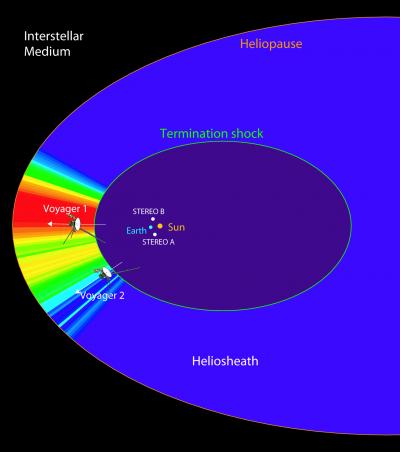
NASA's sun-focused STEREO spacecraft unexpectedly detected particles from the edge of the solar system last year, allowing University of California, Berkeley, scientists to map for the first time the energized particles in the region where the hot solar wind slams into the cold interstellar medium.

Mapping the region by means of neutral, or uncharged, atoms instead of light "heralds a new kind of astronomy using neutral atoms," said Robert Lin, UC Berkeley professor of physics and lead for the suprathermal electron sensor aboard STEREO. "You can't get a global picture of this region, one of the last unexplored regions of the heliosphere, any other way because it is too tenuous to be seen by normal optical telescopes."

The heliosphere is a volume over which the effects of the solar wind extend, stretching from the sun to more than twice the distance of Pluto. Beyond its edge, called the heliopause, lies the relative quiet of interstellar space, at about 100 astronomical units (AU) - 100 times the Earth-sun distance.

The world of geology changes rapidly - sometimes the Grand Canyon is one age and then it is found to be much older. But even in geology it's not often a date gets revised by 500 million years.

University of Florida geologists say they have evidence that a half-dozen major basins in India were formed a billion or more years ago, making them at least 500 million years older than commonly thought. If so, it might remove one of the major obstacles to the 'Snowball Earth' theory that says a frozen Earth was once entirely covered in snow and ice. It might even lend some weight to a controversial claim that complex life originated hundreds of million years earlier than most scientists currently believe.

The Purana basins – which include the subject of the study, the Vindhyan basin – are located south of New Delhi in the northern and central regions of India. They are slight, mostly flat depressions in the Earth's crust that span thousands of square miles. For decades, Meert said, most geologists have believed the basins formed 500 million to 700 million years ago when the Earth's crust stretched, thinned and then subsided.

Human emissions of carbon dioxide are loading the atmosphere with heat-trapping greenhouse gases and have also begun to alter the chemistry of the ocean, according to a team of chemical researchers.

The ecological and economic consequences are difficult to predict but possibly calamitous, they say in the July 4 issue of Science, and halting the changes already underway will likely require even steeper cuts in carbon emissions than those currently proposed to curb climate change.

Ken Caldeira of the Carnegie Institution's Department of Global Ecology, writing with lead author Richard Zeebe of the University of Hawaii and two co-authors*, note that the oceans have absorbed about 40% of the carbon dioxide (CO2) emitted by humans over the past two centuries. This has slowed global warming, but at a serious cost: the extra carbon dioxide has caused the ocean's average surface pH (a measure of water's acidity) to shift by about 0.1 unit from pre-industrial levels. Depending on the rate and magnitude of future emissions, the ocean's pH could drop by as much as 0.35 units by the mid-21st century.

Scientists have long anguished over how little is known about Mercury, the innermost of the four terrestrial planetary bodies in our solar system. The gaps in knowledge covered such basic information as the planet's geology, how it was formed and evolved and whether its interior was still active.

In 1975, the Mariner 10 spacecraft returned intriguing images that showed smooth plains covering large swaths of Mercury's surface. But scientists could not determine whether the plains had been created by volcanic activity or by material ejected from below the surface when objects had collided into it. Thus, they could not reach a consensus over Mercury's geologic past.

Commercial flower and plant growers know all too well that invasive, ubiquitous weeds cause trouble by lowering the value and deterring healthy growth of potted ornamental plants. To control weeds, many commercial nursery owners resort to the expensive practice of paying workers to hand-weed containers. Some growers use herbicides, but efficacy of herbicides is questionable on the wide range of plant species produced in nurseries, and many herbicides are not registered for use in greenhouses.

Enter "dried distillers grains with solubles", or DDGS. DDGS, a byproduct of converting corn to fuel ethanol, is typically used as livestock feed. Rick A. Boydston, Harold P. Collins, and Steve Vaughn, of the U.S. Department of Agriculture, undertook a research study on the use of DDGS as a weed deterrent on potted ornamentals. The study results, published in the February 2008 issue of HortScience, evaluated the use of DDGS as a soil amendment to suppress weeds in container-grown ornamentals.

'Hello, climate? We're from the government and we're here to help you.'

A group of former senior federal officials have called for the establishment of an independent Earth Systems Science Agency (ESSA) that would be created by merging the National Oceanic and Atmospheric Administration (NOAA) and the U.S. Geological Survey (USGS) into something even larger.

Charles Kennel, former Associate Administrator of the National Aeronautics and Space Administration and Director of Mission to Planet Earth, says, "Earth system science focuses on understanding current processes and predicting changes that will take place over the next hundred years. It merges earth, atmospheric, and ocean science into a panorama of the earth system as it is today and as it will be tomorrow. We need it to predict climate change and its impacts, and to help us mitigate and adapt to other changes that have the potential to affect our quality of life and economic well-being."


