
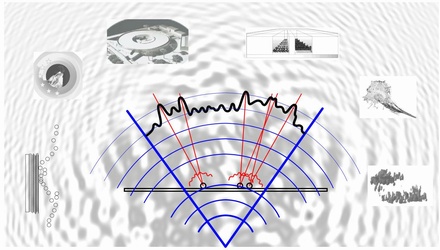



Black holes are massive gravitational fields in the universe that result from the collapse of giant stars. Because black holes absorb light, they cannot be studied using telescopes or other instruments that rely on light waves. However, scientists believe they can learn more about black holes by listening for their gravitational waves.

Scientists hope that a new supercomputer being built by Syracuse University's Department of Physics may help them identify the sound of a celestial black hole. The supercomputer, dubbed SUGAR (SU Gravitational and Relativity Cluster), will soon receive massive amounts of data from the California Institute of Technology (Caltech) that was collected over a two-year period at the Laser Interferometer Gravitational-Wave Observatory (LIGO).

Gravitational waves are produced by violent events in the distant universe, such as the collision of black holes or explosions of supernovas. The waves radiate across the universe at the speed of light. While Albert Einstein predicted the existence of these waves in 1916 in his general theory of relativity, it has taken decades to develop the technology to detect them.

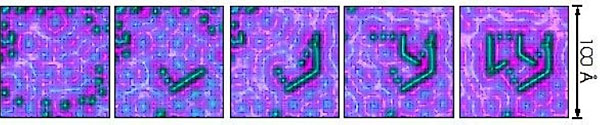
The two atoms of an oxygen molecule severed by a metal catalyst usually behave identically, but new research reveals that on a particular catalyst, one oxygen atom plants itself while the other moves away, probably with energy partially stolen from the stationary one.

Scientists from the Pacific Northwest National Laboratory found this unanticipated behavior while studying how oxygen interacts with reduced titanium oxide surfaces. The chemists are trying to understand how molecular oxygen -- the stuff we breathe -- interacts with metals and metal oxides, which are used as catalysts in a variety of environmental and energy applications.

In a fairly optimistic paper published in Biotropica in 2006 Joseph Wright and Helene Muller-Landau suggested that declining rates of population growth in tropical countries, coupled with increased urbanisation "give reason to hope that deforestation will slow, natural forest regeneration through secondary succession will accelerate, and the widely anticipated mass extinction of tropical forest species will be avoided." Their assertions have been controversial, and have attracted a fair bit of criticism.

Forty years ago, mathematician Mark Kac asked the theoretical question, "Can one hear the shape of a drum?"

If drums of different shapes always produce their own unique sound spectrum, then it should be possible to identify the shape of a specific drum merely by studying its spectrum, thus "hearing" the drum's shape (a procedure analogous to spectroscopy, the way scientists detect the composition of a faraway star by studying its light spectrum).

But what if two drums of different shapes could emit exactly the same sound?

The February issue of Geotimes takes a look at the complicated issues surrounding Iraq’s oil exploration and production.

Though oil prices have doubled and Iraq boasts the largest untapped oil reserves in the world, the instability that comes with war, attacks on infrastructure and outdated technology in Iraq have led to the lowest reserve-to-production ratio of all oil-producing countries.

Currently Iraq produces 2.0 million barrels per day (bpd), down from an average of 2.6 million prior to the invasion in 2003. Exploration and development in Northern Iraq could easily increase production by 100,000 bpd.

A report published in BMC Public Health states that socio-economics and neighborhood have a more powerful influence on sexual activity among 15- and 16-year-olds than the classroom.

A team of researchers analyzed data on nearly 5,000 pupils from 24 different Scottish Schools. They found that overall 42% of girls and 33% of boys reported experience of sexual intercourse, but the rates between schools ranged widely, from 23% to 61%.

Commenting on the value of sex education in schools, lead author Dr. Marion Henderson said, "It would be over-simplifying to interpret these results as suggesting that sex education isn't valuable. The study was looking at effects of school beyond the sex education curricula."

National Science Foundation (NSF) Director Arden L. Bement Jr. has presented the agency's proposed $6.85 billion budget for fiscal year (FY) 2009, a 13 percent increase over its actual FY 2008 budget. The additional $822.10 million would increase funding for agency programs that advance the frontiers of research and education in science and engineering.

Bement said the increase reflected a growing consensus that the United States needs to invest more resources in basic scientific research if it is to remain a global leader in science and technology. "More than a dozen major studies have now concluded that a substantial increase in federal funding for basic scientific research is critical to ensure the preeminence of America's scientific and technological enterprise," Bement said.

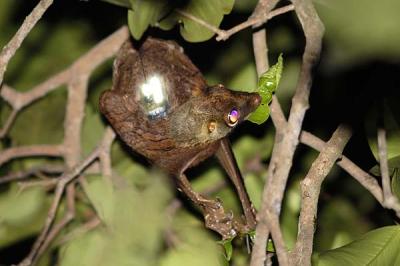
The colugo doesn't fly and is not a lemur but it's still called a "flying lemur" - and it's the champion of all gliding mammals, able to drop from the forest canopy in Malaysia, glide more than the length of two football fields, execute 90-degree turns and then alight gently on a tree trunk.

The colugo looks like a very large squirrel with membranous skin stretching from each limb and even between its toes to catch the wind and work as a parachute. When fully spread, the skin flaps reach the size of a large doormat.

Researchers are discovering how these animals move with the help of a miniature backpack outfitted with accelerometers.

Collaboration is a requirement for the advancement of modern science. Researchers cannot be expert at everything and must specialize to make a unique contribution. But if coordinating research within a group is challenging, effective collaboration between groups is even more so. There is often a strong temptation for research units to treat each other like black boxes. There is some logic to this - the point of having a collaborator is to distribute the responsibility of tasks in a project. If I get involved with every detail of my collaborator's work I may as well do the work within my own group. But problems can arise because of unstated assumptions between groups.
Michael Barton has posted a brief essay on Open Notebook Science on his research web site:
As you might expect from the name, Open Notebook Science (ONS) has similarities with Open Source Software. The clearest likeness between the two, is the belief that by sharing and collaborating, more can be achieved than through secrecy and competition.


