Writing a serious review of research in particle physics is a refreshing job - all the things that you already knew on that specific topic once sat on a fuzzy cloud somewhere in your brain, and now find their place in a tidily organized space, with clear interdependence among them. That's what I am experiencing as I progress with a 60-pageish thing on hadron collider searches for diboson resonances, which will appear sometime next year in a very high impact factor journal.
To see the problem try a google news search for Planet X - and see if you find anything there about the genuine astronomical search for planets beyond Neptune. It's filled with stories saying that the nonsense planet Nibiru is about to fly past Earth or hit us (what professor Brian Cox once called the imaginary bullshit planet Nibiru).
Physics Today says
the culture of physics itself is to blame for the gender pay gap.
Today, the American Society of Crime Laboratory Directors issued a an urgent public alert regarding the dangers posed by drugs currently circulating America’s streets and neighborhoods as a result of the current opioid crisis. This alert is intended to help the public recognize and avoid suspicious materials when they are nearby.
“The threat is unprecedented,” warns ASCLD President Ray Wickenheiser. “Some of the clandestine substances being sold or made accessible have formulations that are so toxic that it’s better to consider them poison.”
The world’s second densest metal can be used to kill cancer cells by filling them with a deadly version of oxygen, without harming healthy tissue, according to a new paper.
The metal, iridium, was in the asteroid with the strongest link to the extinction of dinosaurs. When combined with organic material, the researchers showed it can be directly targeted towards cancerous cells, transferring energy to the cells to turn the oxygen (O2) inside them into singlet oxygen, which is poisonous and kills the cell - without harming any healthy tissue.
Starting Science 2.0 in 2006, I was as wide-eyed as anyone new to media could be. My first month I was sure we were about to discover life on other planets, cancer was going to be cured, chocolate was healthy, resveratrol was the one polyphenol to rule them all. Oh, and academic scientists were going to rush to write for the public because I loved science. (1)
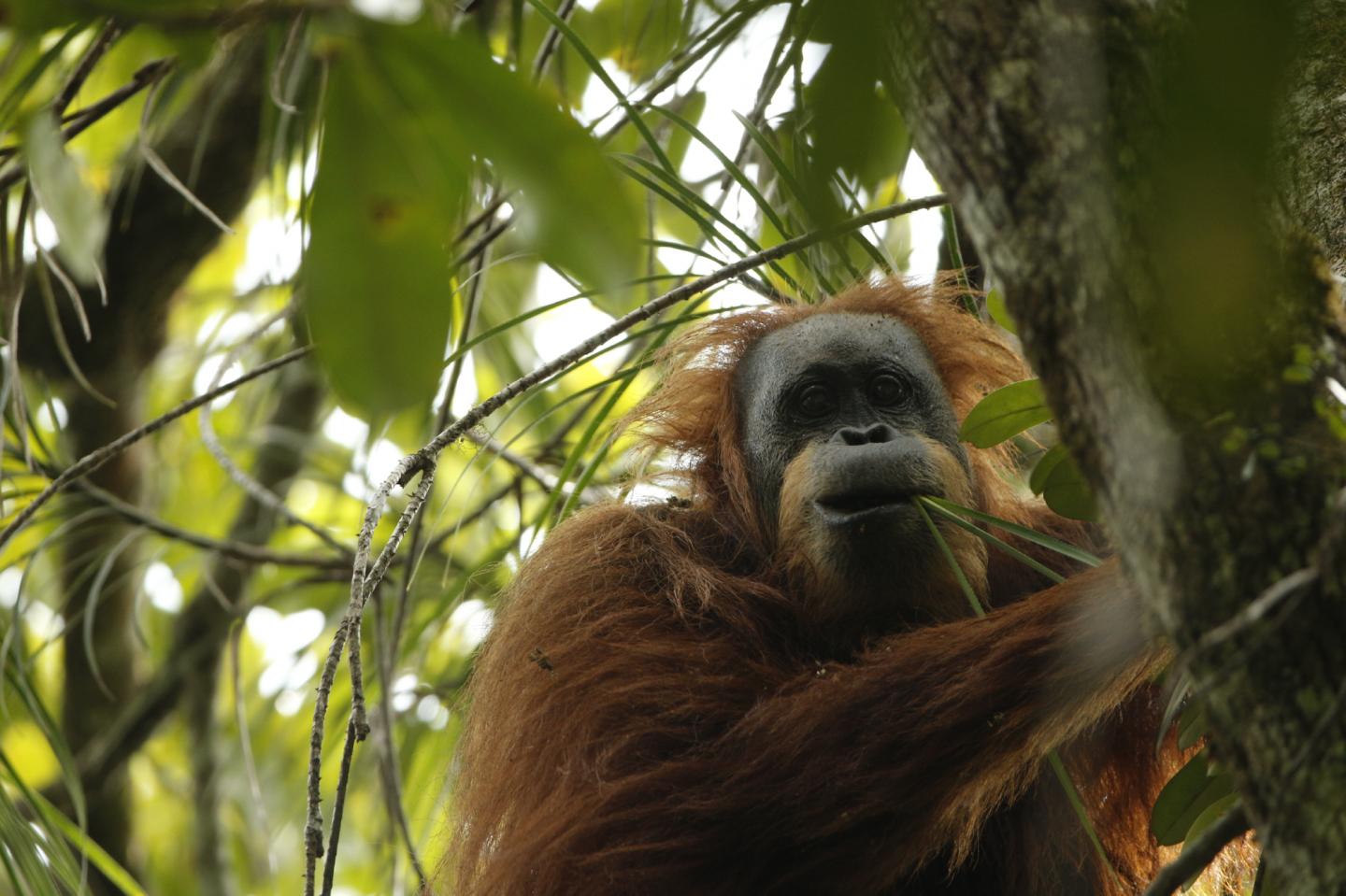
Move over, Bornean and the Sumatran orangutans. Scholars have identified a third orangutan species, the Tapanuli orangutan, that sits alongside the Pongo abelii, living on the island of Sumatra, and the Pongo pygmeaeus, endemic to Borneo, on the evolutionary tree.
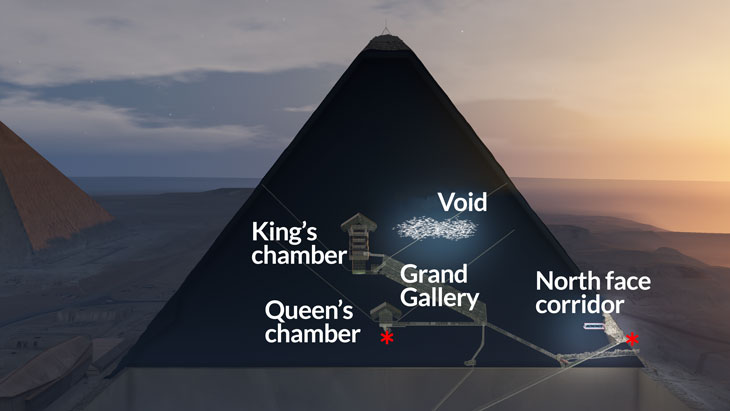
The Great Pyramid, built under the command of the Pharaoh Cheops (who died around 2483 B.C.), retains a lot of mysteries. We don't know how it was built, which has led to any number of conspiracy stories about alien technology and other things.
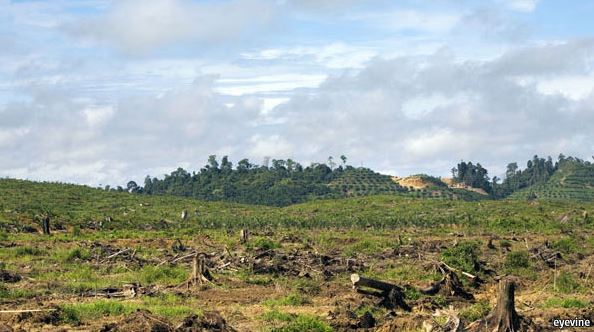
A San Francisco activist group claims major candy and snack manufacturers have deceived consumers by promising to clean up their palm oil supply chains, but these promises have been delayed, revised or watered down.
Palm Oil is a common vegetable oil, Nutella famously said their product won't be popular without it, and it has replaced partially hydrogenated oils in many uses due to higher yields than plants like rapeseed and sunflower plus stability at high temperature. But the popularity has come at a price.
Though there are often conversations about the health of larger minority groups such as African-Americans and Hispanic-Americans, smaller groups are a real worry for an increasingly overburdened government health care system.