Nanotechnology is the ability to measure, see, manipulate and manufacture things usually between 1 and 100 nanometers. A nanometer is one billionth of a meter; a human hair is roughly 100,000 nanometers wide. In 2007, nanotechnology was incorporated into more than $88 billion in manufactured goods. Lux Research projects that figure will grow to $2.6 trillion by 2014, or about 15% of total global output.

An expert analysis in Nature Nanotechnology questions whether industry, government and scientists are successfully applying lessons learned from past technologies to ensure the safe and responsible development of emerging nanotechnologies.

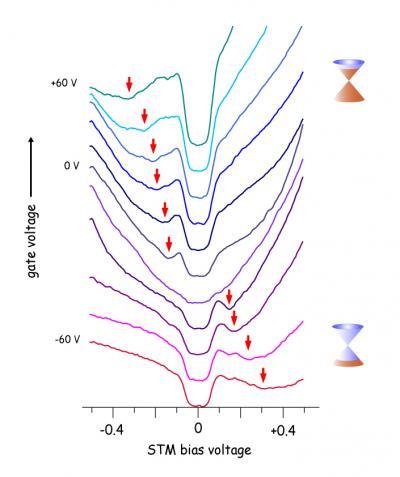
Scientists at the U.S. Department of Energy's Lawrence Berkeley National Laboratory (Berkeley Lab) and the University of California at Berkeley have performed the first scanning tunneling spectroscopy of graphene flakes equipped with a "gate" electrode. The result is the latest in a series of surprising insights into the electronic behavior of this unique, two-dimensional crystal form of carbon: an unexpected gap-like feature in the energy spectrum of electrons tunneling into graphene's single layer of atoms.

BASKING RIDGE, New Jersey, July 21 /PRNewswire/ --

- Delivers Strong Security Offerings and Professional Service Capabilities

Verizon Business joins only a handful of companies around the world to be recognized by BSI Management Systems -- the world's leading international standards, testing, registration and certification organization -- as a leading provider of information security management.

JOHANNESBURG, South Africa and DUBAI, United Arab Emirates, July 21 /PRNewswire/ --

Qualcomm Incorporated (Nasdaq: QCOM), a leading developer and innovator of advanced wireless technologies and data solutions, today announced the appointments of James Munn as the company's vice president of business development for Sub-Sahara Africa and Jay Srage as its vice president of business development for the Middle East and North Africa. In these roles, Munn and Srage will lead Qualcomm's business operations in the regions and manage the Company's strategic relationships with regional customers, including network operators, infrastructure equipment providers, mobile handset vendors and value-added service developers.

PALO ALTO, California, July 21 /PRNewswire/ --

- Users Given the Choice to Preview New Features, Functions and Feeds

Facebook(R) today released a new, cleaner and simpler design, along with the opportunity for users to preview and test the next-generation features and functionality. The company is inviting people to use the new design and try out the improved features by navigating back and forth between the new and current versions of the site. Access to the new design will be limited at first and gradually become available to all of Facebook's more than 80 million users over the coming days.

SUNNYVALE, California, July 21 /PRNewswire/ --

- Long-term study confirms treatment could help 3.3 million U.S. sufferers

BARRX Medical, Inc. today announced that 98.4 percent of patients having a precancerous condition of their esophagus called Barrett's esophagus were free of the disease 2.5 years after non-surgical, endoscopic treatment with the HALO ablation system. The results were published this month in Gastrointestinal Endoscopy, a leading scientific publication for gastrointestinal physicians and researchers. Barrett's esophagus develops as a result of chronic gastroesophageal reflux disease (GERD) and afflicts more than 3.3 million people in the United States.

If you had to pick one organism with which to tell the story of the modern science of biology, you couldn't do better than to pick the tiny gut bacterium Escherichia coli, commonly called just E. coli. In his latest book Microcosm: E. coli and The New Science of Life, Carl Zimmer, uses E. coli as a decoder ring to open up the dense and diverse world of biological research, taking us on a panoramic tour of some of the most important conceptual advances and outstanding scientific questions in this important realm of science.

Biology, in contrast to a science like physics, is a science of particulars. In physics, if you understand one electron, you understand them all, but in biology every organism is unique. In biology it is more challenging to find universals, to pick an object of study that let's you ask big questions with the hope of finding general answers.

With E. coli we can come quite close: this tiny bacterium is the hydrogen atom of biology, a model simple enough to be experimentally tractable, but representative of general principles that apply to all life. As the pioneering molecular biologist Jacques Monod put it, "What is true for E. coli is true for the elephant," and also true for us. In Microcosm, we follow E. coli through a survey of some of the deep foundations and controversies of biology.


BANGALORE, India, July 21 /PRNewswire/ -- Manthan Systems, a leading provider of retail analytics and decision-making solutions, today unveiled the latest edition of its retail performance management solution - ARC 5.8. Positioned to deliver the latest in advanced retail decision-making capability, ARC 5.8 is expected to transform the way retailers use analytics for competitive advantage.

Scientists say they have found a workable way of reducing CO2 levels in the atmosphere by adding lime to seawater. And they think it has the potential to dramatically reverse CO2 accumulation in the atmosphere, reports Cath O’Driscoll in SCI’s Chemistry & Industry magazine published today.

Shell is so impressed with the new approach that it is funding an investigation into its economic feasibility. ‘We think it’s a promising idea,’ says Shell’s Gilles Bertherin, a coordinator on the project. ‘There are potentially huge environmental benefits from addressing climate change – and adding calcium hydroxide to seawater will also mitigate the effects of ocean acidification, so it should have a positive impact on the marine environment.’

Adding lime to seawater increases alkalinity, boosting seawater’s ability to absorb CO2 from air and reducing the tendency to release it back again.

A new technology that spots tooth decay almost as soon as it’s begun promises to reduce the need for drilling and filling, writes Patrick Walter in SCI’s Chemistry & Industry (C&I) magazine.

Drilling is one of the top dental phobias and puts thousands of people off visiting their dentist every year.

The new technology, which may be available in dental surgeries in five years from now, is based on Raman spectroscopy most commonly used to distinguish between different chemicals by identifying each molecule’s unique fingerprint. It detects decay simply and painlessly by pointing a tiny optical fibre at the tooth to check on its health.